How thoughtful acoustic design can promote wellness, accessibility and inclusivity. By Michael DiTullo
The Impact of Acoustics in Creating Inclusive Environments
xxxxx. xxx
xxxxx
xxxxxxxxx
xxxxxxxxxxxxxxx By xxxxxxxx
h2 - xxxx
h3 - xxxx
H1 headline
Sound has a profound impact on the overall experience of a space. Whether occupants are trying to concentrate, have a conversation, or simply feel calm, acoustics can either support or hinder that experience. A designer’s job is to create spaces that accommodate a broad range of sensory needs and balance the environment so that it’s as accessible as possible for learning, work, and enjoyment. Thoughtfully implemented, acoustic strategies help create spaces that are more inclusive, functional and welcoming—often in ways users notice only when those considerations are missing.
While educational, workplace, and hospitality settings each present their own sets of unique challenges, integrating acoustic performance with materials, function, and aesthetics is foundational to creating inclusive environments.
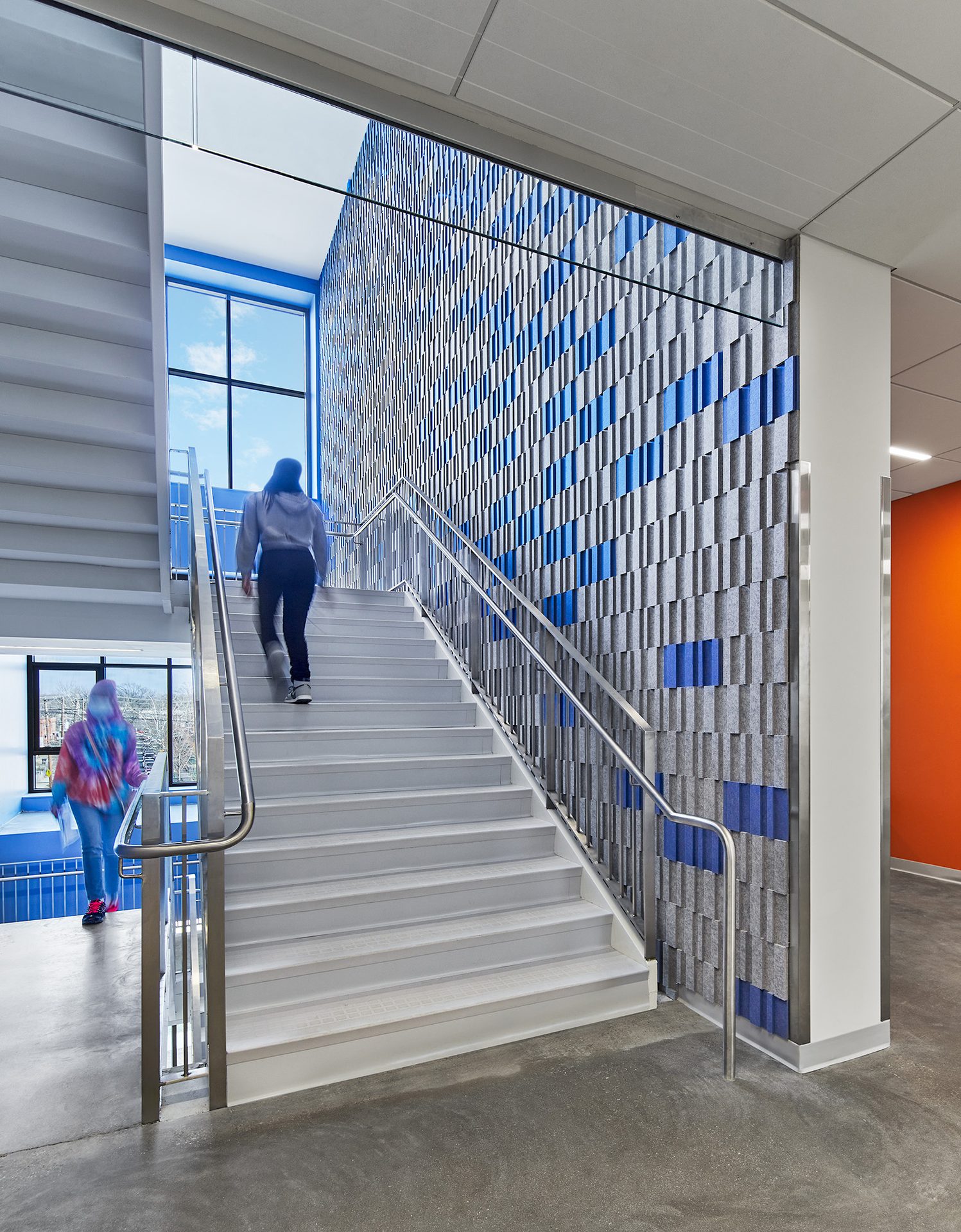
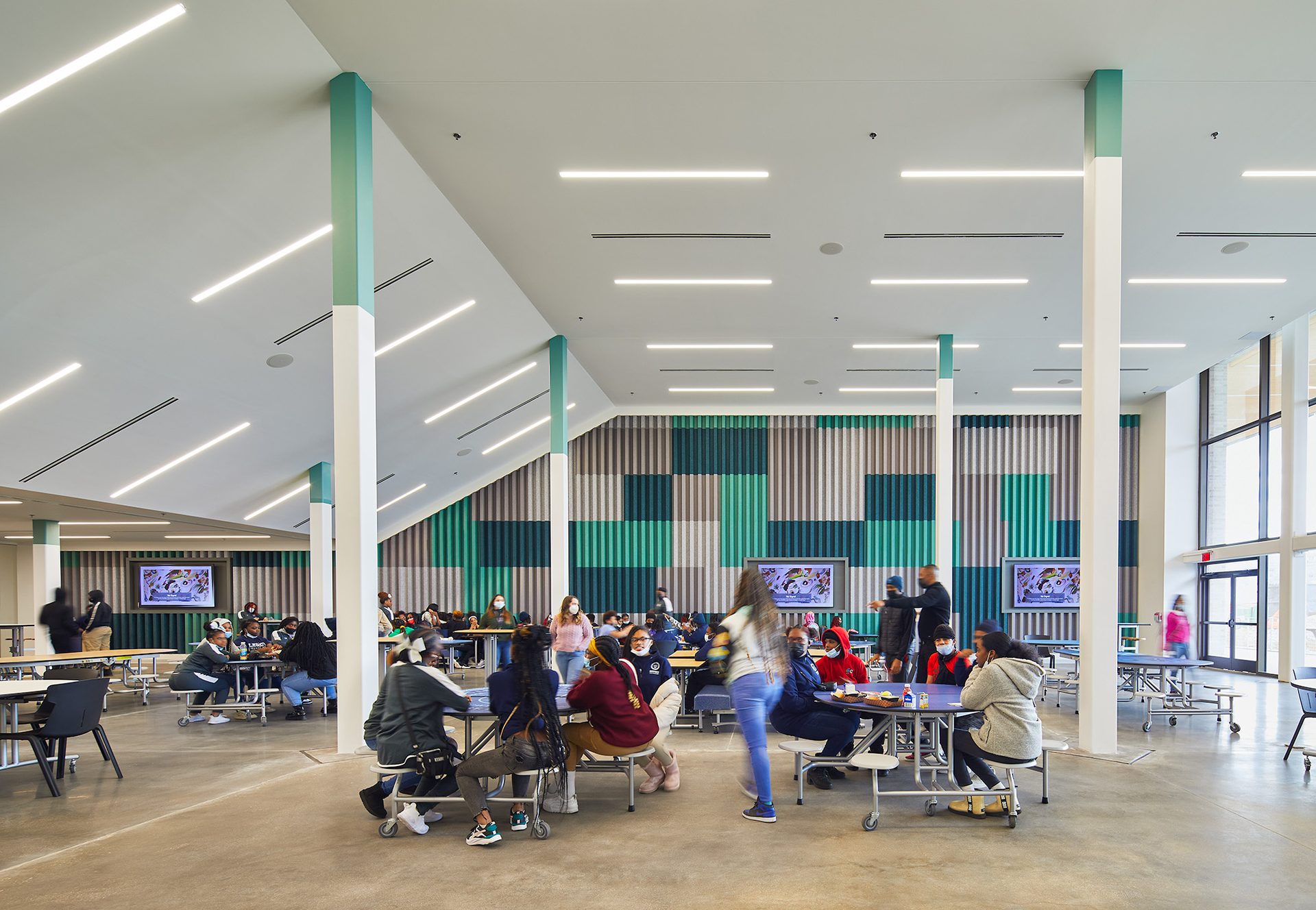
KIPP DC Legacy College Prep High School. Photos courtesy of Kirei | Ft. Kirei Barcode and Fold Tiles
Educational Environments
Sound can either enhance or disrupt the learning process. Studies show that strong acoustic performance can improve speech intelligibility by more than 35 percent, which directly impacts learning outcomes. Conversely, excessive noise and long reverberation times can derail student focus and contribute to teacher vocal strain. These challenges can be particularly severe for students with hearing impairments, learning differences, or sensory sensitivities, who face a significant barrier in educational facilities with poor acoustics.
Modern classrooms often feature open layouts and hard surfaces such as concrete, glass, smartboards/whiteboards and metal, materials that unintentionally amplify sound. Without effective sound management, these environments can easily become overstimulating and distract from learning.
Recognizing this, acoustic design is increasingly being integrated into the earliest phases of educational planning. Panels, tiles, baffles and other sound-absorptive solutions can help control reverberation, and support clearer communication and focus.
A strong example comes from Studio 27 Architecture’s work on KIPP D.C. Legacy High School. The multi-story, hard-surfaced building required acoustic intervention to improve comfort and intelligibility. By installing a series of wall panels, the team reduced unwanted noise while introducing vibrant color-coded elements that also served as wayfinding tools.
Ceiling treatments primarily control reverberation and overall ambient sound, while wall acoustics absorb and block sound at ear level to prevent noise from traveling between rooms and to reduce distractions from adjacent spaces. Paired together, these installations contributed to an inclusive, LEED Gold–certified school that enhances both teaching and learning.
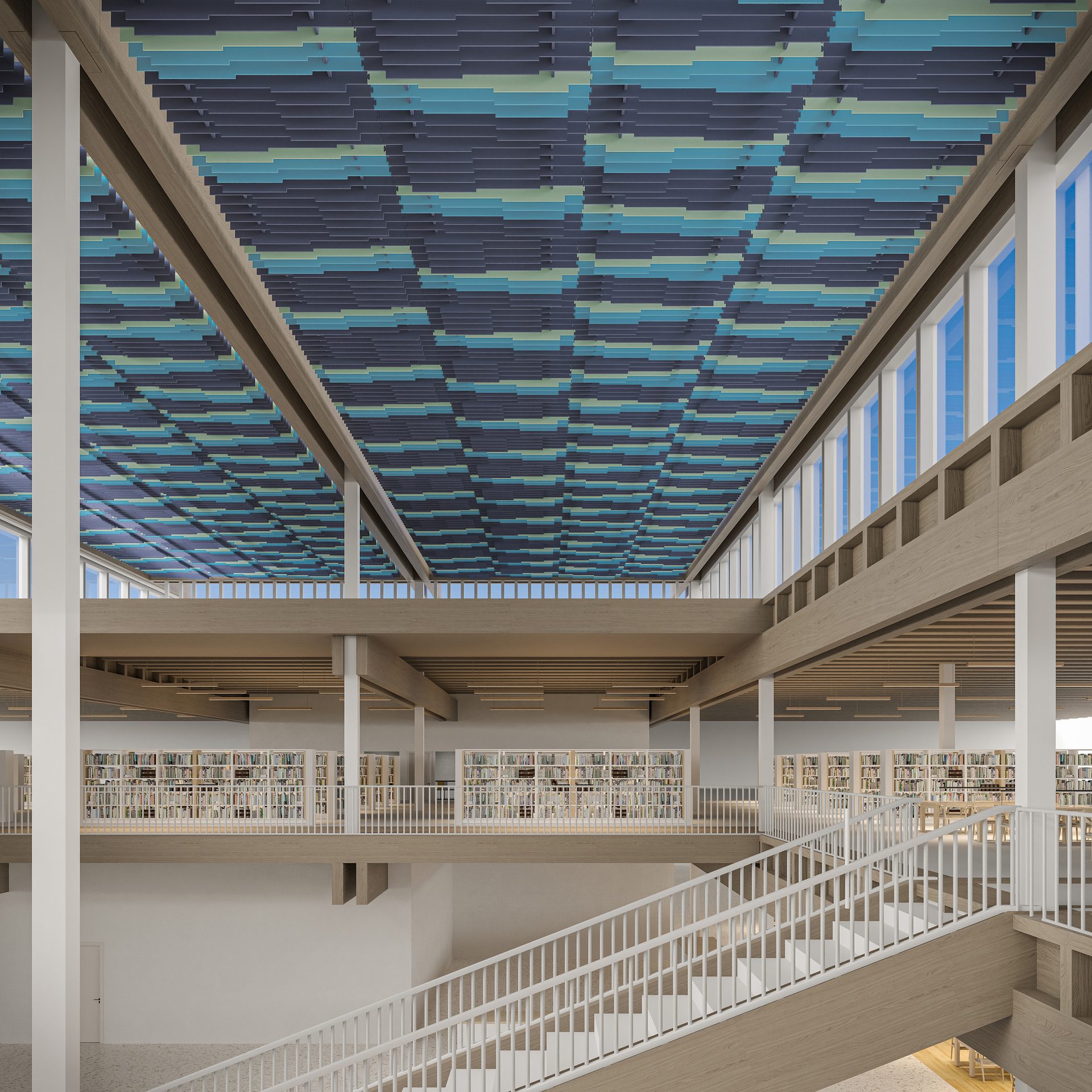
Kirei EchoSky Neu Steppe Baffle System
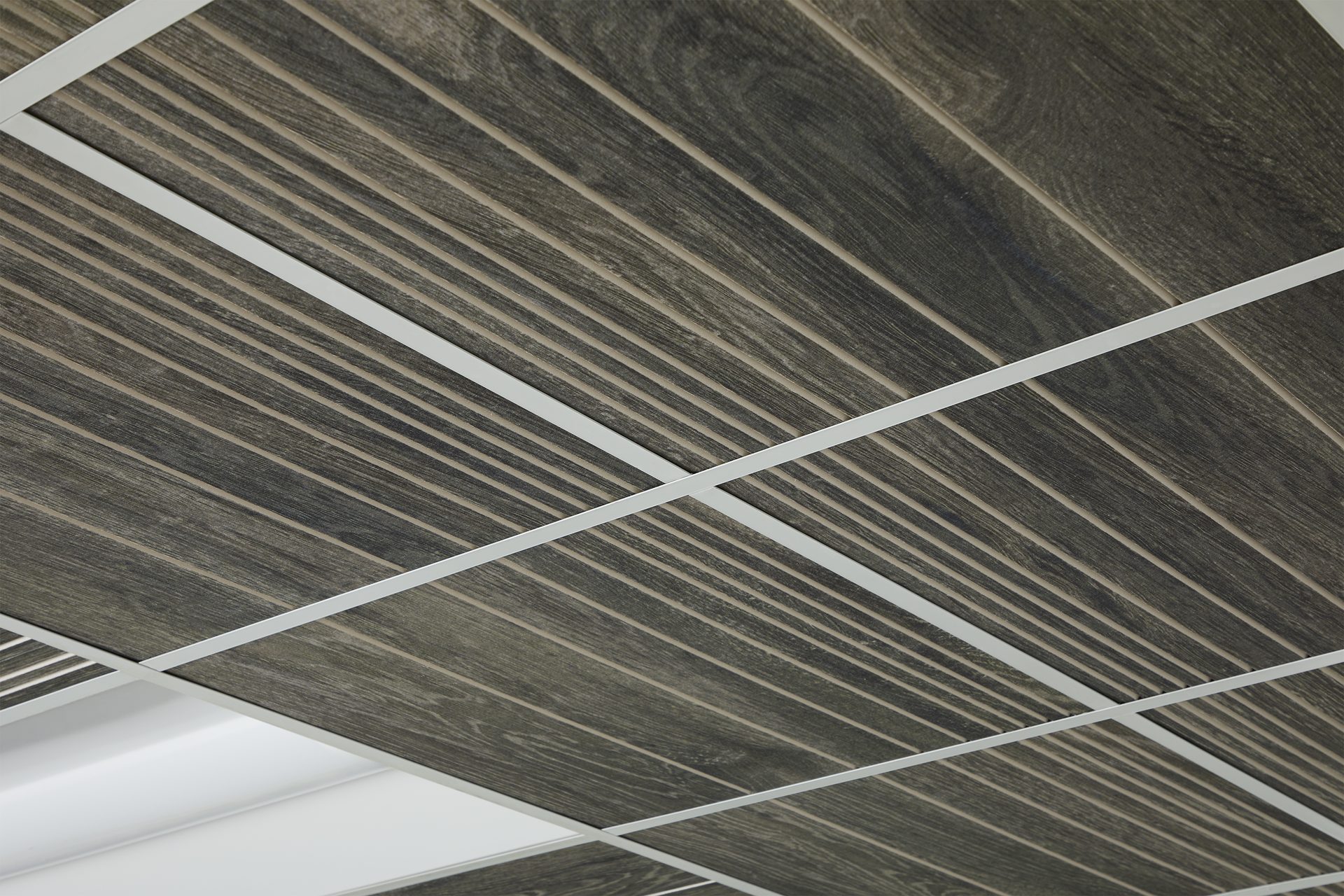
ACT Gather shown in Kirei Ink Wood Charred Oak
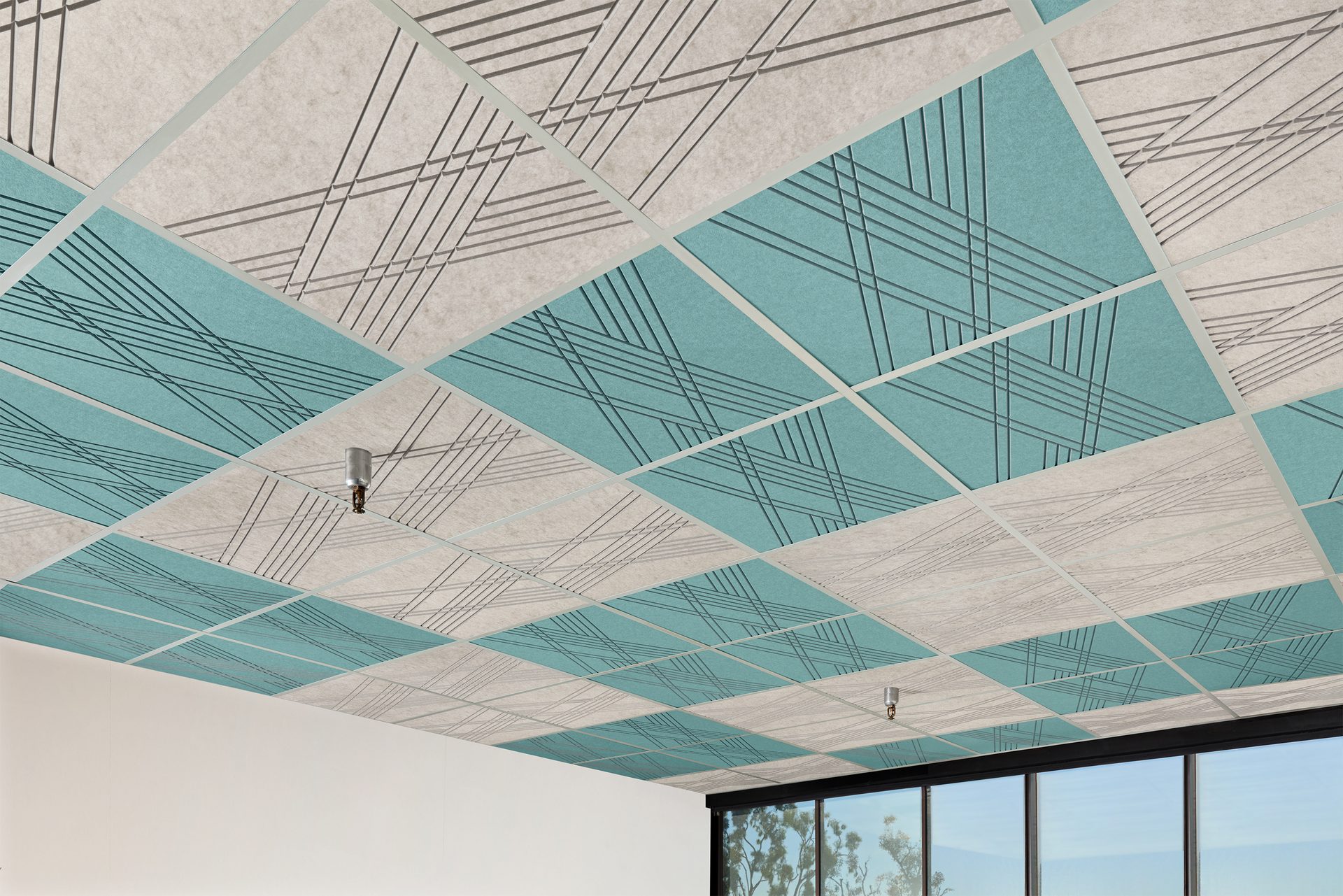
ACT Hatch shown in Duck Egg
Workplace Environments
Just as classrooms require careful sound design to support focus and accessibility, the same principles apply in workplaces, where acoustics can influence productivity, collaboration, and overall employee well-being.
Today’s offices have shifted from rigid layouts toward flexible, human-centered environments. The goal is to design spaces that support a range of work styles—not impose a one-size-fits-all approach.
Instead of workplace design dictating to employees, now, designers are curating offices around the way people actually work and interact. This means the end of cubicles and corner offices, and the beginning of more flexible and user-friendly working atmospheres. Creating an inclusive environment means introducing flexible workstations that accommodate different work styles and sensitivities, and acoustics are key to making this possible.
Strategies that support inclusivity in the workplace include:
- Flexible Workstations: Open workspaces allow more room for collaboration and movement but require sound absorption to remain functional. Adding textured or three-dimensional acoustic tiles helps reduce ambient noise while offering visual interest.
- Acoustic Ceilings: Glass walls can offer many of the same benefits as an open plan, but they negatively impact acoustics. Adding acoustic clouds, baffles, and ACT tiles to the ceiling helps to preserve the quiet of the room that glass may otherwise take away.
- Completely Private Meeting Places: While open office plans have their place, there are also times when a completely private area is necessary for sensitive talks or meetings. An acoustically insulated, fully wired meeting room gives you the opportunity to talk, stream, work and meet in complete silence and privacy if needed.
By integrating these approaches, designers can create workplaces that accommodate a diversity of sensory needs and work preferences, ultimately improving comfort and productivity.
Kirei EchoSky Neu Steppe Baffle System
Left: ACT Hatch shown in Duck Egg | Right: ACT Gather shown in Kirei Ink Wood Charred Oak
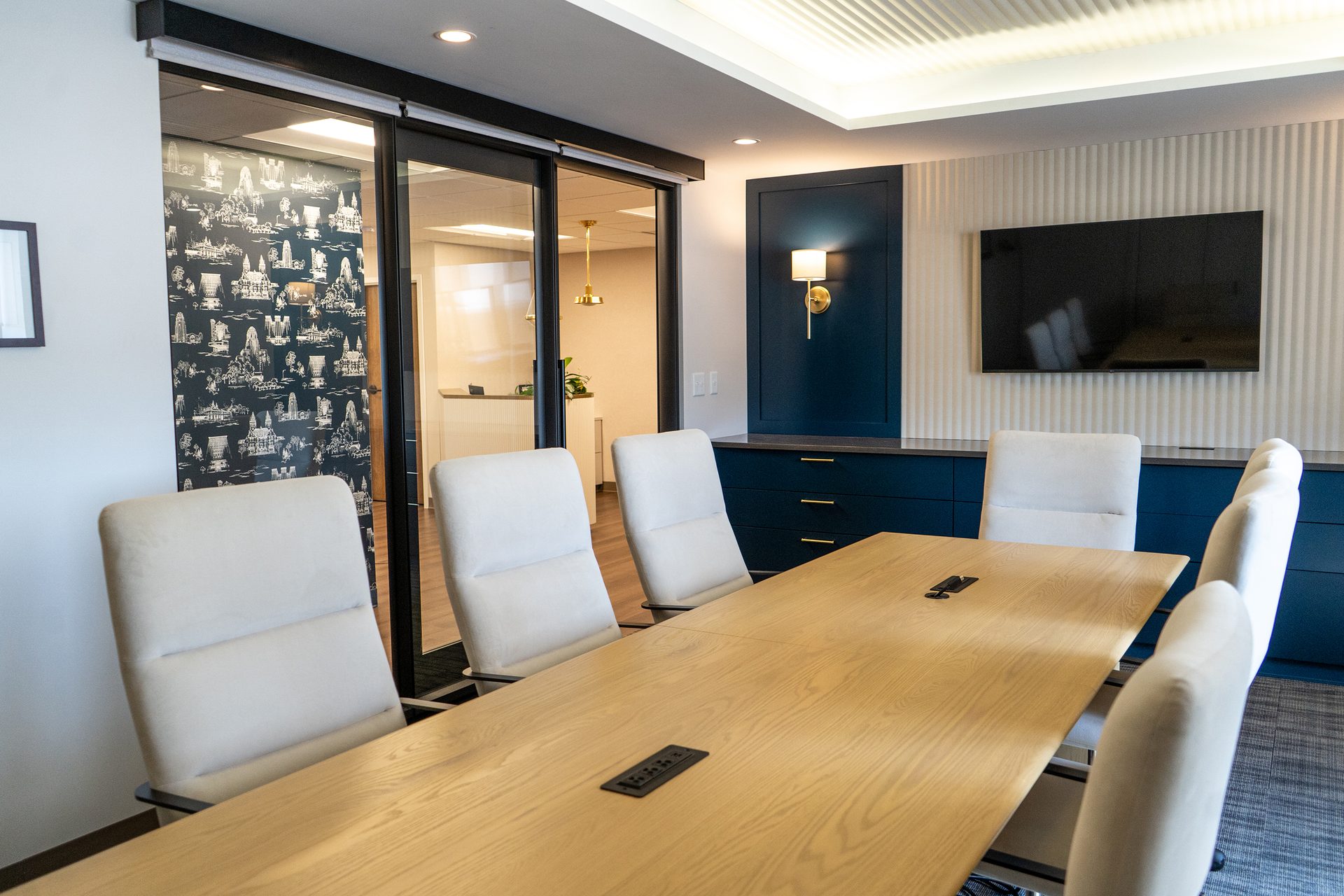
Primacy Financial Office in Buffalo, NY, designed by New Leaf Interiors featuring Kirei Zen Panels | Photography by Erin Kristine
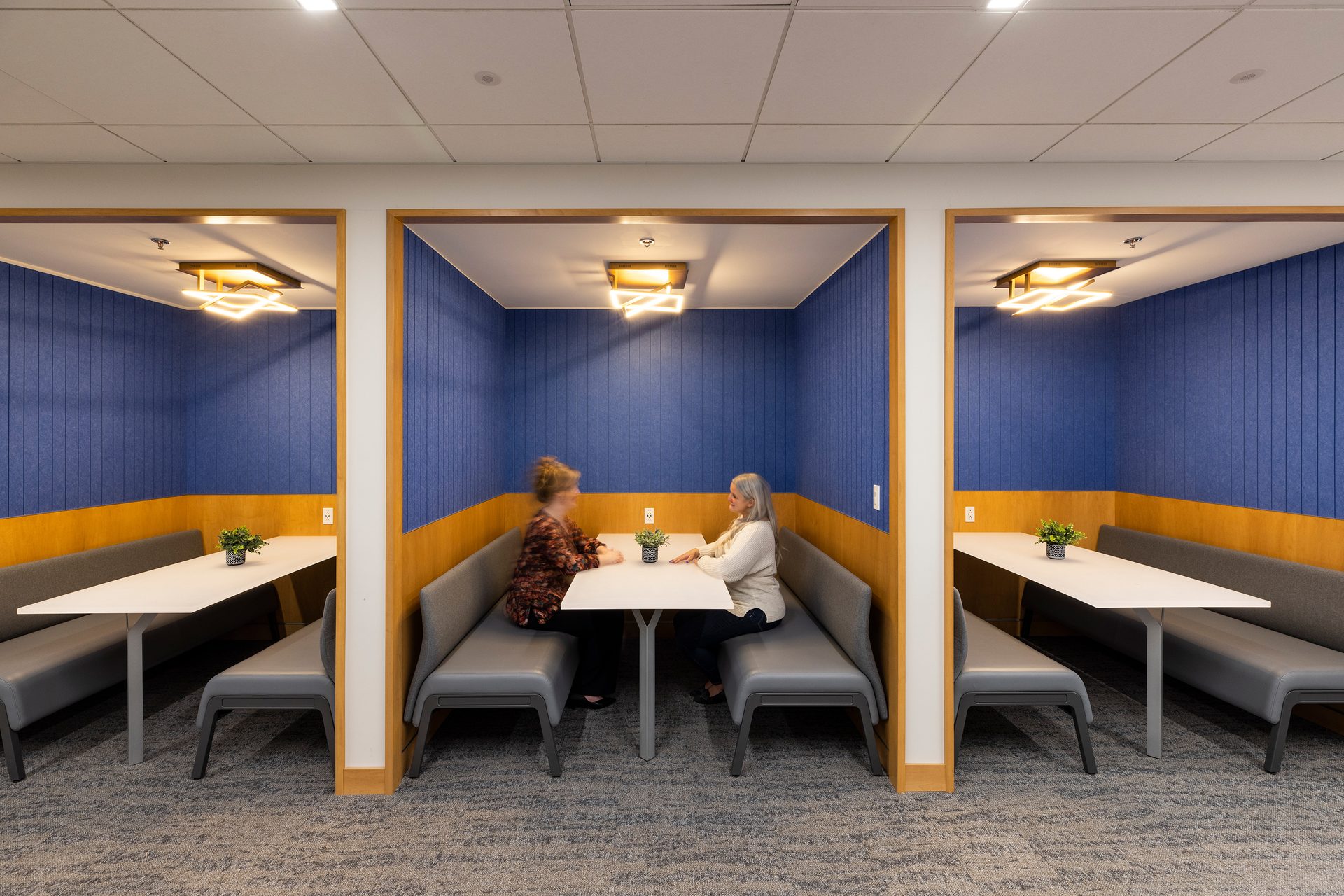
John Snow Inc.’s Boston HQ featuring Kirei EchoLine Groovy Panels 3.0 | Photography by Erin Kristine
Hospitality and Restaurant Environments
Designers of restaurants and hospitality spaces face a unique challenge: creating an acoustic environment that strikes the perfect balance between vibrant and intimate. It can be easy for guests to become overstimulated in a restaurant environment, and improved acoustics make dining experiences more enjoyable for guests with sensory sensitivities or hearing differences.
Many restaurants and event spaces are located in commercial buildings with exposed concrete, mechanical systems, and other hard surfaces that reflect sound rather than absorb it. These conditions can quickly make a space overwhelming. Without acoustic intervention, guests may struggle to hear one another, and background noise can become uncomfortable.
A crucial consideration is reverberation time—the amount of time it takes for sound to decay by 60 decibels. Long reverberation times create echoes and amplify noise, making conversation difficult and increasing overall loudness. Installing an acoustically engineered ceiling system is often one of the first steps in improving these environments. Ceiling treatments can soften reflection, reduce reverberation, and elevate the visual character of the space.

Marisi Restaurant in La Jolla, CA | Courtesy of Kirei
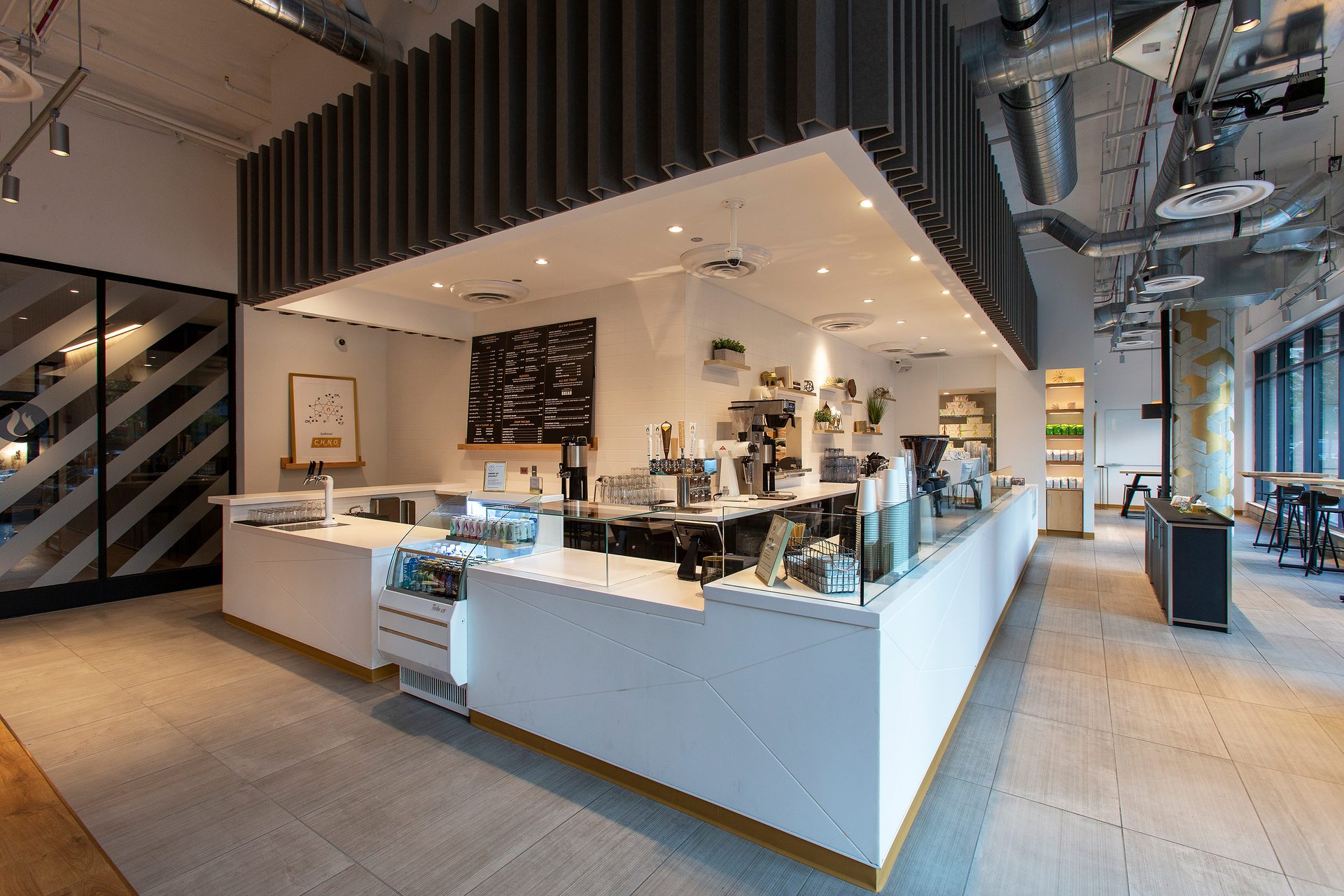
Limitless Coffee & Tea | Courtesy of Kirei
Among the other hard surfaces in hospitality spaces, tables are a major contributor to excessive sound reflection. Introducing soft fabrics like tablecloths will muffle reflections and subtly “turn down” the volume of the entire room. Additionally, strategic use of rugs, plants, and other soft, sound-absorbing materials can reduce echo and help control noise that might otherwise bounce off hard surfaces.
Once you have determined how loud (or quiet) your space needs to be, you can then start to implement some of the above strategies to execute an interior design that is both visually and acoustically balanced. Depending on the size and complexity of the space, engaging an acoustician can help ensure that the final environment strikes the right balance between vibrancy and comfort.
Thoughtful acoustic design isn’t just about controlling noise—it’s about shaping how people feel, focus, and connect. By prioritizing sound, designers can create environments that are not only beautiful and functional but also truly inclusive.
Whether you're designing an office space, classroom, or restaurant, considering ways to integrate acoustic solutions into the space, as well as their materials, is key to setting up occupants for long-term success and comfort.
Images courtesy of Carnegie Acoustic Solutions.
Michael DiTullo has been designing iconic products for some of the world’s biggest brands for more than 20 years. He has worked with Nike, Google, Honda, Timex, Chantal, Converse, Motorola and has been collaborating with Kirei since 2019. Prior to starting his eponymous design studio Michael, was Chief Design Officer for Sound United, parent company of Denon, Marantz, Polk, and Definitive Technology, where he oversaw industrial design, UX, packaging, product management, and marketing creative. He also spent several years as creative director for frog design’s San Francisco studio and nearly a decade at Nike where he worked directly with Michael Jordan, Carmelo Anthony, Derek Jeter, and Dwayne Wade.