Why commercial buildings keep underperforming—and how continuous, integrated wall systems can finally align building physics, codes, and construction reality. By Brian Iverson
The Next Leap in Commercial Building Performance: Solving Thermal Bridging and the Control-Layer Gap
xxxxx. xxx
xxxxx
xxxxxxxxx
xxxxxxxxxxxxxxx By xxxxxxxx
h2 - xxxx
h3 - xxxx
H1 headline
Walk onto any commercial jobsite and you’ll see a familiar rhythm: steel studs, long spans, compressed schedules, and multiple trades moving fast. Commercial construction is efficient, coordinated, and highly engineered. Architects and engineers spend enormous effort detailing assemblies, modeling performance, and selecting materials.
Yet despite all that expertise, the industry is still missing a critical piece: a duplicatable exterior wall system that performs reliably across climate zones, wind loads, and seismic conditions.
Codes change. Materials evolve. Climates vary. But the physics never do. And those physics are forcing a shift.
Thermal Bridging: The Pressure Point
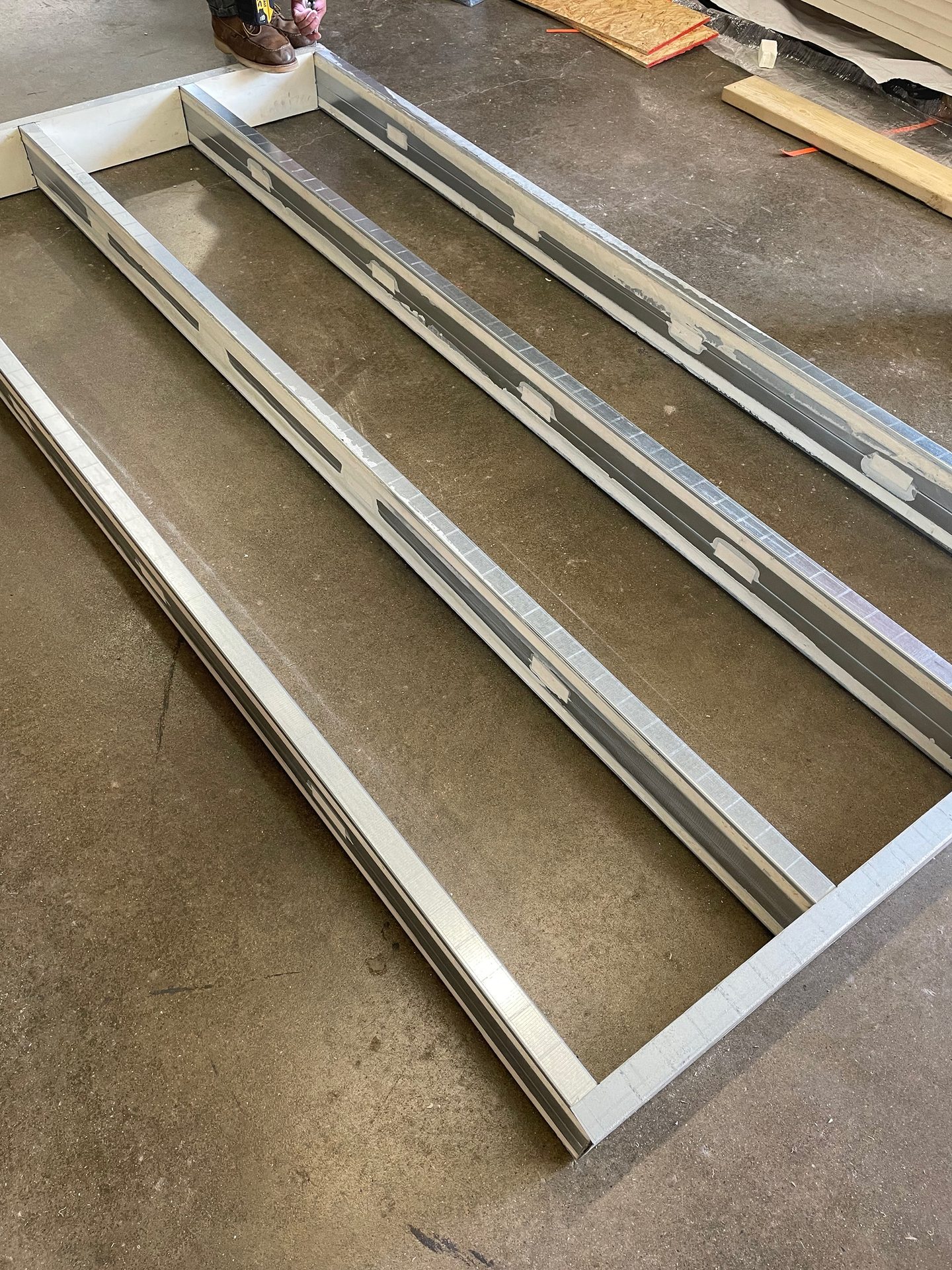
One of the biggest forces reshaping commercial design today is thermal bridging. Steel studs are exceptional structural members—but they are also highly conductive. Heat moves through steel so efficiently it’s often described as a hot knife through butter.
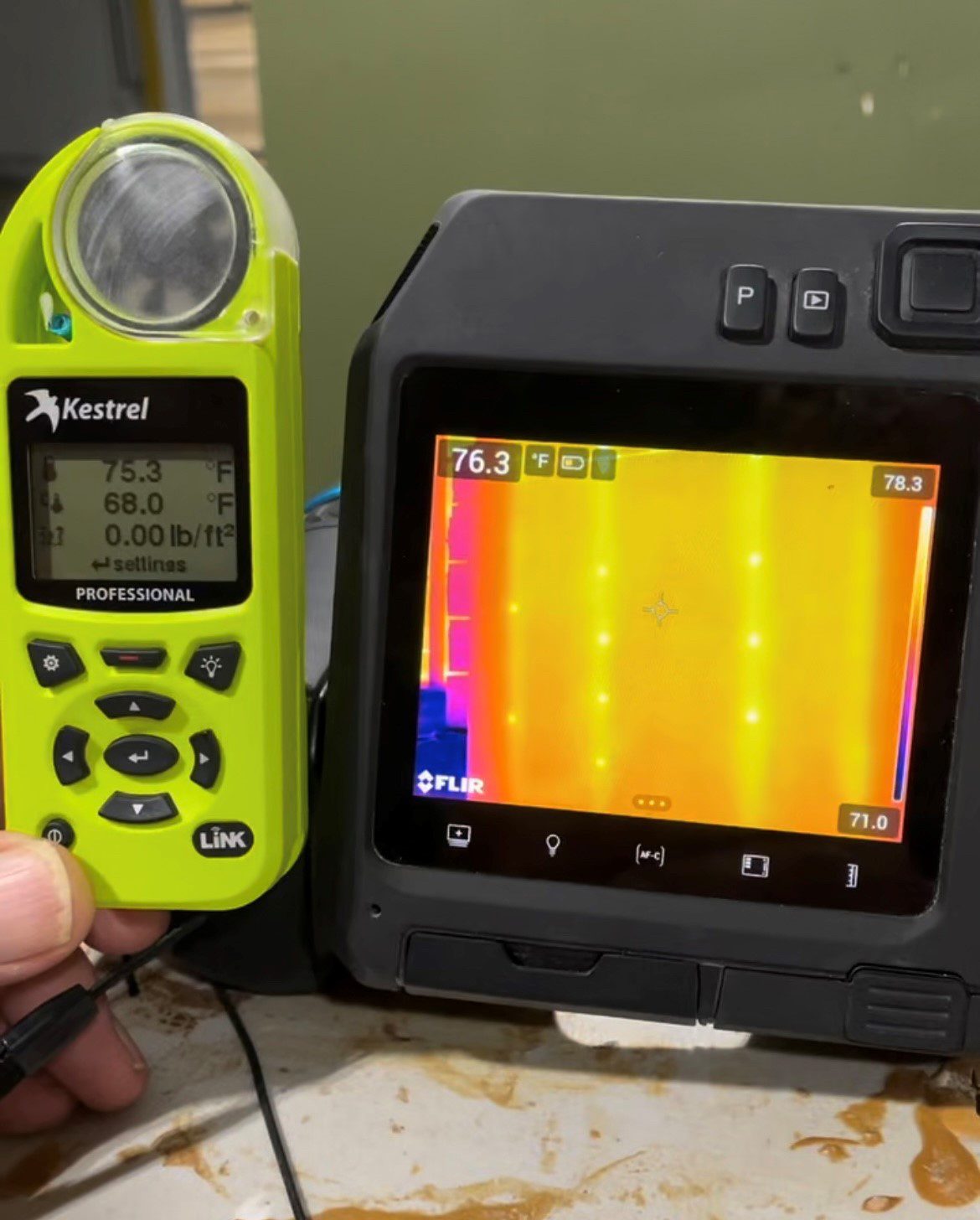
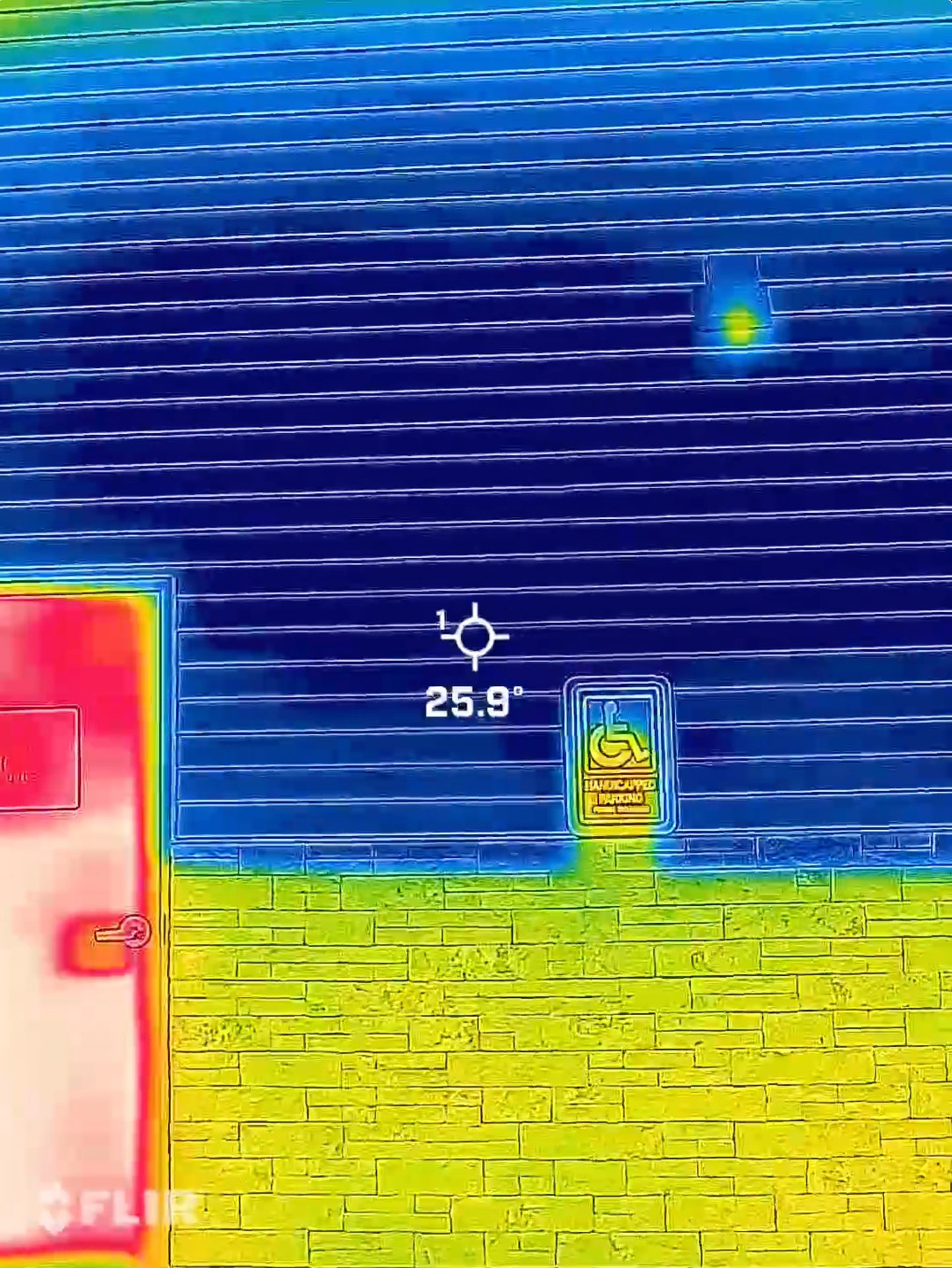
Even with perfectly installed cavity insulation, heat bypasses the insulation by flowing directly through the studs, tracks, and headers. Thermal imaging makes this instantly visible: a bright ladder pattern at every stud line.
Energy codes are responding. Many jurisdictions now require a minimum 2-inch continuous exterior thermal break for commercial walls, and adoption is accelerating. These requirements aren’t arbitrary—they’re rooted in basic building physics. Without a continuous thermal layer:
- Energy use increases
- Condensation risk rises
- Mechanical systems must be oversized
- Comfort declines
- This is not a failure of steel
- It’s a failure of the assembly
A New Jersey office designed by Gensler, featuring a NanaWall HSW60 single-track system | Photography by Garrett Rowland Photography
The office of an Omaha financial institution designed by Alley Poyner Macchietto Architecture, featuring a Generation 4 acoustical, folding glass wall system.
Caption Goes Here
Caption Goes Here
Caption Goes Here
The Real Problem: Fragmented Control Layers
Commercial buildings don’t need better individual products—they need continuous systems.
Every building enclosure must manage a coordinated set of control layers:
- Thermal
- Air
- Vapor
- Bulk water
- Drainage
- Capillary break
- Fire control
- Sound control
- Structural control
- Wind and seismic forces
- (Where allowed) passive ventilation pathways
The industry understands these layers. What’s missing is continuity.
On many projects, one or two layers are well executed while others are fragmented across trades, schedules, or transitions. That fragmentation shows up later as:
- Energy loss
- Condensation
- Indoor air quality issues
- Comfort complaints
- Premature material degradation
You can specify premium sheathing, flawless insulation, and a top-tier WRB—but if the layers aren’t connected, performance collapses. Thermal imaging rarely reveals product failures. It reveals system failures.
Steel Stud Walls: Strength with a Thermal Cost
Steel studs provide straight walls, predictable spans, fire resistance, and speed. They are indispensable to modern commercial construction. But thermally, they come at a cost.
Steel transfers heat hundreds of times faster than wood.
- In heating climates, interior heat flows outward
- In cooling climates, exterior heat pushes inward
Either way, the assembly loses performance. Even a perfect spray foam installation cannot eliminate thermal bridging. Foam excels at air sealing and vapor control, but it cannot create continuity on its own.
That reality leads many project teams to ask a critical question: Can commercial wall panels arrive with the control layers already integrated? The answer is yes.
Integrated and panelized envelope systems already exist—not as marketing concepts, but as proven strategies to improve quality, reduce risk, shorten schedules, and meet tightening codes.
Moisture: The Quiet Risk
Steel doesn’t rot—but everything around it can. In mixed climates, moisture moves in both directions through wall assemblies. When vapor control is misplaced or discontinuous, condensation can occur on steel flanges, sheathing, or fasteners.
High-humidity occupancies—restaurants, pools, laboratories, gyms—behave very differently from offices or classrooms. Assemblies must reflect those realities.
Spray foam dramatically reduces air leakage and moisture migration, but long-term durability depends on integration, not the product alone.
Moisture problems are rarely caused by bad materials. They’re caused by systems that don’t work together.
The Opportunity: Integrated Envelope Planning
Commercial contractors already excel at coordination—managing structure, sequencing, inspections, and trades. When the building envelope is planned with the same discipline, the benefits compound:
- Fewer RFIs
- Fewer callbacks
- Improved schedule control
- More predictable mechanical loads
- Lower operating costs
- Better comfort and IAQ
- Longer building lifespan
Spray foam contractors benefit as well. Air control becomes far more reliable when surrounding layers are continuous and predefined.
Not a Budget Problem—A Physics Problem
High-performance commercial buildings are not inherently expensive. But operating a poorly performing building for 30–40 years is.
Owners pay the price through:
- Elevated energy bills
- Comfort complaints
- Early mechanical replacement
- Moisture damage
- IAQ failures
Most of these issues originate from envelopes that never functioned as unified systems.
Conclusion: Better Assemblies, Not More Materials
The direction of commercial construction is clear:
- Codes are tightening
- Continuous thermal breaks are becoming mandatory
- Air leakage limits are shrinking
- Owners want predictable performance
The future isn’t about hero products or one-off innovations. It’s about coordination, continuity, and building physics.
When exterior walls are delivered as true systems—continuous thermal control, continuous air control, and aligned moisture management—construction becomes simpler, buildings become healthier, and operating costs drop for decades.
The future is integrated, panelized, and code-driven. The systems already exist. We simply need to assemble them with continuity and intention.
Images courtesy of Brian Iverson/Carbonless.
Brian Iverson is an inventor, builder, designer, and building-science educator focused on helping the industry deliver truly climatized, energy-efficient structures.
He runs Carbonless.org, a nonprofit dedicated to teaching smarter, healthier, and more affordable building practices. Learn more at carbonless.org or contact Brian at hello@carbonless.org.