The Blueprint for Innovation Begins with a Universal Language for Building Materials
To unlock efficiency, sustainability and true collaboration in the building industry, we must create and adopt a shared, data-driven language for materials—just as BIM once did for design.
Dave Lemont
INDUSTRY VOICES
Twenty years ago, our industry embraced a seismic shift. The adoption of building information modeling platforms like Revit created a universal language for design, transforming how we visualize, document and construct buildings. The 3-D model became our Rosetta Stone, allowing architects, engineers and contractors to speak a common dialect of space and form.
Yet, a fundamental piece of our professional vocabulary remains fragmented, leading to costly inefficiencies and missed opportunities. We have a language for design, but we lack one for materials.
This gap in our technological ecosystem is more than an inconvenience; it’s a critical vulnerability. Materials account for roughly 40 percent of a building’s cost, and the decisions surrounding them have far-reaching consequences. These choices influence not just the final aesthetic but also a project’s performance, its environmental impact and its long-term viability. Without a shared, standardized language for materials, we operate in a state of perpetual mistranslation.
The Cost of Fragmented Material Knowledge
The current process is a patchwork of siloed knowledge. Architects rely on a combination of personal experience, outdated office libraries and fragmented manufacturer data. Specifications are often built on a foundation of scattered spreadsheets and disconnected product sheets. This creates a telephone game where an architect’s design intent can be diluted or misinterpreted at every step. The owner may have one understanding of "high-performance," the architect another, and the contractor a third, leading to value engineering that feels more like a compromise than a collaboration.
Consider the simple request for “durable, sustainable cladding.” For an architect in a coastal region, this implies corrosion resistance and the ability to withstand salt spray. For a client in a northern climate, it means resilience to freeze-thaw cycles. For a sustainability consultant, it points toward low embodied carbon and recycled content. Without a system to define and weigh these attributes, and a consistent way to represent and compare them across product manufacturers, the selection process becomes subjective and fraught with risk. This ambiguity leads to miscommunication, last-minute substitutions and project outcomes that fail to meet the original vision.
The challenges have been magnified by recent global events. Unpredictable supply chains have made relying on "go-to" products a risky proposition. Economic pressures force project teams to make rapid substitutions, often without the time or tools to fully vet alternatives. Simultaneously, the moral and regulatory imperative to address climate change demands a deeper understanding of a material’s entire lifecycle. The old way of doing things is simply no longer adequate.
Building a Common Language Through Data and AI
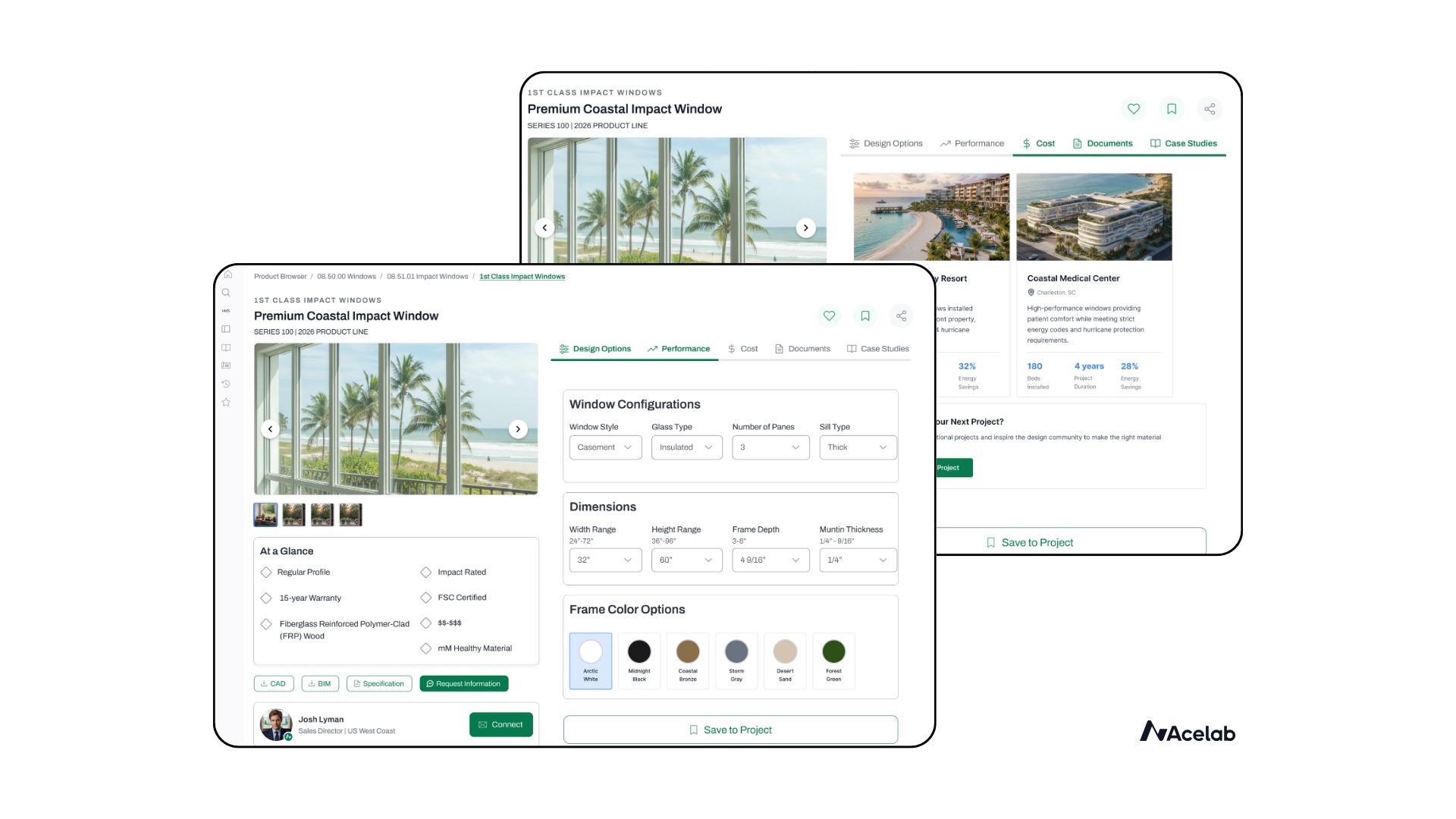
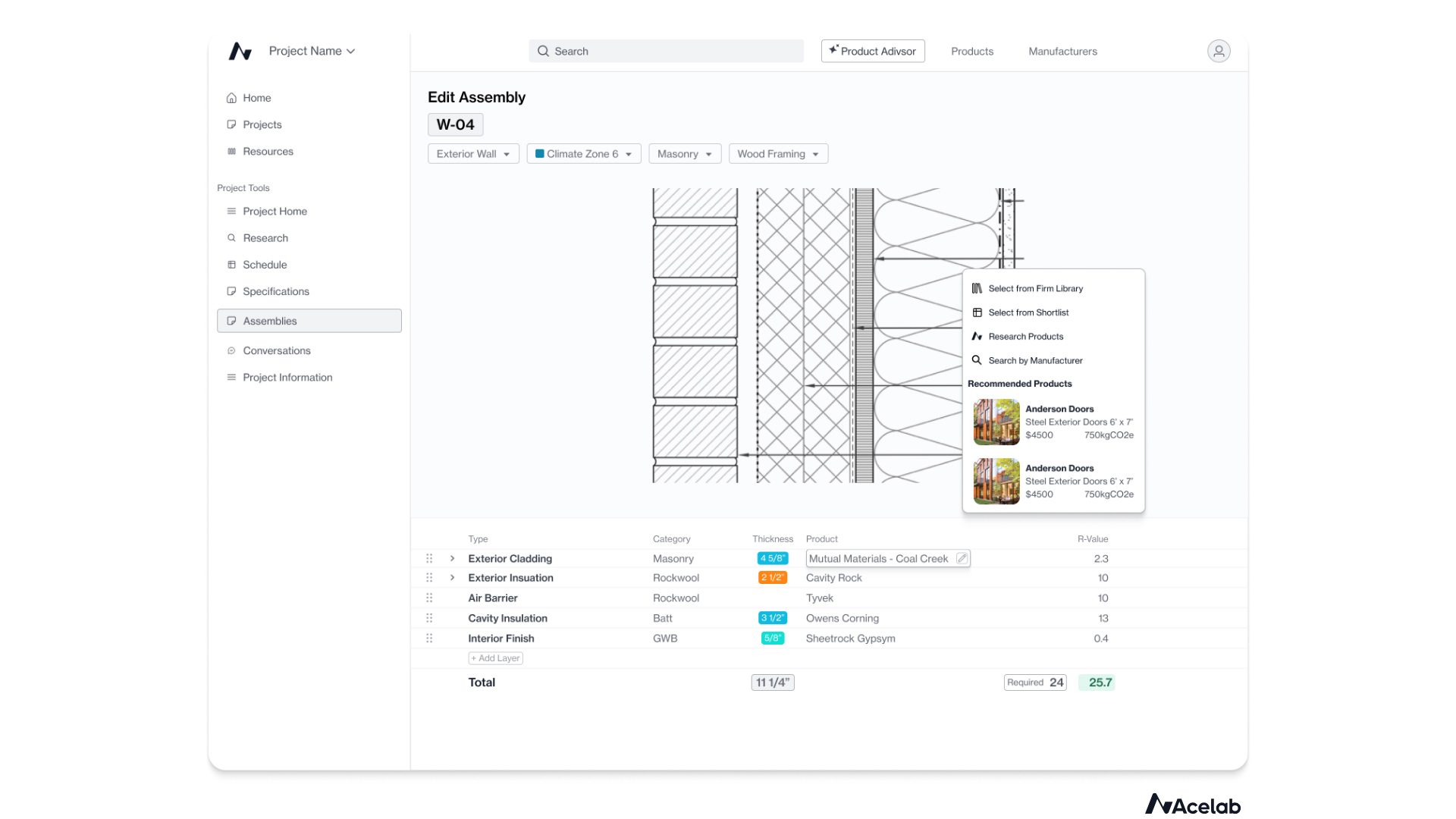
The solution is a common language for materials, a unified, data-rich and easily searchable framework that allows all stakeholders to communicate with clarity. Imagine a system where product data isn’t just a collection of PDF cut sheets but a dynamic, structured language capturing every critical attribute, from technical performance and regional pricing to environmental impact and installation requirements.
By leveraging AI, this common language platform can become even more efficient as it rapidly interprets requests to refine priorities like performance, cost and sustainability while using vast datasets to identify eco-friendly alternatives and optimize supply chains to reduce environmental impact. As architects use the platform, the AI learns from their decisions, continuously improving its ability to recommend products for future projects. This creates a powerful feedback loop where every interaction enhances the system’s collective intelligence, benefiting the entire industry.
This isn’t a theoretical exercise. We can look to other industries for precedent. In manufacturing, the adoption of standardized parts and digital twins has revolutionized production, enabling global collaboration and incredible efficiency. In medicine, standardized terminologies allow for the seamless sharing of patient data, improving diagnoses and treatment outcomes. The building industry, with its complex web of collaborators, is overdue for a similar evolution.
Adopting unified material terminology offers immediate, profound benefits. For instance, a design team specifying a high-performance, budget-friendly window system in the Pacific Northwest could filter options using precise U-values, dimensions and local costs via a shared material platform. When their initial choice faces supply chain delays, they wouldn’t restart their research. Instead, they could quickly identify three viable alternatives meeting the same criteria, providing the client and contractor with transparent cost and lead time data. This seamless workflow avoids weeks of uncertainty and delays.
This is the power of a common language: it transforms adversarial negotiations into collaborative problem-solving. It allows an owner to define standards across an entire portfolio, ensuring consistency and quality. It enables a manufacturer to clearly communicate a product’s unique benefits, connecting them with architects who need that exact solution. It empowers a contractor to understand constructability requirements upfront and suggest value-added alternatives that align with the original design intent.
A Foundation for Sustainability and Industry-Wide Change
A shared material language is the key to unlocking true innovation in sustainability. Architects are on the front lines of the climate crisis, and material selection is one of our most powerful tools for change. The building industry contributes nearly 40 percent of global carbon emissions, a staggering figure that carries with it immense responsibility. A common language for materials makes sustainability data actionable. It moves environmental product declarations, embodied carbon metrics and material ingredient disclosures from supplementary documents to filterable attributes at the moment of decision.
When an architect can compare the embodied carbon of two functionally equivalent insulation types as easily as they compare their R-values, the choice becomes clear. This elevates sustainability from a “nice-to-have” to a core project metric, on par with cost and performance. By aligning with frameworks like LEED, WELL and the Living Building Challenge, a shared platform empowers architects to be stewards of the environment without sacrificing project goals.
So, how do we, as an industry, move toward this more integrated future? The shift requires both technological and cultural commitment from all stakeholders.
For architecture firms, the first step is to look inward. Begin by digitizing and standardizing your firm’s own material library. Move away from physical binders and scattered files toward a centralized, accessible knowledge base. Document not just what products you use, but why you use them. Capture performance insights, lessons learned from past projects and preferred supplier relationships. This internal library is the foundation of your firm’s institutional memory.
Next, embrace platforms and tools that are built on a structured material language. Encourage your teams to use these systems for product research and specification. The more we engage with these data-rich environments, the more we reinforce their value and contribute to a collective intelligence that benefits the entire industry. This creates a network effect; as more firms adopt a shared language, its power to streamline communication and drive better outcomes grows exponentially.
For manufacturers, the call to action is to embrace data transparency. Provide clear, structured and comprehensive information about your products. This goes beyond marketing brochures to include detailed performance data, EPDs and accurate availability information. By contributing to this common language, you make it easier for architects to discover, understand and specify your products with confidence.
Ultimately, the goal is not to replace the architect’s expertise but to augment it. A common material language, amplified by technology, provides the data-driven foundation needed for informed, creative and responsible decision-making.
The 3-D model will always be central to how we communicate design intent, but to build the sustainable, resilient and beautiful buildings of the future, we need to speak with equal clarity about the very stuff they are made of. By building and adopting a common language for materials, we can finally bridge the gap between inspired design and intelligent execution, ensuring our work is not only visionary but also viable.
Pull Quote Background Image Credit: sankai / iStock / Getty Images Plus via Getty Images.
Dave Lemont is Executive Chairman of Acelab, a company that provides AI-powered material management. He brings more than three decades of experience in scaling software companies. He has held five CEO roles and ten board member positions, specializing in building winning go-to-market strategies. Dave’s leadership has led to several successful acquisitions. As CEO of Revit Technology, he guided the company’s 2002 acquisition by Autodesk. He was also CEO of AppIQ (acquired by HP), Kuebix (acquired by Trimble) and Currensee (acquired by Oanda). Earlier in his career, he served as COO at Concentra, leading the company through an IPO and its eventual sale to Oracle. Through his firm, Lemont Consulting, Dave has guided hundreds of entrepreneurs and acts as an advisor to innovative construction tech startups like Higharc and Augmenta. He holds a Bachelor of Science from Bucknell University.