Ten applications show how cold-formed steel (CFS) helps contractors deliver better performance, speed and resilience across today’s most demanding projects. By Marco Johnson
Modern
Steel Framing
xxxxx. xxx
xxxxx
xxxxxxxxx
xxxxxxxxxxxxxxx By xxxxxxxx
h2 - xxxx
h3 - xxxx
H1 headline
Choosing the right framing material doesn’t just affect cost—it defines what a project can become. Cold-formed steel framing has long delivered strength, precision and value in construction. Today, specialty contractors are taking it far beyond straight walls and standard partitions, using CFS to solve problems in ways other materials can’t.
From curved window openings and sculptural architectural forms to wildfire recovery housing and chase walls, CFS has become a problem-solving material of choice. Its dimensional stability, light weight and resilience let contractors build faster, waste less, and fulfill complex design intents.
What follows is a collection of advanced CFS applications. It’s a field guide to what’s possible: Ten ways to turn steel framing into your competitive advantage.
1. CFS-Framed Rounded Windows
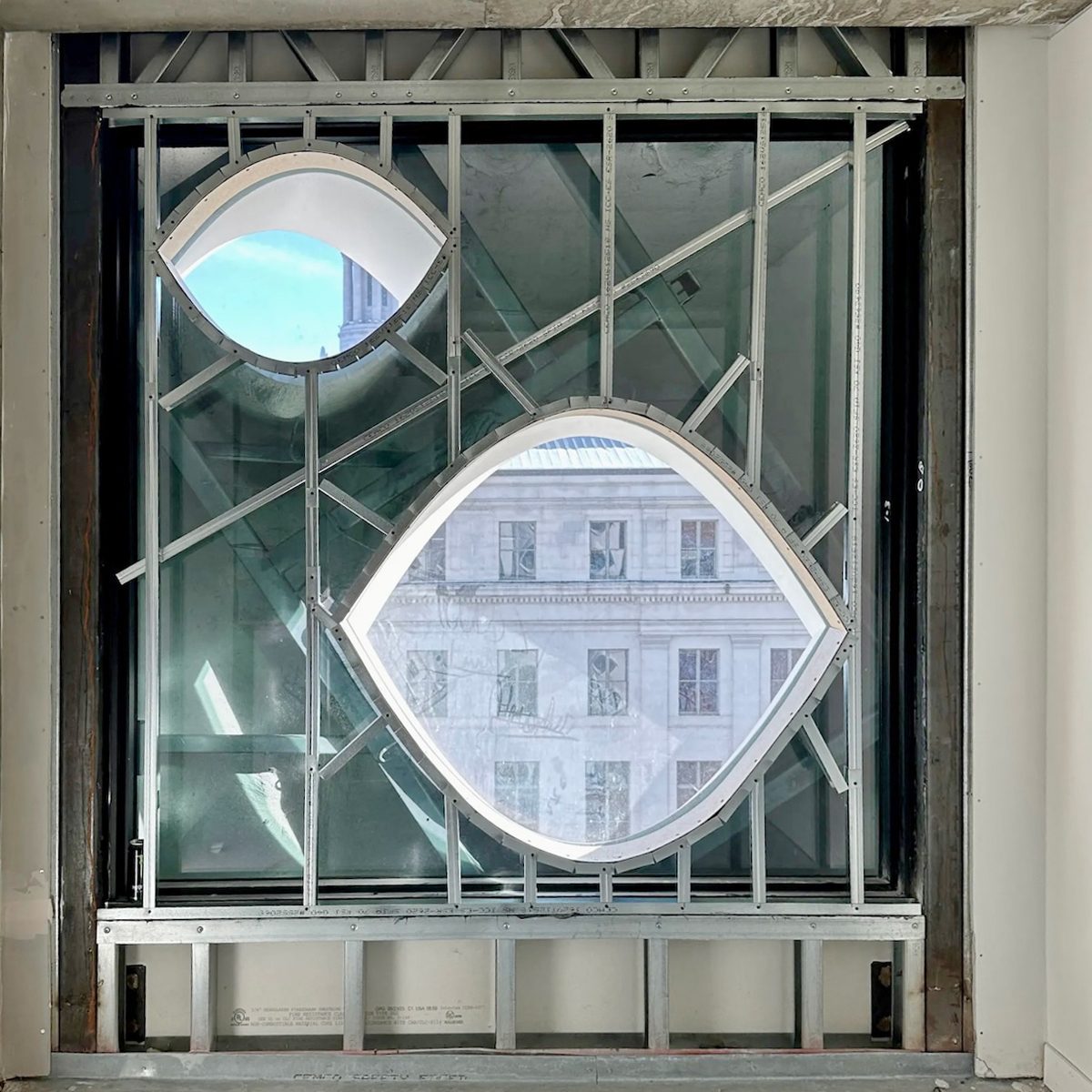
In Denver, 4K Painting & Drywall installed cold-formed steel in the interiors of Populus hotel, a 13-story structure with unique sculpted windows. Each window is crowned with a subtle overhang—an architectural “eyelid”—that shields interiors from sunlight and reduces energy demand.
The specialty contractor, 4K Painting & Drywall, had the interior scope, which included framing the eye-shaped and tear-drop-shaped window openings by hand on site. This called for curved CFS components with bridging and bracing to support the openings.
CEMCO, which supplied 150 tons of cold-formed steel components for the project, says the CFS framing provided strength, cut costs and helped achieve the architect’s unusual design intent. The interior framing at Populus won the Steel Framing Industry Association Industry Project and Product Award in the Architectural Design Detail category.
Cold-formed steel (CFS) framed the window openings of all shapes and sizes at Denver’s Populus hotel. Image courtesy of CEMCO
2. CFS-Framed “Sculptures”
In May 2025, Universal Orlando Resort celebrated the grand opening of Universal Epic Universe. The theme park transports guests to five imaginative worlds, one being Dark Universe. Dark Universe features stories of unearthly legends like Dracula, The Wolf Man, Frankenstein’s Monster and more.
KHS&S Contractors used 550 tons of cold-formed steel to frame Dark Universe’s asymmetrical structures, overlapping roof lines and sinking chimneys; a variety of configurations, angles and slopes. Two towers reach 90 feet in height.
Cold-formed steel framing reduced the weight of the facades compared to plaster and cast product alternatives. KHS&S and won the Judges’ Choice award for Dark Universe in SFIA’s most recent Industry Project and Product Awards competition.
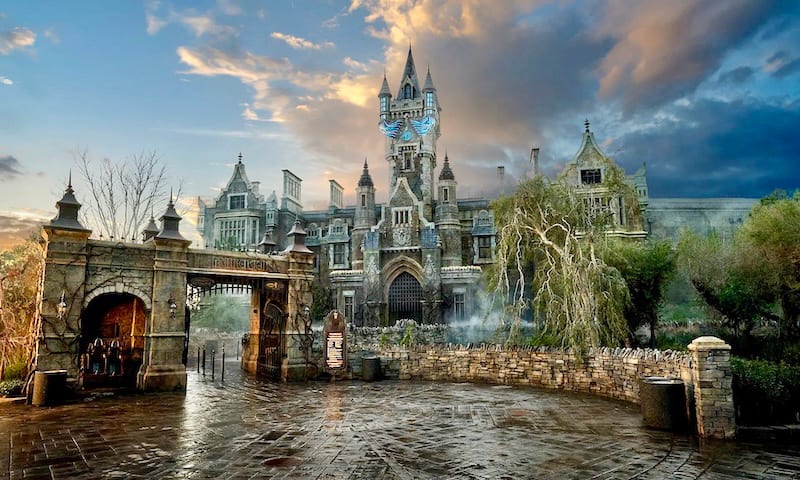
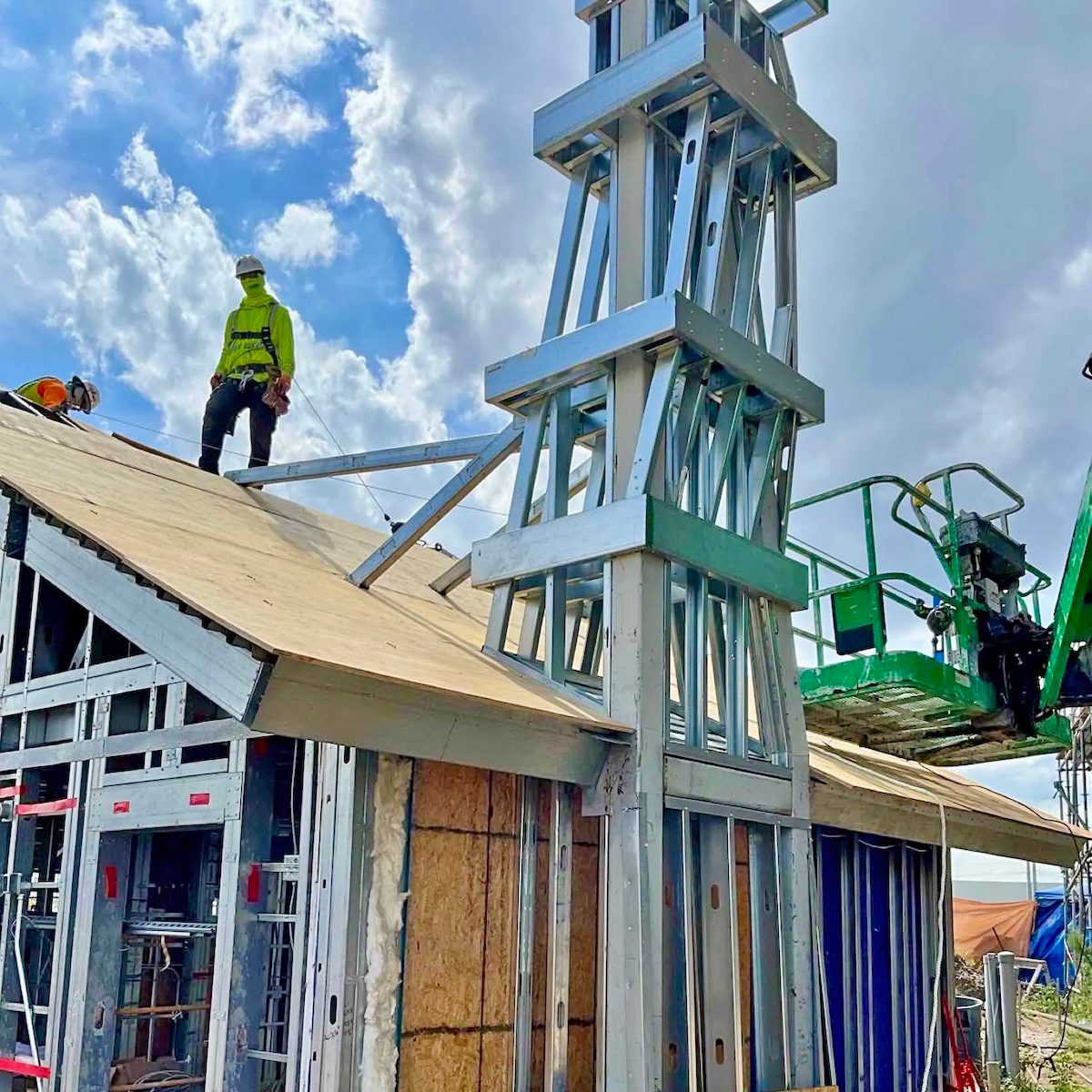
At the Universal Epic Universe theme park, Dark Universe, cold-formed steel (CFS) studs frame fantasy structures. Top image courtesy of KHS&S; publicity image from Universal
3. CFS-Framed Pods
As modular and offsite construction gains traction, wall and ceiling contractors are finding new ways to expand their scope (and value) by delivering prefabricated, steel-framed pods for complex projects.
At the Cleveland Clinic’s Lerner Research Institute, R.G. Construction Services framed 44 modular research lab pods, each weighing roughly 10,000 pounds. Engineering firm R.A. Smith designed the CFS-framed pods. R.G. Construction built them off-site with a nine-person crew. The approach reduced staffing by 21 tradespeople and saved 48 total crew days, according to R.G. Construction. The project earned a CFSEI Design Excellence Award for its CFS framing design and pod system.
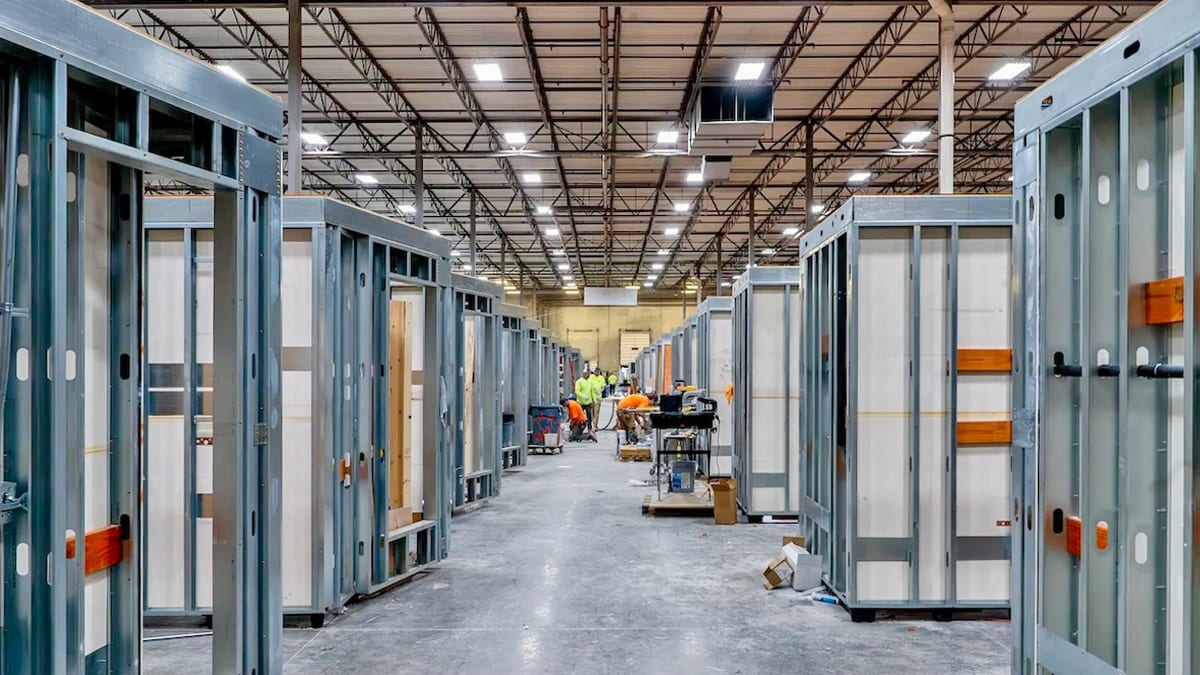
A similar prefabrication strategy played out on a larger scale in St. Louis. T.J. Wies Contracting, Inc. supported the construction of a new 16-story tower at Barnes-Jewish Hospital by prefabricating 277 bathroom pods and 224 headwalls for just-in-time delivery. The project relied on 107 tons of cold-formed steel framing to meet an aggressive construction schedule.
Engineers designed the bathroom pods without traditional floors, allowing ceiling assemblies to carry the structural loads during hoisting. CFS provided the rigidity needed to lift fully tiled pods while protecting grout lines and interior finishes from damage. The project was completed with zero reported injuries.
The healthcare pods earned T.J. Wies an SFIA Industry Project Award, reinforcing how CFS framing enables contractors to deliver precision, high-volume results.
T.J. Wies Contracting prefabricated 277 bathroom pods and 224 headwalls for a healthcare project in St. Louis. Image courtesy of T.J. Wies
4. CFS-Framed Panels
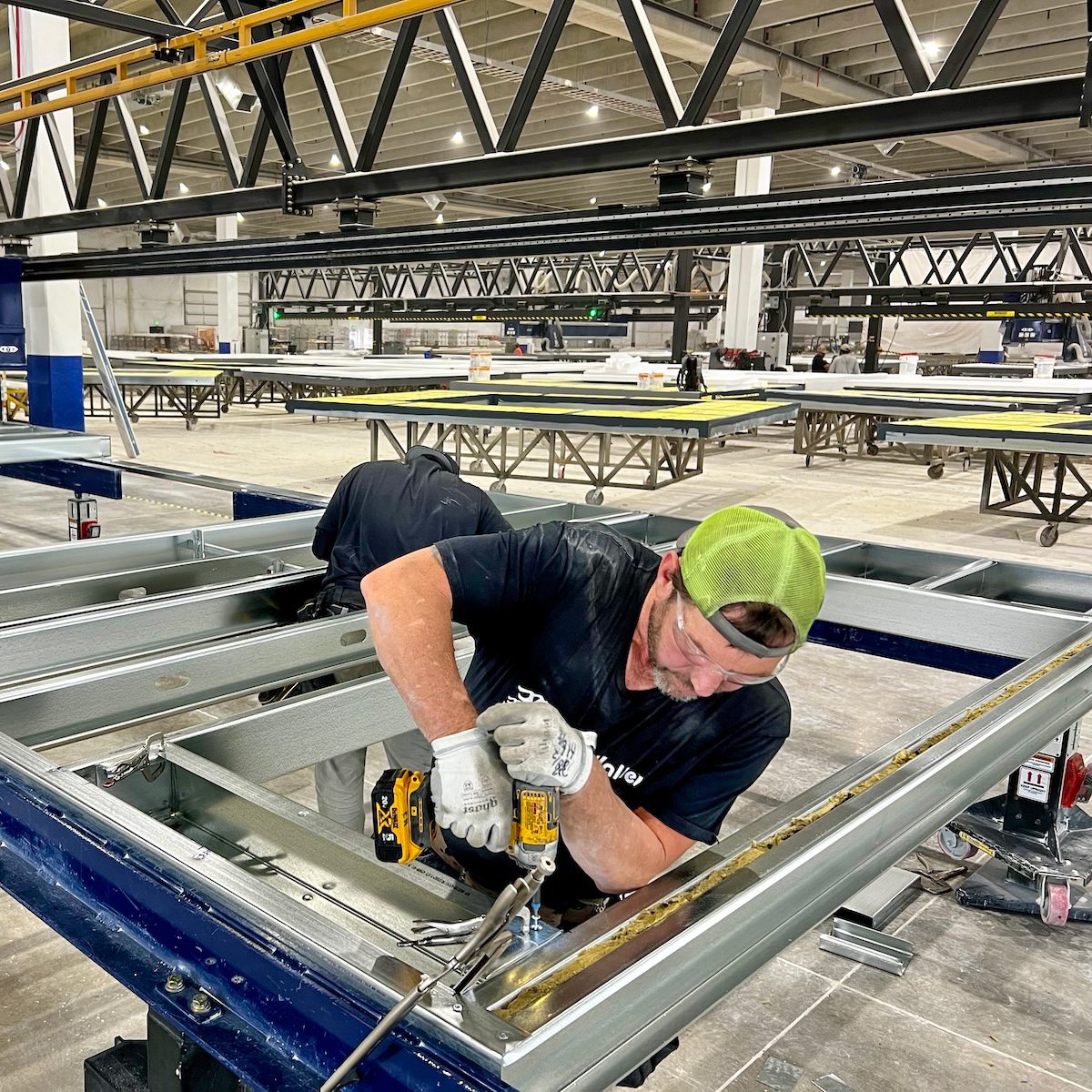
South Valley Prefab, a division of South Valley Drywall, has been on a roll for more than a decade, completing dozens of projects in the Denver Metro Area. Recent projects, Belleview North Tower, Emerson and One7, stand as testaments to the division’s success in producing and installing CFS-framed exterior finished panels. For Belleview North, South Valley Prefab produced 850 of such panels.
The company’s 75,000-square-foot production facility in Centennial, Colorado, includes manual work stations. But mostly, the facility features automation for creating the panels—robotic machines and original software to track production. As a result, South Valley Prefab can enclose buildings 75 percent faster than traditional construction and reduce onsite framing labor by 90 percent, says Travis Vap, CEO of South Valley.
South Valley Prefab builds cold-formed steel framed exterior finished panels. Image courtesy of Marco Johnson
Similarly, Tori Contracting fabricated and installed 287 tons of cold-formed steel framed panels to build six warehouses in the Sunset & Decatur Industrial Park in Las Vegas. Some CFS panels were 35 feet tall.
Industrialized Construction Solutions, engineered the CFS framing system, which included both load-bearing prefabricated CFS panels and interior wall systems. The panels integrated seamlessly with long-span roof trusses and interior mezzanines.
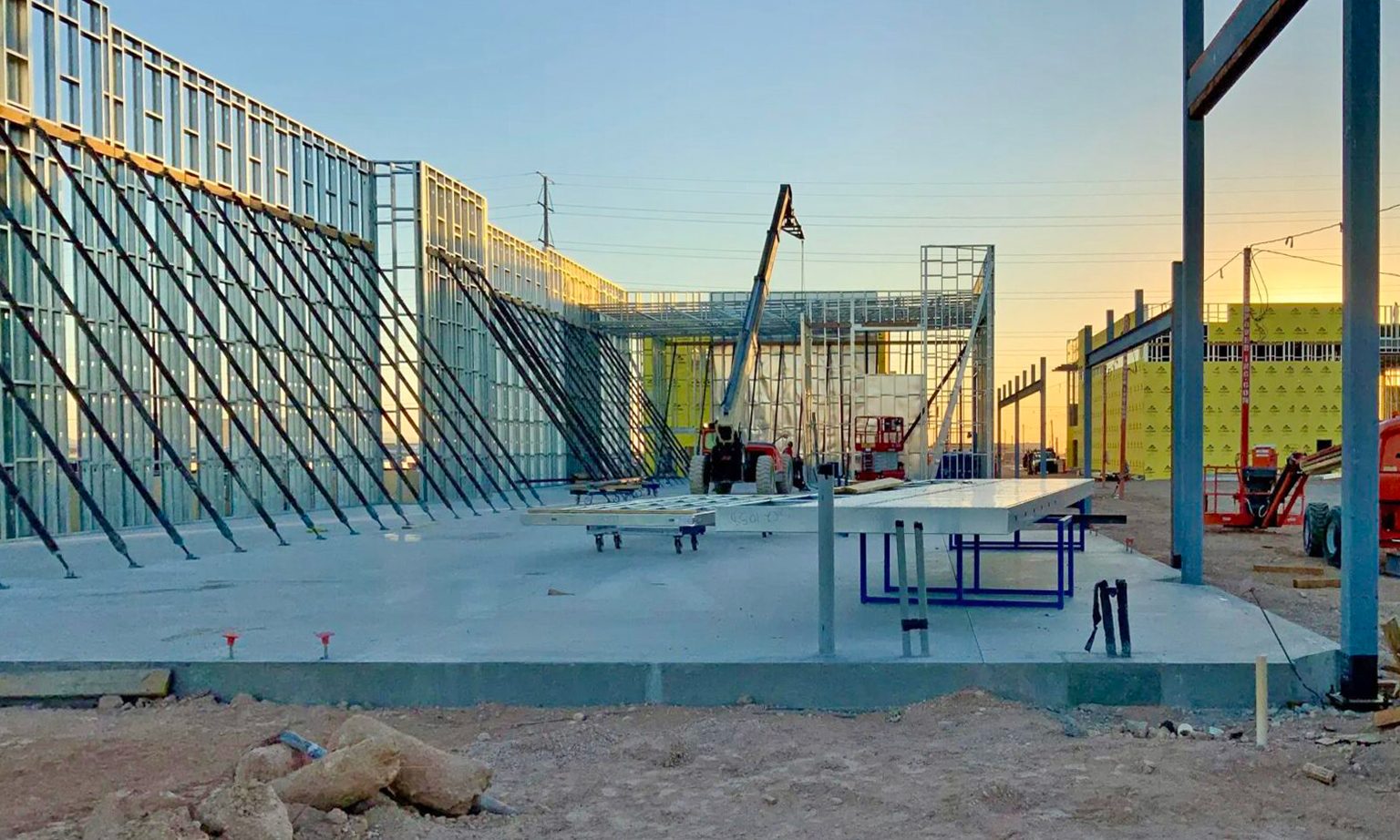
Tori Contracting built six warehouses with prefabricated cold-formed steel (CFS) panels. Image courtesy of Industrialized Construction Solutions
While initially conceived as a tilt-up concrete project, the industrial park development ultimately embraced panelized cold-formed steel framing to address future energy standards and installation efficiency. The project’s CFS framing design won a recent SFIA Industry Project and Product Award in the Sustainable Project category.
What Is Cold-Formed Steel Framing?
Cold-formed steel consists of framing members made from structural-quality sheet steel. Manufacturers form CFS into C-sections and other shapes using roll-forming machines. The machines have a series of dies or rollers to bend and shape the steel without added heat. This distinguishes cold-formed steel from hot-rolled structural steel. Available CFS thicknesses support both structural and nonstructural framing applications.
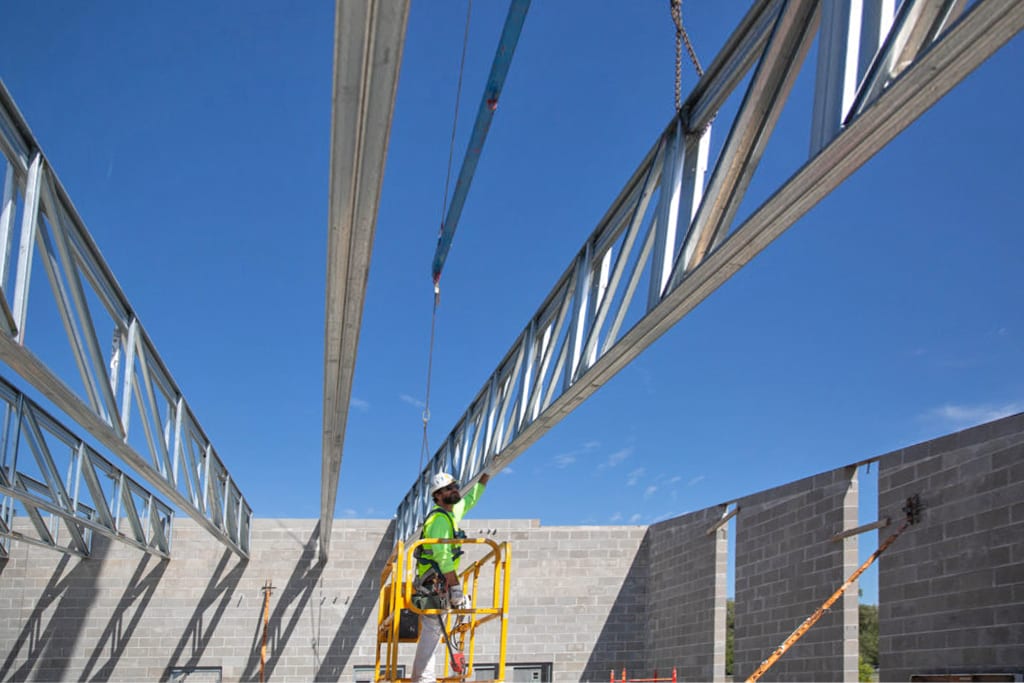
Cold-formed steel framing can speed up construction. Image courtesy of Negwer Materials
5. CFS-Framed Fire Resilience
Rising insurance costs are reshaping framing decisions. In one recent hotel project, a builder’s risk insurance premium dropped from $450,000 to $92,000 after the project switched from wood framing to cold-formed steel, a reduction of nearly 80 percent. The example reflects a broad trend currently underway.
As BuildSteel.org has reported, insurers increasingly differentiate between combustible and noncombustible framing systems. That pricing gap is most pronounced in catastrophe-exposed areas, where wildfire risks continue to climb. For owners and developers, material selection carries financial consequences beyond the initial cost.
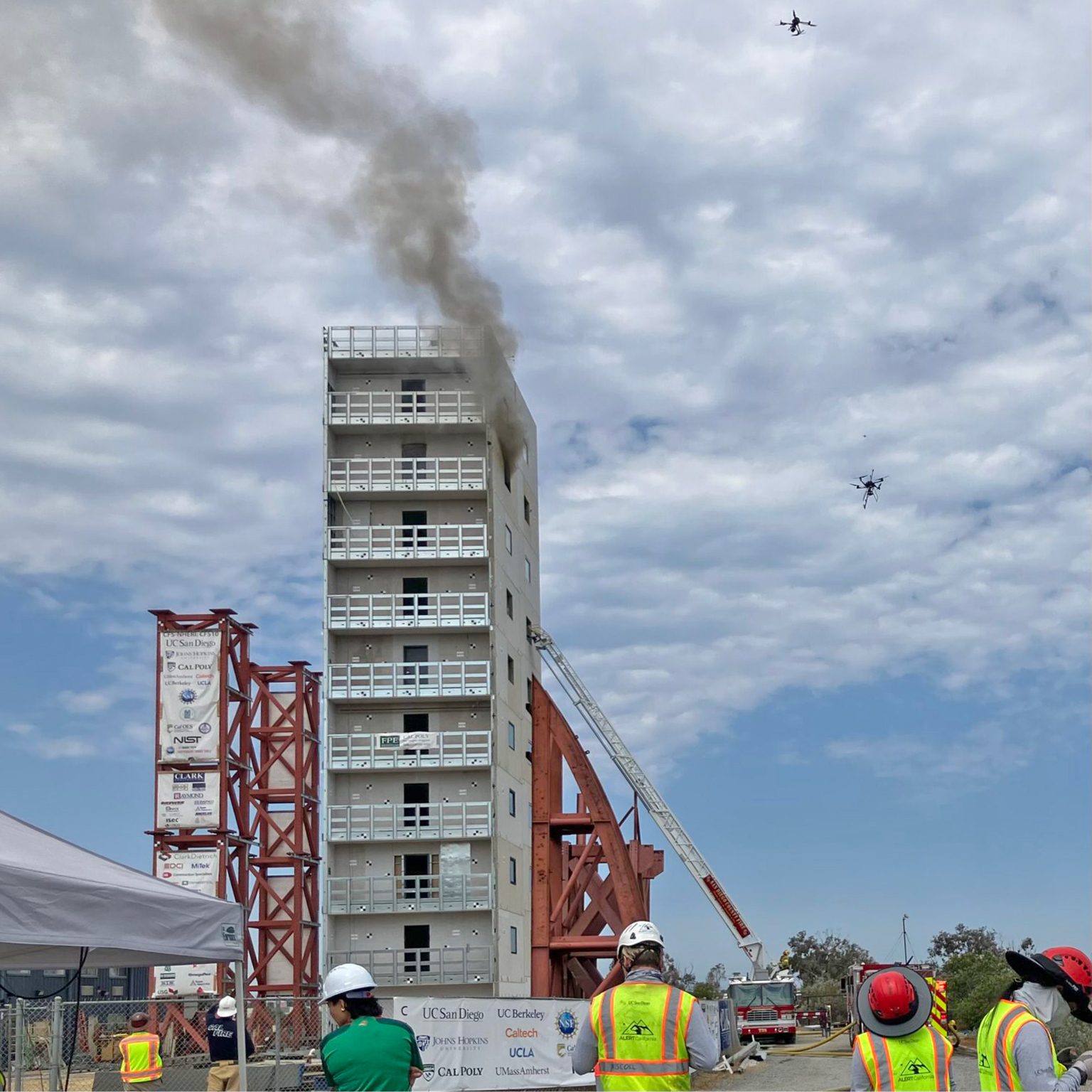
Furthermore, cold-formed steel’s performance in fire is now backed by research. At the University of California San Diego, researchers tested a 10-story CFS structure with 18 simulated earthquakes followed by a controlled burn. The building remained structurally intact, verifying steel’s role in resilient construction and opening the door to its broader adoption in mid-rise and high-rise projects.
The shift is also underway in residential construction. In wildfire-prone regions of California, builders are increasingly turning to noncombustible cold-formed steel framing paired with exterior stucco systems to rebuild destroyed neighborhoods. Following the 2017 Tubbs Fire in Santa Rosa, for example, several developers adopted steel framing to improve fire resistance and long-term insurability. That approach has since gained momentum as wildfire seasons grow longer and more destructive.
Taken together, insurance pricing, laboratory testing and real-world rebuilding efforts point in the same direction: Cold-formed steel is no longer specified solely for performance. It is increasingly selected as a risk-management strategy, one that improves resilience and helps projects remain viable in high-peril environments.
Last summer, UC San Diego and Cal Poly researchers tested a 10-story cold-formed steel framed structure with 18 simulated earthquakes and a controlled burn. Image courtesy of Don Allen
6. CFS for Hurricane Recovery
For decades, cold-formed steel has proved its value in commercial buildings. Today, in hurricane-prone regions, it is reshaping how homes are built (and rebuilt) after a disaster. CFS brings qualities that matter most after a hurricane: strength, predictability and durability. Unlike wood, steel does not rot, warp or attract termites, and it performs reliably in humid, flood-prone environments.
Along the Gulf Coast, where stronger storms and rising insurance costs are forcing hard choices, steel framing is emerging as a practical response to an unforgiving climate.
For example, Hurricane Ida was a reckoning in South Louisiana. When the Category 4 storm made landfall in 2021, it laid bare the weaknesses of conventional wood-framed housing. Entire neighborhoods suffered wind and water damage, followed by mold, rot and soaring insurance premiums.
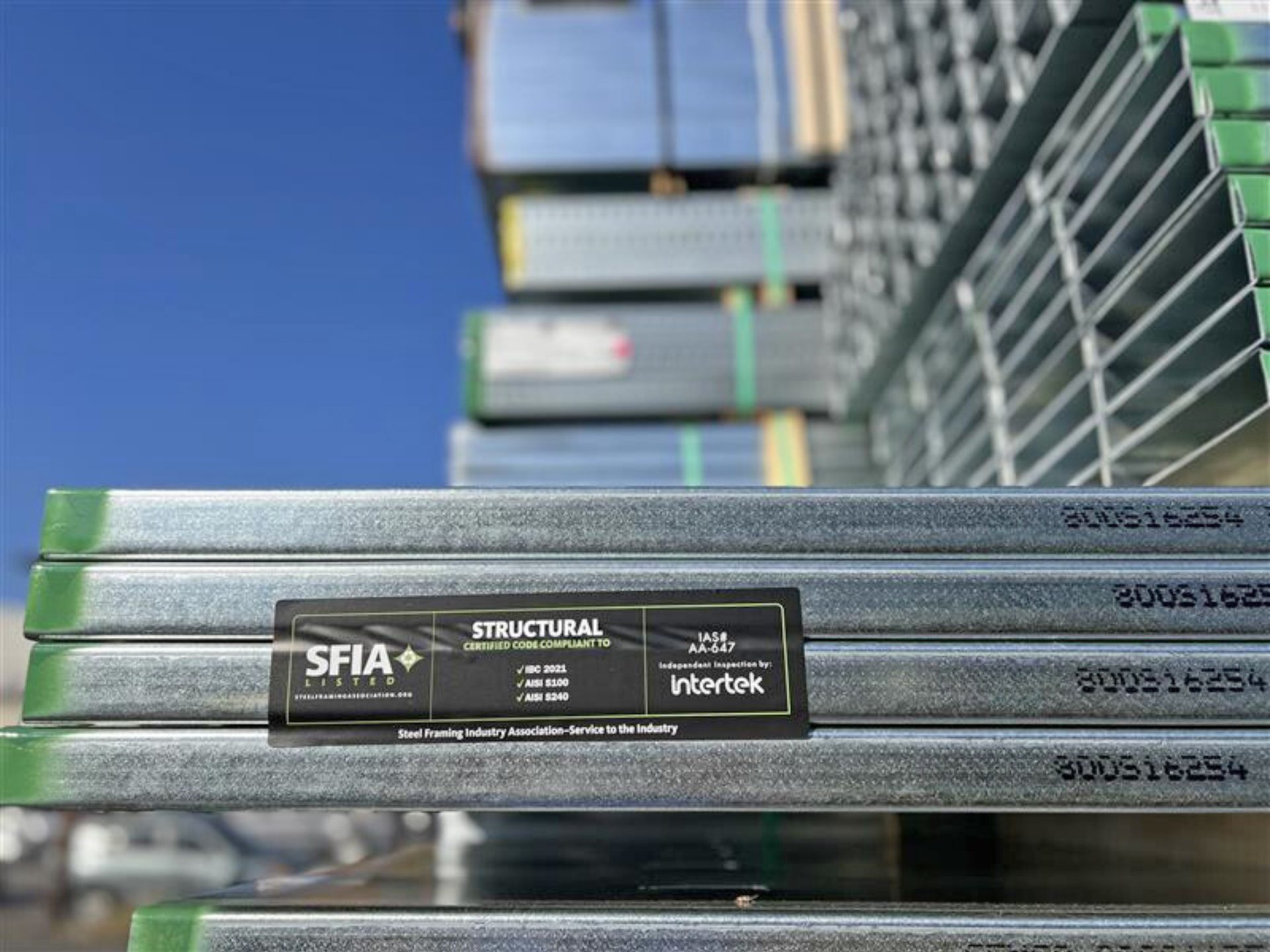
The South Central Planning and Development Commission in Houma decided to chart a new course. Tasked with addressing long-term housing resilience, the commission launched a $4.5 million initiative to design and manufacture steel-framed homes specifically for the Gulf Coast. SCPDC studied building methods from around the country to see what could withstand salt water, salty air, high winds, fire and termites. Steel checked every box.
SCPDC even invested in its own roll-forming equipment to produce cold-formed steel components in-house. The move gives the commission tighter control over cost, quality and supply when facing post-disaster rebuilding.
As insurers reassess coastal risk and premiums continue to rise, communities and builders increasingly turn to steel to reduce long-term exposure to repeated damage and costly repairs.
Cold-formed steel does not warp, rot or crack under pressure. It can endure harsh weather conditions. Image courtesy of Marco Johnson
7. CFS-Framed Barndominiums
As the United States faces a growing housing shortage, one company is showing how steel-framing technology can make a difference. Last fall, Scottsdale Construction Systems erected a barndominium live at a trade show. A Scottsdale team assembled the 2,500-square-foot cold-formed steel-framed structure during METALCON 2025 at the Las Vegas Convention Center.
The barndominium, called “Eagles Landing,” was built for veterans. Scottsdale partnered on the project with the Military Warriors Support Foundation, a nonprofit that supports veterans and Gold Star families with homes and vehicles. The foundation also provides life skills training, financial education and leadership development.
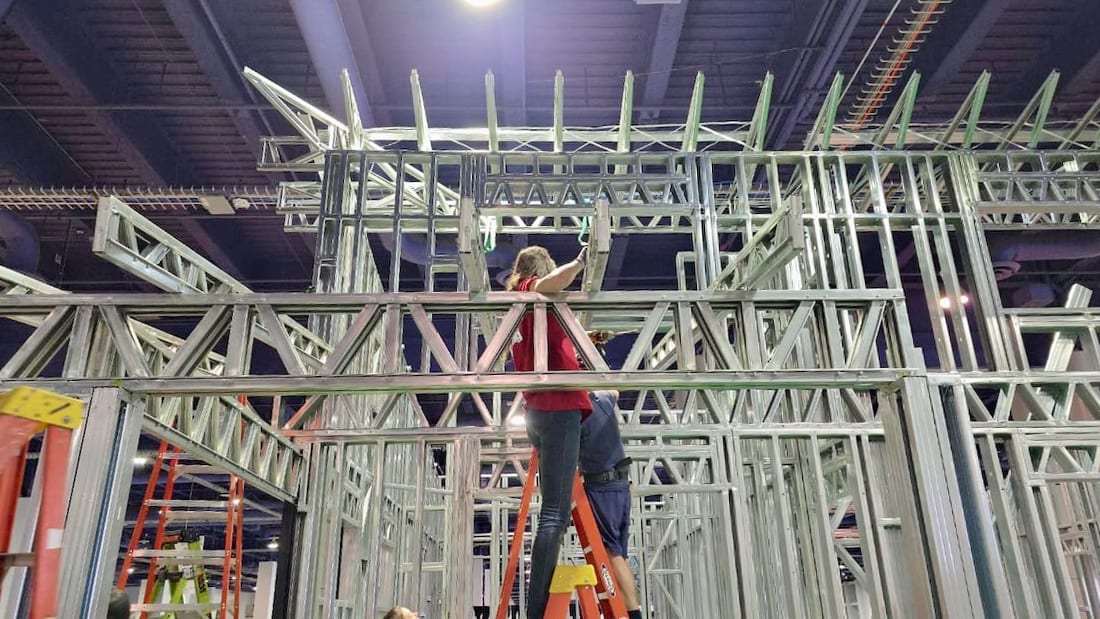
Scottsdale’s Scotpanel and Scottruss systems powered the production of the CFS studs, joists and other framing components for the barndominium. After METALCON 2025, Scottsdale and its partners shipped to and reassembled the barndominium in Hall, Montana. There, it serves as a rural retreat for combat-wounded veterans.
Scottsdale calls “Eagles Landing” a model for future housing. As housing demand continues to outpace supply, especially in rural and veteran communities, the project demonstrated how cold-formed steel can deliver strength, speed of assembly and long-term durability, while supporting a broader mission.
A Scottsdale team assembled a cold-formed steel framed barndominium live at METALCON 2025. Image courtesy of Scottsdale
8. CFS Trusses
Construction of the Great Wolf Lodge South Florida showcases how cold-formed steel roof trusses can accelerate schedules on large hospitality projects.
The 20-acre resort in Naples, Fla., includes a 500-room hotel, a 90,000-square-foot indoor water park and a 60,000-square-foot adventure park. Backed by developers Blackstone and Centerbridge Partners, the more than $250 million project demanded speed, durability and coordination across multiple building systems.
To meet those demands, the project team chose a long-span cold-formed steel truss system from MiTek. Above All Trusses fabricated the roof components offsite. Prefabrication allowed the roof system to arrive sequenced for installation. This reduced on-site labor demands and minimized weather-related delays.
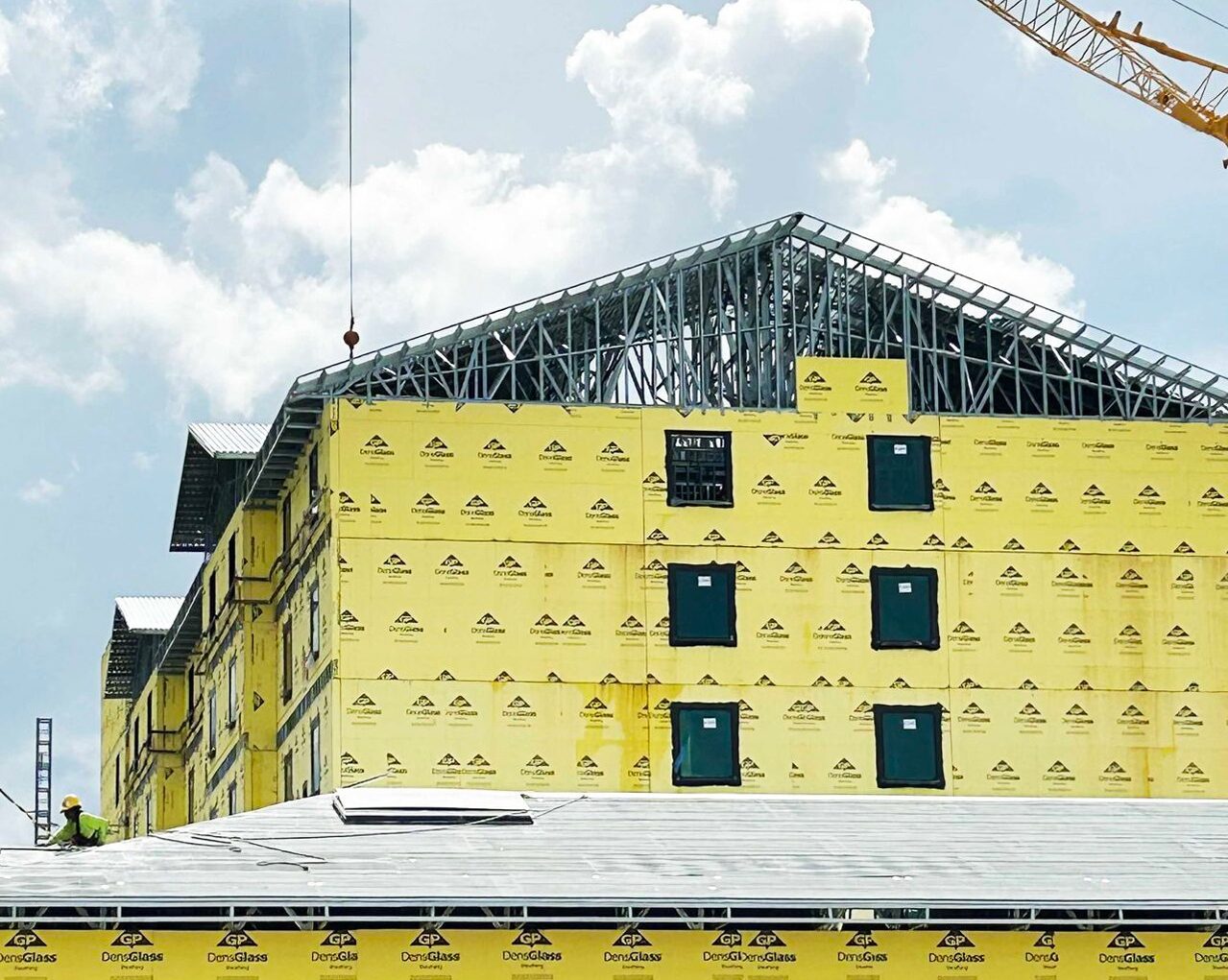
Brannon Specialties installed the long-span trusses. Their light weight helped the installation crews move quickly through the roofing phase of the project.
Cold-formed steel trusses are increasingly specified for mid-rise and large-scale commercial projects. They combine strength-to-weight efficiency with design flexibility. For developments like the Great Wolf Lodge Florida project, where complex rooflines and aggressive timelines intersect, CFS-framed trusses provide a predictable solution that integrates easily with other systems.
MiTek’s Ultra-Span trusses were installed quickly at Great Wolf Lodge. Photo courtesy of MiTek
9. CFS for Better Acoustics
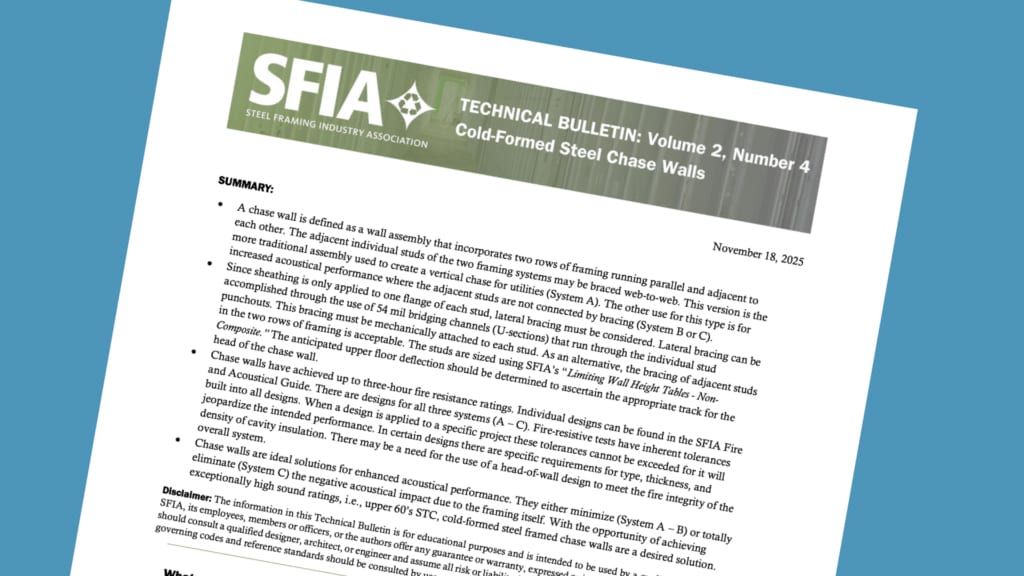
Cold-formed steel chase walls are emerging as a practical framing assembly for projects where sound control is a priority. A new SFIA technical bulletin clarifies how these assemblies perform and how contractors can build them.
Historically, chase walls served a utilitarian purpose: creating vertical pathways for plumbing, electrical and mechanical systems. Today, their role has expanded. Properly designed CFS chase walls can improve acoustical separation between multi-family or hospitality dwelling units, corridors and service spaces.
At their core, chase walls consist of two parallel rows of cold-formed steel studs separated by an open cavity. The SFIA Tech Bulletin Vol. 2, No. 4,“Cold-Formed Steel Chase Walls,” outlines multiple options.
In braced chase walls, the stud rows are tied together to meet fire-resistance and structural requirements. These assemblies are commonly used where rated wall systems are required, but they offer limited sound isolation benefits.
Decoupled configurations deliver better acoustical performance. Chase walls that use independent stud rows limit direct vibration paths that carry sound. Increasing the width of the chase, minimizing bridging and avoiding rigid connections between stud rows together further improve the sound attenuation. These approaches align with tested wall assemblies that achieve Sound Transmission Class ratings greater than single-stud walls.
The SFIA bulletin also gives practical considerations for contractors, including bracing requirements, allowable stud heights, fire-rated assembly references and coordination with adjacent framing. When detailed correctly, cold-formed steel chase walls can improve acoustical performance, without adding unnecessary complexity to projects.
SFIA’s Tech Bulletin Vol. 2, No. 4 shows how cold-formed steel (CFS) chase walls can enhance acoustical performance.
10. CFS-Framed Multilevel Decks
A backyard deck renovation in New Jersey demonstrates how CFS framing can expand design possibilities. What began as a modest request to extend an existing wood deck evolved into a multilevel space with a balcony, screened porch and integrated stair system. The changes pushed wood framing beyond its comfort zone.
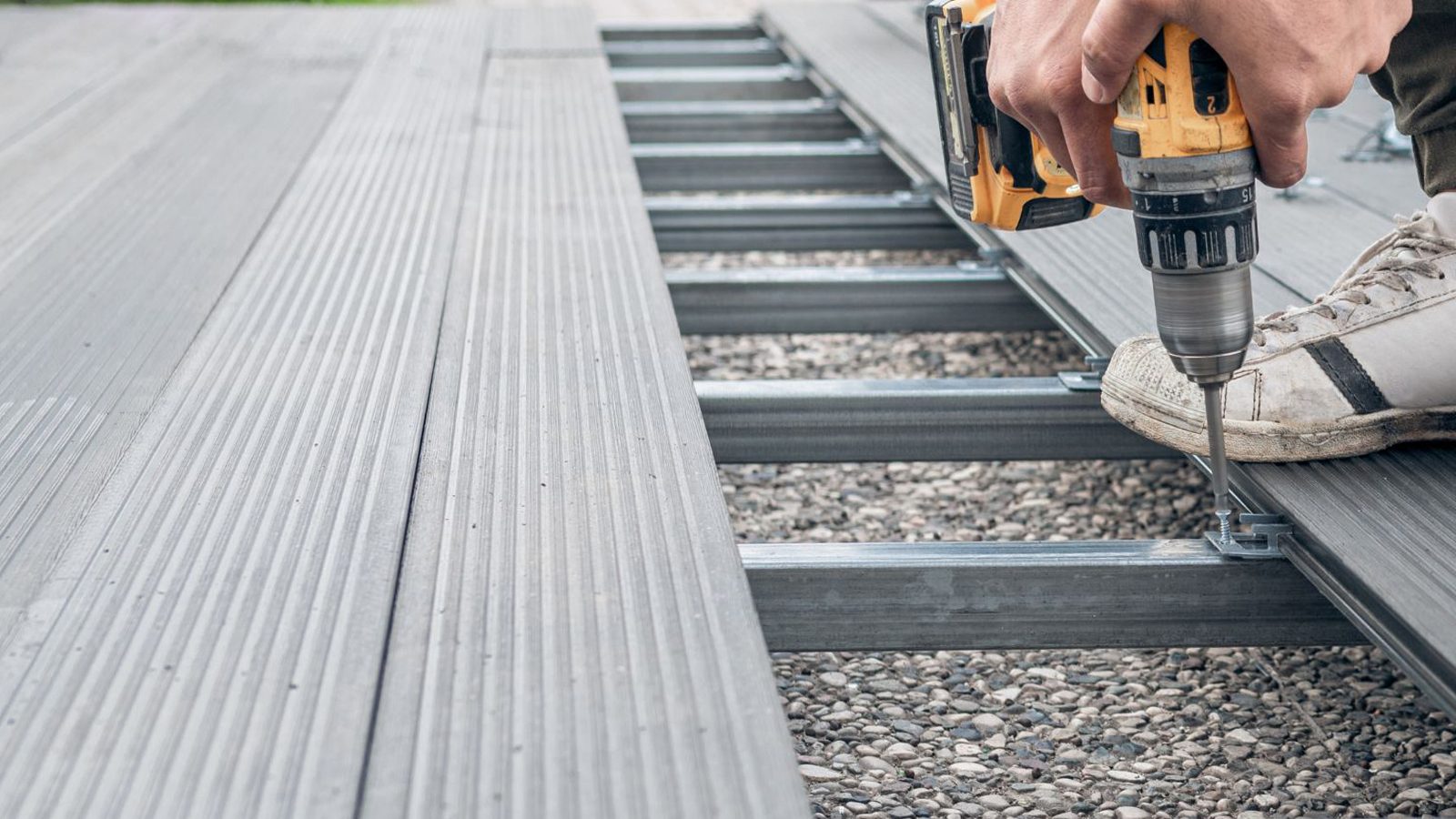
Instead of wood, the project team transitioned to cold-formed steel framing — specifically, CFS paired with helical piers. Steel framing allowed for longer spans, fewer supports and a lighter structural footprint. The steel components proved easy to handle, and the multilevel deck framed quickly with a small crew.
Finished with travertine decking and fiberglass components, the outdoor space delivers the look of a high-end custom build. Backed by durable CFS, the deck is resistant to rot, warping and pests. Cold-formed steel delivers low-maintenance performance in exposed exterior applications where traditional materials often fail.
A remodeler used cold-formed steel (CFS) framing and helical piers to build a strong backyard deck. Image courtesy of BuildSteel
Four Steps for CFS Beginners
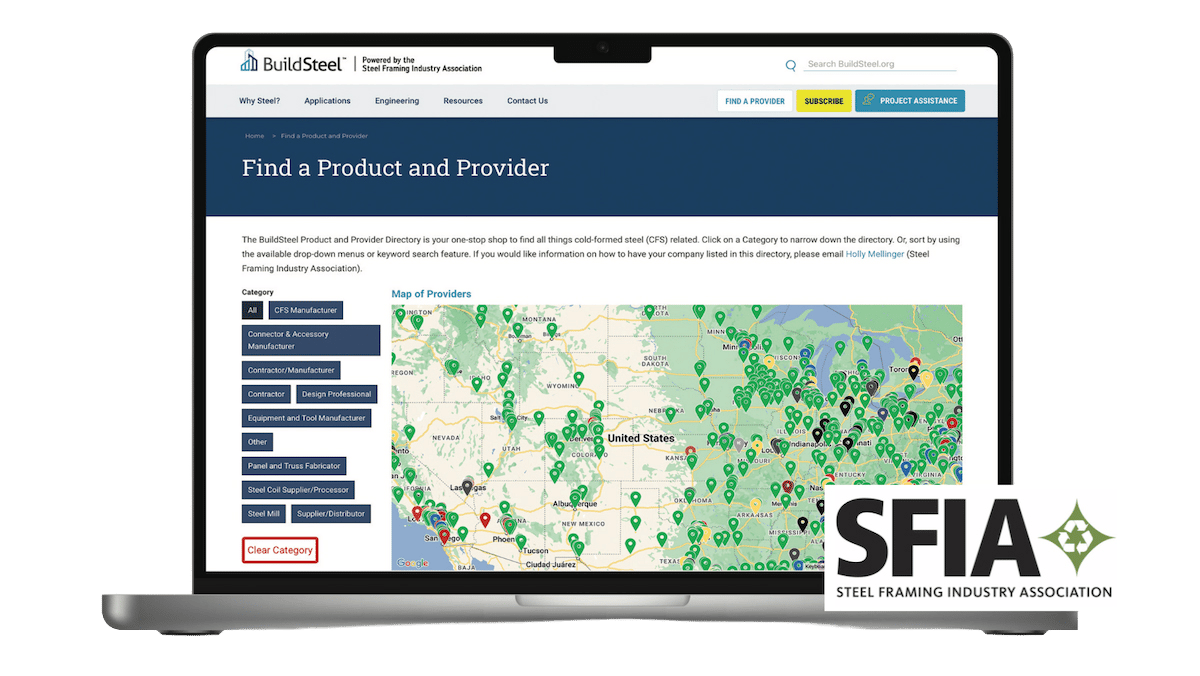
Find trusted cold-formed steel products and services on BuildSteel.org’s Product and Provider Directory.
- Download: “A Beginner’s Guide to Cold-Formed Steel Framing” (PDF).
- Use a spec “cheat sheet”: Checklist for Architects and Engineers Writing CFS Specifications.
- Stay aligned with current codes and standards: Complying with New Codes and Standards for Cold-Formed Steel Framing.
- Search for products and providers: The BuildSteel Product and Provider Directory
Images courtesy of xxxxxxx.
Image Credit: [Photographer Name]/[Collection Name] via Getty Images.
Marco Johnson is editor of BuildSteel.org, providing news and education for the steel framing industry. He writes regularly about wall and ceiling systems. You can reach him at linkedin.com/in/markjohnsoncommunications.

Marco Johnson is editor of BuildSteel.org, the voice of the steel framing industry and powered by the Steel Framing Industry Association. He writes regularly about walls and ceilings products, systems and businesses and can be reached via LinkedIn.com/in/markjohnsoncommunications.