Trade News
USG CEO Christopher Griffin to Retire After 30-plus Years
USG President and CEO Christopher Griffin is preparing to step away later this year, closing a chapter that spans nearly three decades at one of North America’s most influential building materials manufacturers. The company has announced that Chief Operating Officer Christopher Macey will become president and CEO effective April 1, marking a planned transition that Griffin says has been years in the making.
For Griffin, the moment feels less like an ending than a natural handoff—one shaped by time, timing, and the belief that leadership has a shelf life. “I’ve been working for over 40 years,” Griffin said. “My wife and I are so fortunate. I live a life today that I didn’t even know existed when I was 19, 20 years old and still starting.”
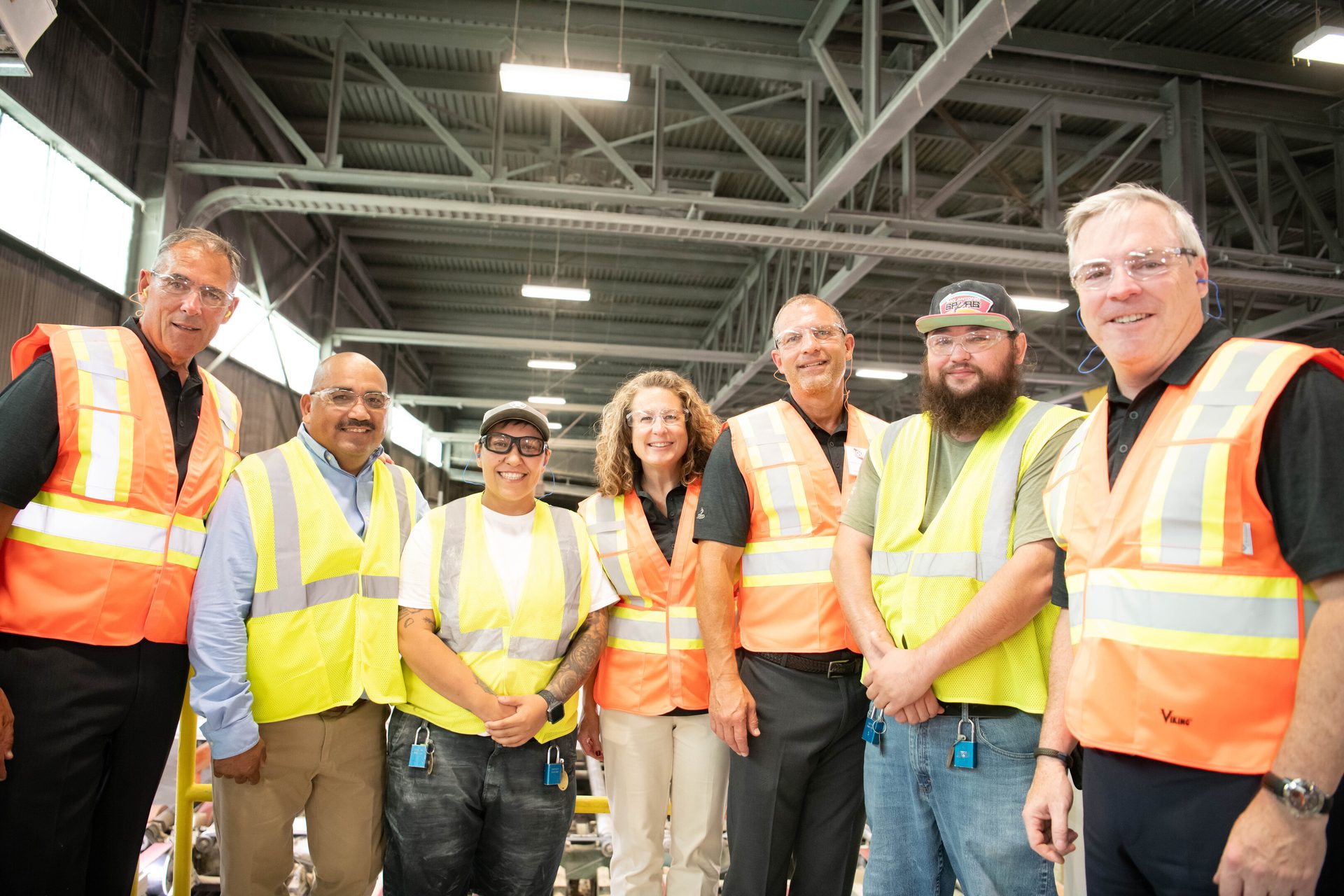
CEO Chris Griffin (far left), Chief People Officer Shelly Green (center), Senior Director of HR Gary Jones (third from right), and COO/incoming CEO Chris Macey (far right) with USG team members (yellow vests) at their plant in Sweetwater, Texas, during the facility's 100th anniversary celebrations in 2023. Photo courtesy of USG
Griffin’s story begins far from USG’s Chicago headquarters, in the Toronto area, where he grew up in and around a small family contracting business that eventually became a building supply company. Over time, his role expanded beyond the family business. “I eventually became president of a buying group,” he added with a laugh. “As you know, everybody in Canada eventually joins buying groups.”
By his mid-30s, Griffin began to look outward. He had built a career in the industry, but he wanted to test himself against larger organizations. “I realized that we wanted to make a bit of a change,” he said. “The companies I admired at that time in Canada were the likes of CGC, Owens Corning.”
That opportunity arrived in 1997, when Griffin moved to Chicago and joined USG. His family followed the next year. “My friends at the time told me that I wouldn’t last six months working for a big company,” he recalled. “But it turned out that I was given opportunities at USG that I could never have imagined, running a small family business.”
His first role was in marketing on the ceilings side—work that leaned heavily on his field experience. “Because I had worked on the tools, I started off as somebody who was developing some programs to try and convert people to use our ceiling grid in the Chicago market,” Griffin said. “It was my first job with the company.”
As his career progressed, Griffin watched USG evolve physically and culturally. He described the company’s earlier Chicago offices with a kind of affectionate disbelief. “Do you remember the TV show Barney Miller?” he asked. “The USG offices looked like that … old steel case furniture, and a bunch of engineers with ties and short-sleeved shirts, everybody smoking.”
The company’s downtown footprint shifted over the years: from Wacker Drive to the AT&T Tower and eventually to its current building. Griffin remembered the milestone when the city recognized the company’s presence. “At our 100-year anniversary, they named that USG Way on Franklin Street,” he said.
That sense of longevity has always mattered to him. USG is now 125 years old, and Griffin sees leadership as stewardship. “I feel a great responsibility to be a steward of that legacy,” he said. But his own rise to the CEO role came during one of the company’s most significant transitions.
In 2019, USG was acquired by Knauf and returned to private ownership. That same year, Griffin became CEO. The shift, he argued, fundamentally changed how the company could think about investment and resilience in a cyclical industry. “We believe that being private and able to take a long-term view allowed us to reinvest in our facilities,” he said. “It’s not feast and famine like it had traditionally been.”
Griffin points to reinvestment in manufacturing as a central theme of his tenure. USG’s plants—some of them more than a century old—needed modernization after years marked by major disruptions, including asbestos-related bankruptcy in the early 2000s and the Great Recession. “We’ve had a lot of investment to catch up,” he said. “We called it Project Home … a place where you’d want your sons and daughters to come and work again.”
For Griffin, this isn’t abstract. He believes manufacturing is a “noble profession,” and he wants the industry to reclaim that identity for the next generation. “People are going to have to build stuff, repair stuff, fix stuff,” he said. “We’re not going AI our way out of that.”
When asked what he hopes his legacy will be, Griffin doesn’t lead with market share, product launches, or acquisitions. He leads with culture. “People first,” he said. “If you hire the right people, put the right team on the field, you win.”
He’s proud of the company’s multigenerational workforce, and he sees that continuity as something rare—and fragile. “When you visit some of our facilities, you meet second, third, even fourth generation people,” Griffin said. “To maintain that is a huge part of our company DNA.”
That people-first mindset also shapes how he thinks about succession. Griffin said he believes CEOs have a window where they are most effective—and that staying too long can harm both the leader and the team. “I’ve been at this job as CEO since 2019, and I do believe that there’s a sort of a five- to seven-year window where you’re most effective,” he said. “I’m coming up to the end of that window.”
He also framed the decision in practical terms. “In any big organization, if I don’t leave, somebody else will,” he said. “I’ve got a strong team. They’re ready to take the mantle and do even more.”
As he looks ahead, Griffin’s personal plans are clear. He and his wife, Carmela, will split time between Arizona and Ontario. “I made the mistake of bringing Carmela out to the desert in Arizona about 20 years ago, and she fell in love,” he said. “Our plan will be Arizona seven or eight months a year, and Haliburton, Ontario, three or four months a year.”
While he’s optimistic about the company’s future, Griffin acknowledges near-term volatility in construction markets. “We’re certainly in a slowdown with regards to housing,” he said. “Office has been anemic since COVID.” Still, he believes the long-term fundamentals are strong, especially if the U.S. confronts the housing affordability gap. “We’ve got to solve the affordability gap for people,” he said. “The fundamentals would just suggest we have to.”
If there’s a risk he worries about, it’s not technology or disruption. It’s hesitation. “The one thing we could miss is not investing fast enough for the recovery that’s about to come,” Griffin said.


American Spray Technologies Acquires Desco Manufacturing
American Spray Technologies announced the acquisition of Desco Manufacturing, a Florida-based company founded by Don Pesano. This strategic move unites two of the most respected brands in construction equipment, creating a single entity dedicated to the highest standards of performance and durability.
Since 1969, AST (originally known as Pete’s Equipment, founded by Pete Whitt) brought a forward movement the drywall industry with the first hydraulic-control rigs and later the iconic Kodiak portable sprayer.
By acquiring Desco, a company known for its rugged systems and dominant presence in the Eastern U.S., AST provides contractors with an unprecedented level of nationwide expertise.
“We have always viewed Desco as a kindred spirit in this industry,” said a spokesperson for AST. “Don Pesano built a legacy on reliability and heavy-duty engineering that mirrors our own values. By bringing Desco into the AST family, we aren't just growing our fleet; we are ensuring that the next generation of drywall professionals has access to the most dependable equipment ever built.”
The acquisition will see the integration of Desco’s piston pump line into AST’s product offerings. Existing Desco owners can expect continued support and access to AST’s expanded resources and technical team.
More States Add Construction Jobs as Labor Crunch Persists
Construction employment expanded across much of the country in September, with 31 states and the District of Columbia adding jobs and 27 states reporting year-over-year gains, according to an analysis of federal employment data released by the Associated General Contractors of America. Association officials said the broader uptick signals strengthening demand but warned that persistent labor shortages remain one of contractors’ biggest challenges.
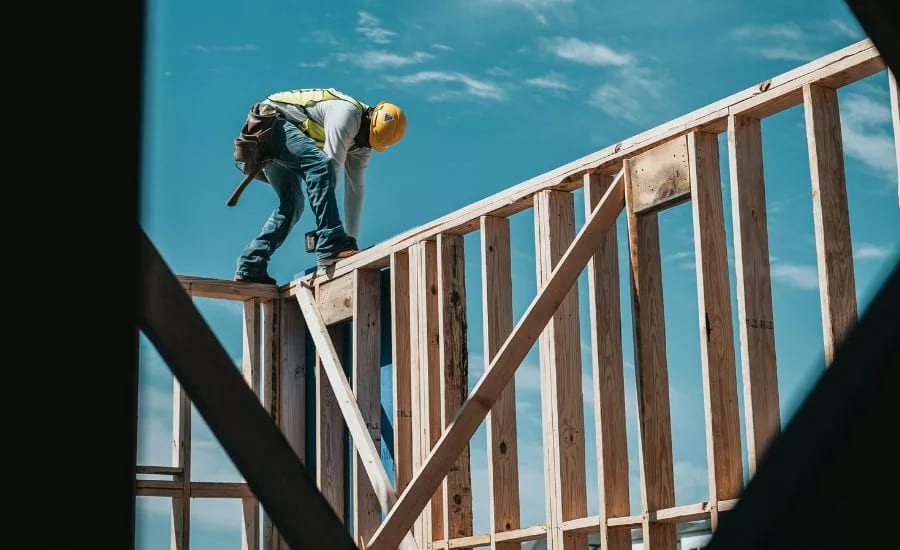
Photo by Josh Olalde on Unsplash
“Seeing more states add construction jobs in September is an encouraging sign, but labor shortages remain a significant hurdle for many contractors,” said Macrina Wilkins, senior research analyst at the association. “Firms continue to report that finding enough qualified workers is one of their biggest challenges and a key factor behind project delays.
Between September 2024 and September 2025, 27 states and D.C. added construction jobs, while 23 states shed jobs. Texas added the most construction jobs (16,400 jobs or 1.9 percent), followed by Virginia (13,500 jobs, 6.1 percent), Ohio (12,200 jobs, 4.9 percent) and Michigan (11,000 jobs, 5.6 percent). New Mexico had the largest percentage gain over 12 months (12.4 percent, 6,700 jobs), followed by Idaho (7.5 percent, 5,400 jobs), Alaska (7.1 percent, 1,300 jobs), and Kentucky (6.9 percent, 6,500 jobs).
New York lost the most construction jobs during the past 12 months (-16,900 jobs, -4.3 percent), followed by California (-14,600 jobs, -1.6 percent), Washington (-12,100 jobs, -5.4 percent), New Jersey (-10,000 jobs, -6.0 percent), and Nevada (-5,500 jobs, -5.0 percent). The largest percentage loss was in New Jersey, followed by Washington, Nevada, New York, and Maine (-3.4 percent, -1,200 jobs).
For the month, industry employment increased in 31 states and the District of Columbia, declined in 17 states, and was unchanged in Maine and Arizona. Texas added the most construction jobs (4,300 jobs or 0.5 percent), followed by Michigan (4,200 jobs, 2.1 percent) and Indiana (1,800 jobs, 1.1 percent). The largest percentage gain occurred in Michigan, followed by Wyoming (1.7 percent, 400 jobs) and Iowa (1.5 percent, 1,300 jobs).
Florida experienced the largest decline in construction jobs from August to September (-4,400 jobs, -0.7 percent), followed by Mississippi (-2,600 jobs, -1.0 percent), Georgia (-3,000 jobs, -4.9 percent), and New York (-2,400, jobs, -0.6 percent). Mississippi also lost the highest percentage of jobs for the month, followed by Alaska (-1.5 percent, -300 jobs), Montana, West Virginia (-1.1 percent, -400 jobs), and Missouri (-0.9 percent, -1,300 jobs).
Association officials noted that demand for private-sector construction jobs is likely to increase since the Federal Reserve Board lowered interest rates yesterday. That new demand is likely to put additional strain on already tight labor markets. As a result, association officials continued to urge federal leaders to take short- and long-term steps to support construction workforce development.
“We need federal officials to make significant new, long-term investments in construction-focused workforce development programs,” said Jeffrey D. Shoaf, the chief executive officer of the Associated General Contractors of America. “At the same time they should be taking short-term steps to allow more people to lawfully enter the country and work in construction to meet demand while we rebuild the domestic workforce pipeline.”
View September 2025 state employment data and 1-month, 12-month rankings.

FWCCA Announces 2026 Show, Announces Exhibit Space
This year the Annual Southeastern Florida Wall & Ceiling Contractor’s Association Convention and Trade Show will take place at the Caribe Royale Resort, July 29-August 2 in Orlando, Fla. Caribe Royale Orlando is a full-featured all-suite resort near Walt Disney World that combines comfort, convenience, and recreation. Its accommodations range from modern one-bedroom suites (with separate living area, workspace, and updated décor) to spacious two-bedroom villas complete with full kitchens, dining areas, in-suite laundry, and access to a private villa pool—ideal for families or extended stays.
The association encourages those interested in exhibiting to reach out to the staff (information below). There are booths still available, so contact the staff now.

EIMA Announces Expert Judging Panel for the 2025 EIFS Excellence Awards
EIMA announced the distinguished judging panel for the 2025 EIFS Excellence Awards. This year’s panel brings together a renowned group of experts from across the architecture, design, and construction industries—including past EIFS Architectural Award–winning architects—who will lend their experienced perspectives to the evaluation process.
Judging is currently underway and will be completed on December 15, following a rigorous and impartial review of all submissions against established criteria. The panel’s evaluation will recognize the most innovative, technically proficient, and aesthetically compelling EIFS projects.
The 2025 judging panel includes:
- Jeffrey Cole, Jeffrey Cole Architects
- Marcell Davis, RA, Davis Partnership Architects
- Lansing Dodd, AIA, EDAC, NCARB, Gresham Smith Architects
- John Edgar, John R. S. Edgar Consulting, Inc.
- David A. Johnston, former Executive Director/CEO of EIMA
EIMA extends its gratitude to this outstanding panel for contributing their time, expertise, and commitment to honoring excellence within the EIFS industry. The results of the competition will be announced at the 2026 EIMA Annual Meeting in Washington D.C.

ATAS Launches New AIA Course on Metal Plate Systems
ATAS International has debuted a new continuing education course centered on architectural metal plate cladding systems after acquiring the assets of Metal Sales & Service, Inc., including the Metalwërks line, earlier this year.
Titled “Architectural Metal Plate Systems: Durable Design for Today’s Buildings,” the program is approved by the American Institute of Architects for one LU/HSW and is designed to help architects and building professionals differentiate plate systems from other wall assemblies while understanding the materials, finishes, and installation approaches that support high-performing, resilient building envelopes.
The learning objectives of this course are as follows:
- Recognize what defines a metal plate system and how it differs from other metal wall assemblies.
- Identify materials and finish options for architectural metal plate and learn about applications and installation techniques.
- Explore the performance attributes and design advantages of plate systems.
- Discover how metal plate contributes to sustainable and resilient building envelopes.
ATAS now offers a total of 13 courses, all approved by the AIA for 1 LU/HSW. Ten of those courses are approved by IIBEC (International Institute of Building Enclosure Consultants) for one continuing education hour. Four courses focused on sustainable products, resulting in more energy efficient buildings, are approved by GBCI (Green Business Certification, Inc.) for one continuing education hour. For metal ceilings and other metal interior products, two courses are approved by IDCEC (International Design Continuing Education Council) for one continuing education unit for interior designers. Several of our courses (recorded webinars) are offered online.
All of the course offerings, with their learning objectives, can be found on the ATAS Academy web page.
CertainTeed Invests $240M to Expand Palatka Plant
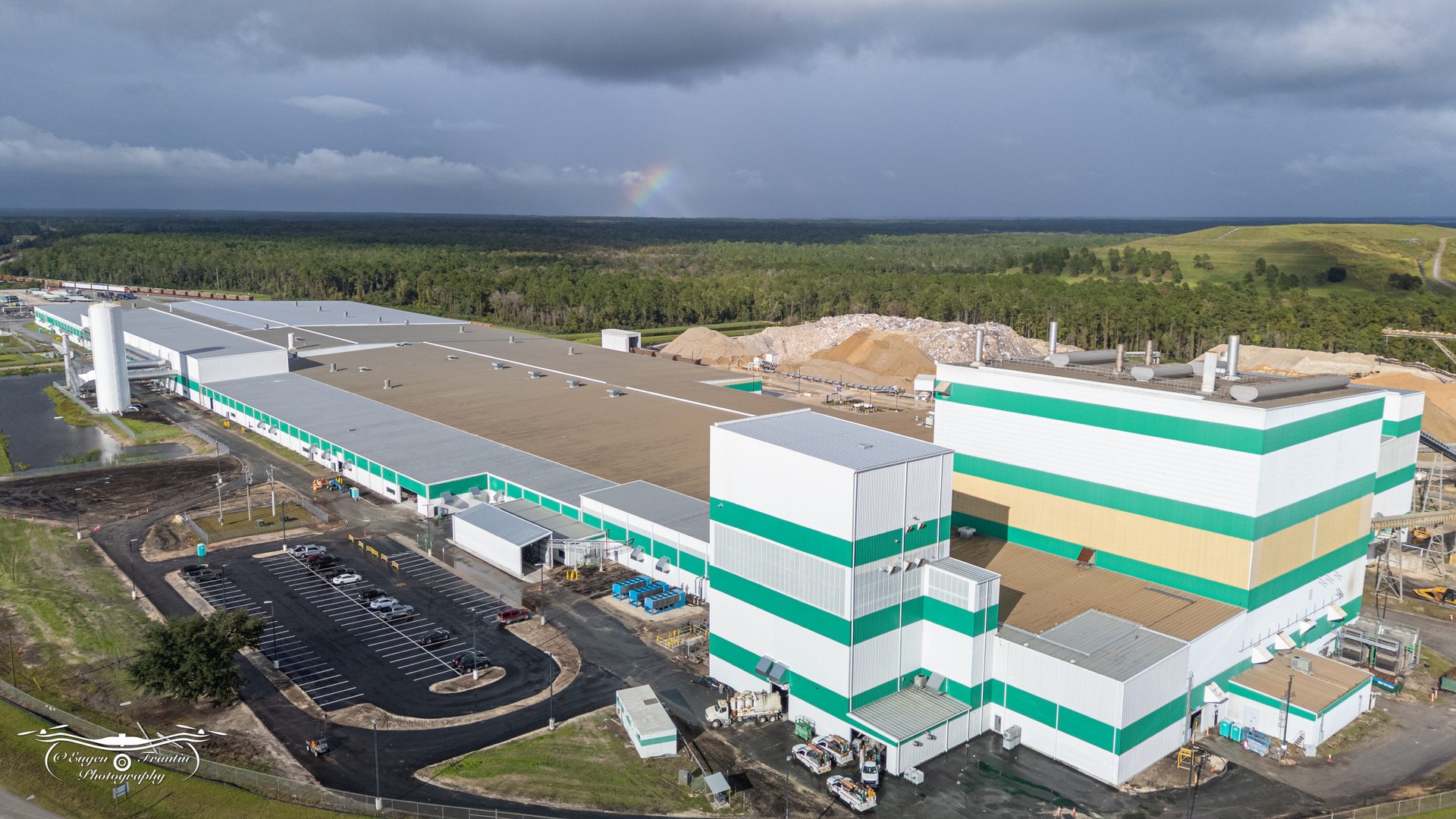
CertainTeed has completed a $240 million expansion of its gypsum wallboard plant in Palatka, Fla., a project company leaders say transforms the site into the largest wallboard manufacturing facility in the world while bringing more than 100 new jobs to Putnam County, reported Peter Willott of the Palatka Daily News.
Employees, local officials and industry partners gathered Friday for a ribbon-cutting ceremony celebrating the launch of a second production line at the U.S. 17 facility, an addition executives described as both a capacity boost and a long-term commitment to the community.
The project added roughly 100,000 square feet to the plant and significantly increased output to help meet rising housing demand across the southeastern United States.
“This is now the biggest wallboard plant in the world,” said Mark Rayfield, CEO of CertainTeed North America. He credited local workers for executing the expansion while maintaining strong production. “We’ve doubled the capacity here and created over 100 new jobs. That’s an extraordinary accomplishment by this team and this community.”
For Plant Manager Deborah Master, who has worked at the site since it opened in 2001, the expansion marked both a professional and personal milestone.
“We’ve come such a long way, and I’m incredibly proud of this team,” Master said. She noted the plant offers career pathways for employees entering the workforce with limited formal education. “You can come in with a high school diploma, get trained, move up and build a future.”
With the new line running, employment at the facility is expected to surpass 240 workers. Many employees have spent more than a decade at the plant, and in some cases multiple generations of the same family now work there.
“This place is like a family,” Master said. “We don’t just grow production; we grow people.”
Company officials also highlighted sustainability investments tied to the expansion. Rather than lower-cost, higher-fuel furnaces, CertainTeed installed high-efficiency systems designed to reduce energy use. The new production line incorporates recycled materials, including recovered gypsum board, and features improvements aimed at better air quality and overall energy performance.
“We spent more to make it more sustainable,” Rayfield said, adding that environmental responsibility and product quality go hand in hand for the company and its customers.
Local leaders praised the project as a significant economic development win.
Putnam County Commission Chairwoman Leota Wilkinson said the investment brings well-paying jobs and signals opportunity for future industry. “When people see success here, others will follow,” she said.
Simpson Strong-Tie Opens New Manufacturing Facility in Tennessee
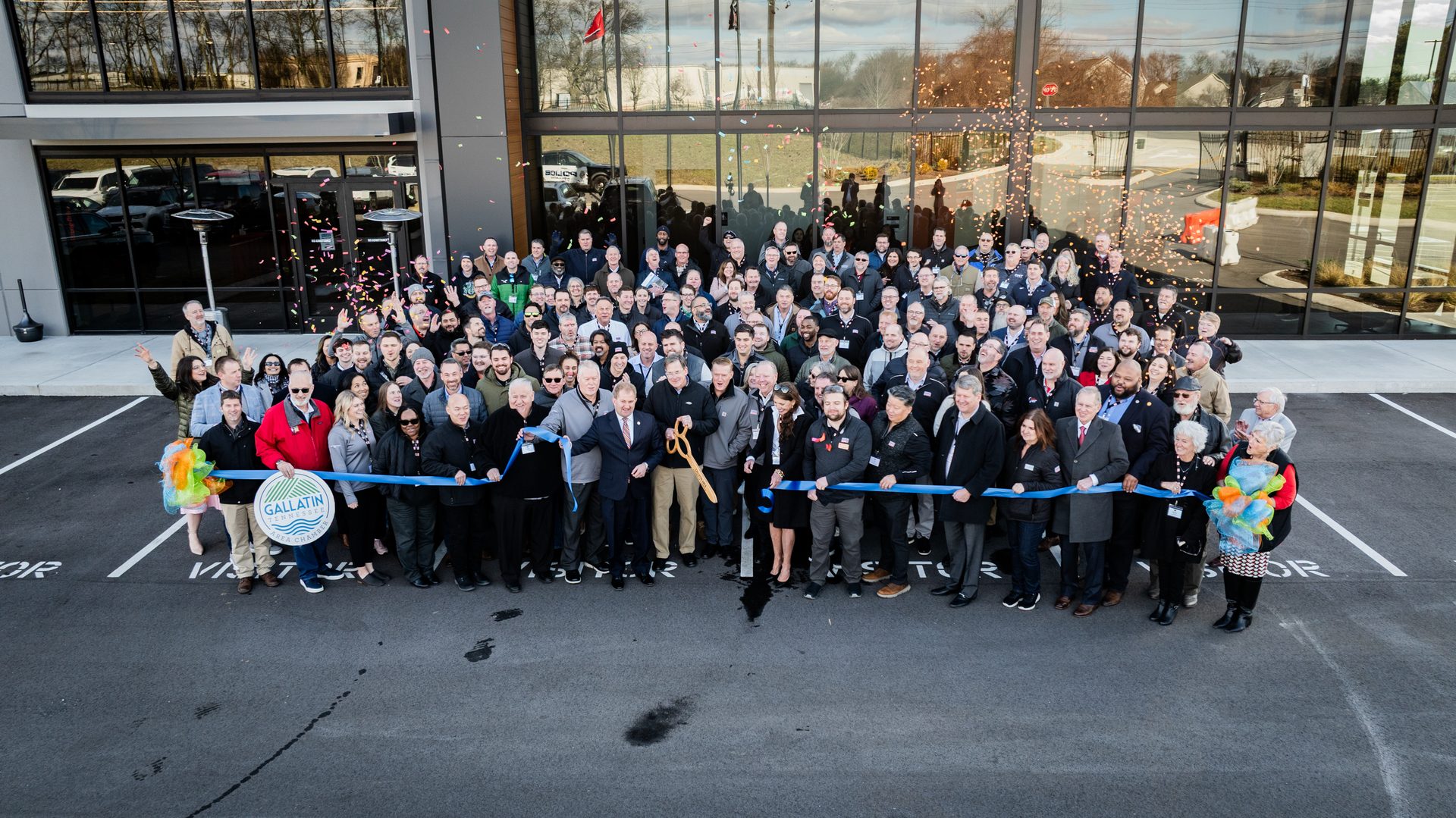
Simpson Strong-Tie, the leader in engineered structural connectors and building solutions, marked the grand opening of its newest manufacturing plant, located in Gallatin, Tenn., with a ribbon cutting, celebration and tours on January 15.
The 500,250-square-foot, $125-million facility will test and manufacture a range of anchors, fasteners and QuikDrive fastening tools. The facility opened with 227 employees, including machine operators, maintenance technicians, heat treat techs, and process and product engineers, and is expected to create an additional 20 jobs in 2026.
“Simpson Strong-Tie is excited to open our state-of-the-art facility in Gallatin, enhancing our ability to serve our customer base and strengthening our distribution network while delivering even greater value and product innovation,” said Mike Olosky, CEO of Simpson Strong-Tie. “This manufacturing and training facility is unlike any other in the construction industry, featuring end-to-end fastening production under one roof with the latest equipment and technology. We’re proud to expand our presence in Tennessee, a state with a growing, vibrant population, a skilled workforce and a supportive business environment.”
The January 15 grand opening celebration gathered Simpson Strong-Tie leaders, valued partners and customers, and local politicians, including Gallatin Mayor Paige Brown.
“Simpson Strong-Tie has a tremendous history in Gallatin. For more than 60 years, they’ve provided good jobs for our citizens and produced products that power construction around the world,” said Brown. “Our city is most fortunate that Simpson Strong-Tie worked hard to locate their new, expanded facility in Gallatin. We are grateful for their investment here and the outstanding culture they represent, as it is a reflection of the types of companies that we are proud to have in Gallatin.”
To learn more, visit strongtie.com.
Spackle by Dave Coverly

People News
The Glenrock Company announced that Michael Griffin has joined the organization to lead its newest initiative in the EIFS and stucco markets throughout the Upper Midwest.
Bryan I. Schwartz will serve as Co-CEO alongside Joseph Koenig, Jr., who continues in his role at Trim-Tex. He has been appointed President of Trim-Tex and will oversee day-to-day operations and execution of the company’s long-term strategy. The company also announced that industry veteran Michael Kohut has joined the company as vice president of sales.
Kohut
Schwartz
USG Corp. said President and CEO Christopher Griffin will retire later this year, ending a career of more than 30 years with the building materials manufacturer (see lead story). The company’s board and owner Knauf Group have appointed Chief Operating Officer Christopher Macey as president and CEO, effective April 1.
Macey
Griffin

xxxxxxxxxx Some Person xxxxxxxxxxxxxxxxxx
xxxxxxxxxx Some Person xxxxxxxxxxxxxxxxxx