Despite a sluggish construction market, the rapid expansion of AI-driven data centers is creating major opportunities for steel framing manufacturers because of steel’s safety, strength, and sustainability advantages. By Steve Farkas
Why the Explosion in the Growth of Data Centers in the U.S. is a Boon for Steel Framing Manufacturers in 2026
xxxxx. xxx
xxxxx
xxxxxxxxx
xxxxxxxxxxxxxxx By xxxxxxxx
h2 - xxxx
h3 - xxxx
H1 headline
Let’s be honest for a moment: 2025 was not the best year for the economy, let alone for residential or commercial construction. Whether you are an architect, builder, developer, contractor, building product manufacturer, or anyone else connected to the construction industry, 2025 was a disappointment.
And 2026 isn’t looking especially strong either. Metrics, such as the American Institute of Architects’ Billing Index, indicate an overall decline in architectural billings. The Associated General Contractors of America noted in a recent presentation that certain segments of the nonresidential construction sector could see decreases ranging from 2 percent to 12 percent from the previous year. Overall, activity could remain relatively slow for the rest of the year.
However, there is a bright spot: data centers. Anyone who follows the stock market has likely seen the huge demand to quickly build data centers to support the rapid growth of artificial intelligence. AI requires massive amounts of server space, typically housed in large, climate-controlled warehouses containing thousands of servers that provide the foundation for today’s AI-driven world. AI is transforming how we work, play, and live in a connected society.

Consider the Data
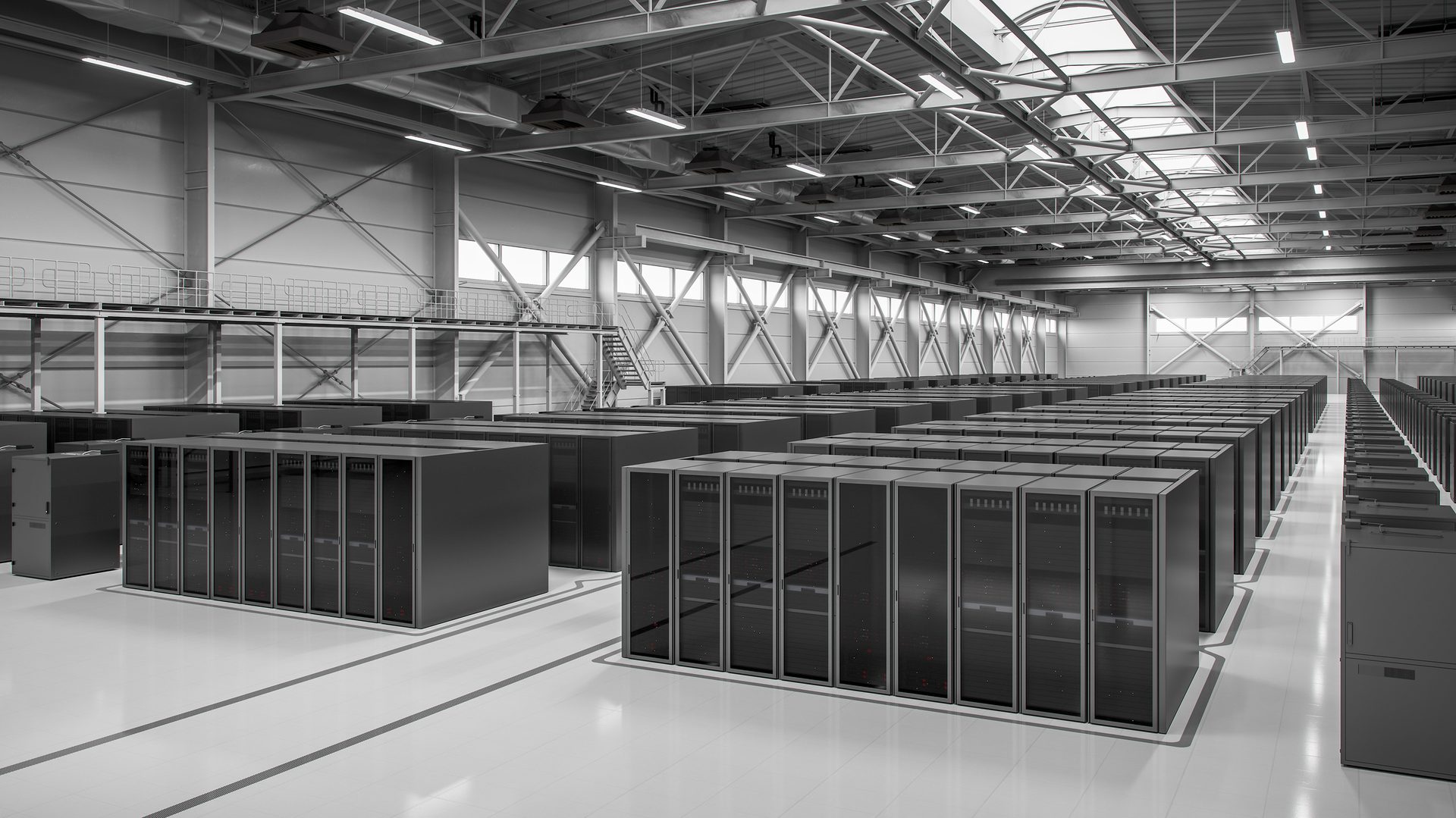
So how are all these data centers coming online so quickly? First, consider their design needs. Most data centers are expansive single-story structures, typically around 200,000 to 300,000 square feet under roof. In the case of the “hyperscalers” (companies such as Amazon, Microsoft, Google, and Meta) new data centers planned for 2026 and 2027 often exceed 500,000 square feet. One of the largest on the horizon is Meta’s “Hyperion” data center in Louisiana, with a combined footprint of 3.7 million square feet.
Second, data centers are often designed with large clear spans to accommodate cooling systems, flexible server rack configurations, and scalable power delivery. Given these needs, which building systems are most advantageous?
When comparing wood-framed, concrete block, and steel-framed construction, steel framing is often the most practical choice. Wood can burn, warp, and attract pests, and it may not align with the sustainability goals of many firms. Concrete block construction requires large, heavy foundations to support tall walls, typically 20 to 30 feet high. It also relies on high-carbon-content materials, which can challenge sustainability targets. That leaves steel framing, which can be summarized in three words: safe, strong, and sustainable.
xxxxxxxxxxxx
Image Credit: imaginima / iStock / Getty Images Plus via Getty Images.
Safe. Hundreds, if not thousands, of fire-tested assemblies are available for architects and engineers designing large structures intended to last 30 to 50 years. Engineers can rely on decades of structural data to design for integrity and safety, including protection from earthquakes, tornadoes, hurricanes, and fires. Major manufacturers provide code-compliant products certified to meet current international, national, and regional building codes. Organizations such as the Steel Framing Industry Association require members to maintain compliance through programs like the Code Compliance Certification Program, which involves third-party inspections by groups such as the International Code Council and Intertek to verify materials, manufacturing quality, and code transparency.
Strong. Steel is one of the strongest materials available. High-rise buildings around the world rely on it. Most nonresidential structures use steel framing for exterior and interior assemblies. Steel framing is engineered to handle thousands of vertical and horizontal load conditions while maintaining integrity over decades. It is produced in many sizes, thicknesses, and strengths, with tight manufacturing tolerances. Custom sizes can reduce jobsite cutting and improve safety.
Steel-framed systems can resist extreme axial and lateral loads and accommodate seismic movement by flexing slightly rather than breaking. Its strength-to-weight ratio also makes it ideal for architecturally ambitious projects such as the Disney Concert Hall, SoFi Stadium, and the Sphere in Las Vegas.
Sustainable. Steel is one of the most recycled materials on Earth. Modern U.S. steel production often combines scrap steel with small amounts of raw materials in electric arc furnaces, producing sheet steel with recycled content commonly between 30 percent and 40 percent, and sometimes exceeding 60 percent.
The steel scrap industry in the U.S. has grown into a multibillion-dollar sector, reducing demand for iron ore, coal, and limestone. Using scrap steel lowers Global Warming Potential, a metric that measures the climate impact of production in kilograms of CO₂ per metric ton of steel. EAFs’ lower GWP translates to lower embodied carbon in steel framing products. At the end of a building’s life, steel studs, tracks, and accessories can be recovered and recycled, returning to the production cycle in a truly circular lifecycle.
As the economy continues to embrace AI and its advancements, there is reason for optimism in the construction industry. With growing domestic steel capacity and ongoing technological progress, steel framing manufacturers are well positioned to support data center growth by delivering products that are safe, strong, and sustainable for generations to come.
Opening Image Credit: gorodenkoff / iStock / Getty Images Plus via Getty Images.
Steve Farkas is a 40-year veteran of the construction industry, starting as an apprentice carpenter, now serving as director of business development for CEMCO where he currently leads several teams, including architectural support, advertising and marketing, research and development and structural engineering. Steve is an active member of AWCI, ASTM, CFSEI, and SFIA. Steve can be contacted at sfarkas@cemcosteel.com.