A centuries-old wall finish is emerging as one of construction's fastest-growing premium materials By Rob Knight
Why Architects Are Falling Back in Love with Plaster
xxxxx. xxx
xxxxx
xxxxxxxxx
xxxxxxxxxxxxxxx By xxxxxxxx
h2 - xxxx
h3 - xxxx
H1 headline
Across continents and cultures, walls are no longer passive boundaries—they are canvases. Decorative plasters, rooted in ancient craftsmanship, have evolved into a global industry valued at approximately $4.7 to $7.2 billion in 2024, with projections reaching $7.8 to $12.2 billion by 2033.
Driven by architectural innovation, sustainability trends, and a renewed appreciation for artisanal finishes, decorative plasters occupy a premium niche in both residential and commercial construction. From the polished sheen of Venetian plaster in Europe to the earthy textures of clay finishes in Africa and Asia, the market reflects a blend of tradition and modern demand.
Unlike conventional coatings, decorative plasters provide depth, texture, and permanence. They are increasingly specified in luxury residential developments, hospitality environments, and commercial spaces where design differentiation is essential. The growing global appreciation for handcrafted finishes has elevated plaster from a functional surface to a defining architectural element.

A New Jersey office designed by Gensler, featuring a NanaWall HSW60 single-track system | Photography by Garrett Rowland Photography
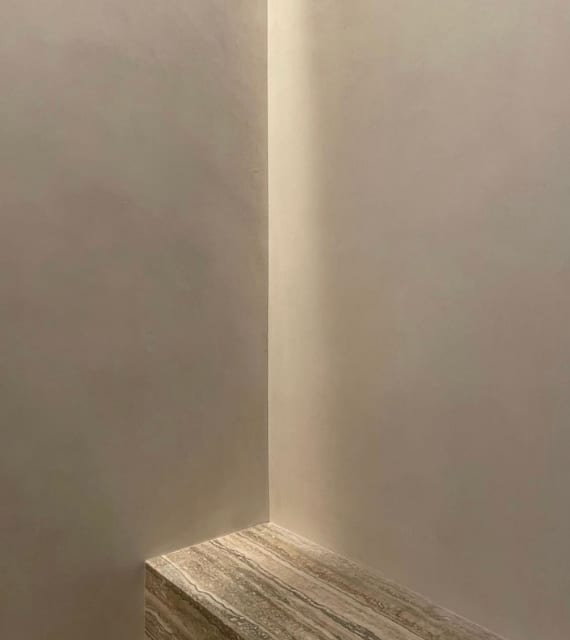
The office of an Omaha financial institution designed by Alley Poyner Macchietto Architecture, featuring a Generation 4 acoustical, folding glass wall system.
Global Sales Landscape
Here’s an approximate breakdown of global sales for this market:
- Europe (~$2.9B): Market leader, driven by heritage restoration and luxury construction Asia-Pacific (~$1.8B): Fastest growth, fueled by urbanization
- South America (~$0.4B): Expanding urban markets
- Middle East & Africa (~$0.6B): Hospitality-driven demand
- Australia (~$0.1-0.2B): Niche but expanding
Europe maintains its leadership through a deep-rooted tradition of lime-based finishes and preservation of historic structures. Asia-Pacific continues to surge as rapid urban development fuels demand for both decorative and functional plaster systems. Emerging markets in South America and Africa are contributing to steady global expansion, particularly in urban and tourism-driven construction.
Premium Decorative Plasters
Venetian Plaster
Venetian plaster remains the flagship decorative finish, valued at approximately $2.1 billion in 2024. Known for its polished, marble-like appearance and visual depth, it is widely regarded as the benchmark of luxury wall finishes.
- Dominant in Europe, where its heritage originates
- Rapid growth in Asia-Pacific luxury developments
- Widely used in high-end residential and hospitality design
- Its appeal lies in its ability to reflect light and create a sense of movement within a surface, offering both elegance and timelessness
Marmorino
Marmorino, a close relative of Venetian plaster, blends lime with marble dust to produce a softer, matte, stone-like finish.
- Strong presence in Europe, particularly in contemporary design.
- Growing adoption in Australia
- Favored in minimalist and natural interior schemes
Marmorino bridges the gap between traditional craftsmanship and modern aesthetics, making it increasingly popular among architects seeking subtle sophistication.
Tadelakt
Originating in Morocco, Tadelakt is a lime-based plaster prized for its waterproof properties and organic sheen.
- Rooted in North Africa
- Expanding into luxury spas, bathrooms, and boutique hospitality environments worldwide
- Premium pricing due to its labor-intensive, hand-polished application
Though smaller in overall market share, Tadelakt commands high value due to its artisanal nature and unique performance characteristics.
These finishes define the artisan segment of the market, where craftsmanship, heritage, and specialized application techniques determine value.
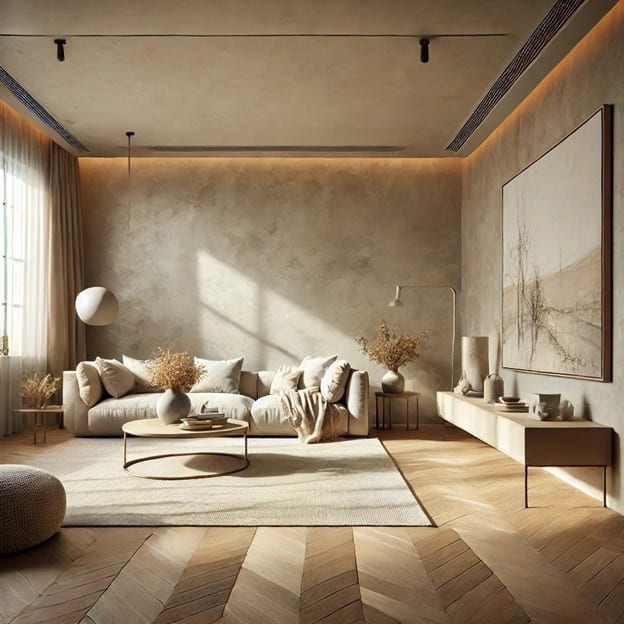
A New Jersey office designed by Gensler, featuring a NanaWall HSW60 single-track system | Photography by Garrett Rowland Photography
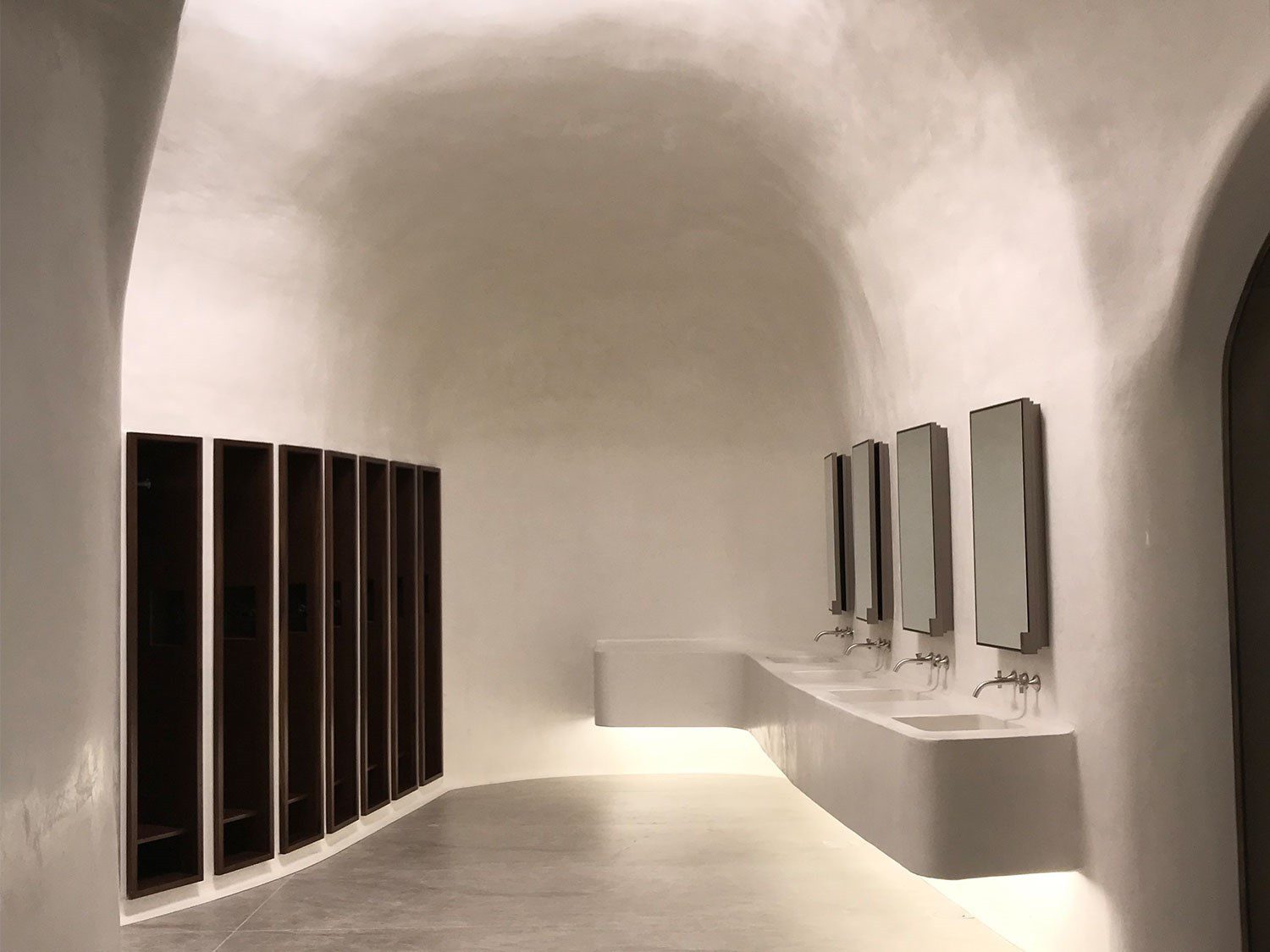
The office of an Omaha financial institution designed by Alley Poyner Macchietto Architecture, featuring a Generation 4 acoustical, folding glass wall system.
High-Volume & Sustainable Materials
Gypsum Plaster
Gypsum plaster dominates the market in terms of volume and practicality, with projections nearing $4.9 billion globally by 2030.
- Leading material in Asia-Pacific construction markets
- Widely used across Europe
- Known for smooth finishes, efficiency, and rapid application
While often considered a base material, gypsum plays a crucial role in preparing surfaces for decorative finishes and remains essential in large-scale construction.
Acrylic Plaster
Acrylic plasters represent the modern, performance-driven segment of the market. These synthetic finishes offer flexibility, durability, and resistance to environmental conditions.
- Strong demand in Australia
- Increasing use in commercial and exterior applications
- Capable of replicating stone, concrete, and textured finishes at lower cost
Their versatility makes acrylic plasters particularly appealing in regions where durability and cost efficiency are key considerations.
Clay Plaster
Clay plaster is gaining global attention as sustainability becomes central to architectural design.
- Strong adoption in Africa and Asia, aligned with traditional building methods
- Increasing use in Europe due to environmental regulations
- Naturally breathable, non-toxic, and environmentally friendly
As green building standards continue to influence construction practices, clay plaster is emerging as a preferred material for eco-conscious projects.
Together, gypsum and acrylic dominate the high-volume segment, while clay leads the movement toward sustainable building materials.

A New Jersey office designed by Gensler, featuring a NanaWall HSW60 single-track system | Photography by Garrett Rowland Photography
The office of an Omaha financial institution designed by Alley Poyner Macchietto Architecture, featuring a Generation 4 acoustical, folding glass wall system.
Regional Distribution & Market Drivers
Regional Composition
Asia-Pacific (~$1.8B)
- Gypsum: 40 percent
- Venetian/Marmorino: 30 percent
- Acrylic: 15 percent
- Clay/Tadelakt: 15 percent
Europe (~$2.9B)
- Venetian/Marmorino: 45 percent
- Gypsum: 25 percent
- Clay: 15 percent
- Acrylic/Tadelakt: 15 percent
Africa (~$0.3B)
- Clay/Tadelakt: 50 percent
- Gypsum: 25 percent
- Others: 25 percent
South America (~$0.4B)
- Acrylic/Gypsum: 60 percent
- Decorative lime finishes: 40 percent
Australia (~$0.1–0.2B)
- Venetian/Marmorino: 35 percent
- Acrylic: 30 percent
- Gypsum: 25 percent
- Others: 10 percent
Market Drivers
Luxury & Customization
Rising demand for bespoke interiors continues to elevate decorative plasters as a premium design solution. Venetian and Marmorino finishes, in particular, are increasingly specified in high-end residential and hospitality projects.
Sustainability
Environmental awareness is reshaping material selection. Clay and lime-based plasters offer low-VOC, breathable, and recyclable solutions that align with modern green building standards.
Urbanization
Rapid expansion in Asia-Pacific cities is driving large-scale demand for gypsum and acrylic plasters, balancing efficiency with aesthetic appeal.
Heritage Restoration
Europe's architectural legacy sustains ongoing demand for traditional plaster techniques, ensuring the preservation of historic buildings and craftsmanship.
Conclusion
Decorative plasters occupy a unique intersection of art and industry. From the refined elegance of Venetian plaster to the natural authenticity of clay, these materials reflect both cultural heritage and contemporary innovation.
As global markets expand, the future of decorative plaster will be shaped by a balance between tradition, sustainability, and technological advancement. Architects and designers are increasingly turning to these finishes not only for their beauty, but for their performance and environmental benefits.
In the evolving language of architecture, walls are no longer static-they are expressive, tactile, and deeply connected to both place and purpose. Decorative plasters ensure that this expression continues to grow, layer by layer, across the world.
Images courtesy of Variance Specialty Finishes.
Rob Knight is the business development manager at Variance Specialty Finishes/Parex. He brings over 35 years of experience in the commercial and residential markets with a wealth of stucco, EIFS and specialty finishing materials experience.