Precision Acoustical blends craft, speed and mentorship in Seattle’s competitive market. By John Wyatt
Seattle Ceiling Contractor Builds with Purpose
xxxxx. xxx
xxxxx
xxxxxxxxx
xxxxxxxxxxxxxxx By xxxxxxxx
h2 - xxxx
h3 - xxxx
H1 headline
In the world of suspended ceiling systems, precision is not optional. Layout tolerances, grid alignment, hanger wire spacing, acoustical performance—mistakes show up immediately, both visually and audibly. For contractors in commercial interiors, ceilings are often the last trade in and the first detail everyone notices.
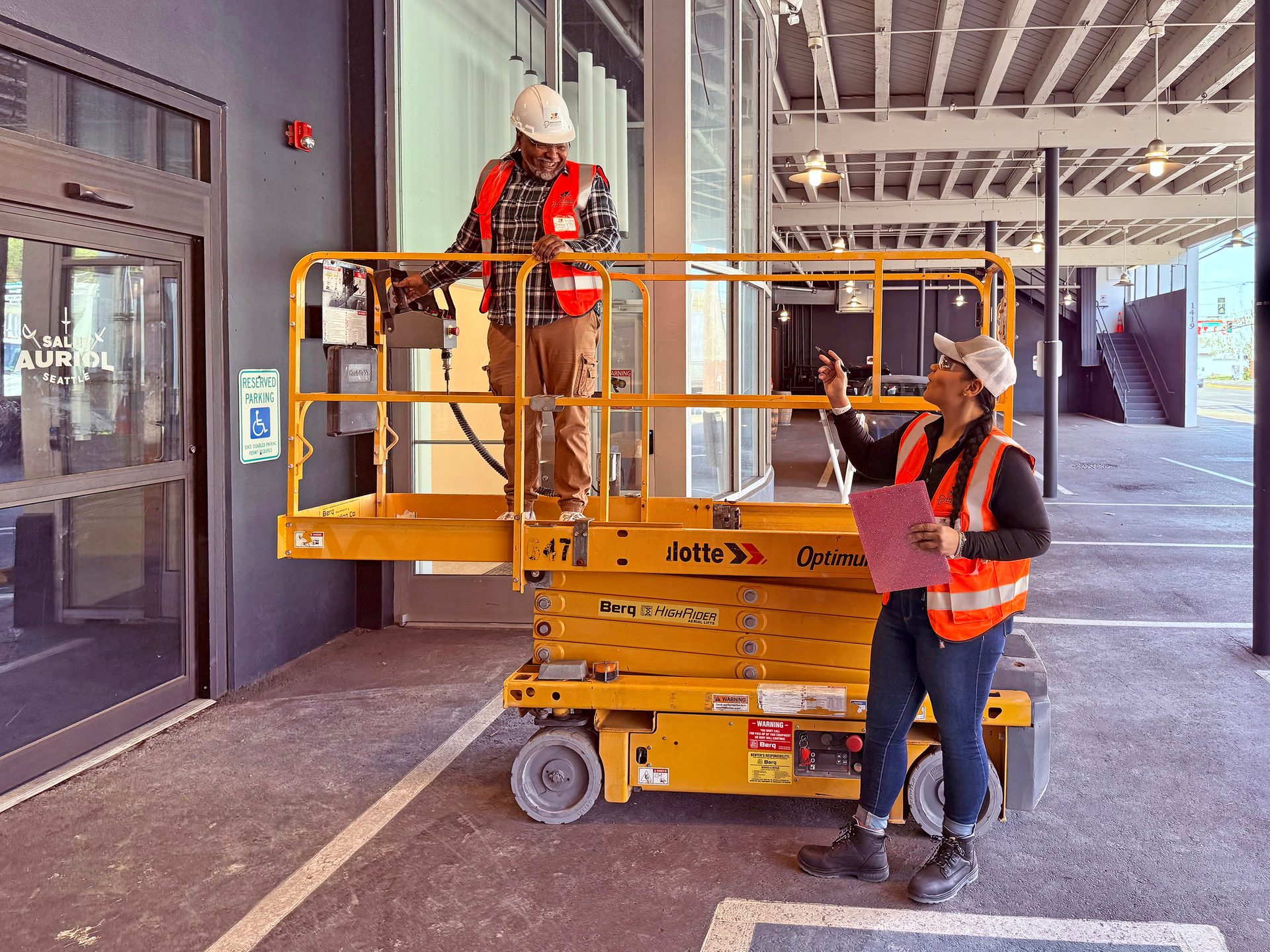
For nearly two decades, that’s where Melvin Smith and his team at Precision Acoustical Sound Solutions Inc. have built their reputation in the greater Seattle market: suspended ceilings installed clean, fast and right the first time.
Smith officially launched Precision Acoustical in 2008, though his time in construction stretches back more than five decades. He started in the trades at 17, gravitating toward hands-on work long before specialty ceilings became his focus.
After years working for others—and with encouragement from mentors—he stepped out on his own in 1988. By the time Precision Acoustical was formed, he had already developed deep field experience and relationships that would anchor the company’s growth.
The company today operates with roughly 10 employees, scaling crews based on project load. It remains intentionally lean. In a competitive regional market where labor shortages and material pricing volatility continue to affect schedules, that agility matters.
“We can pivot quickly,” Smith explains. For contractors managing tight tenant improvement (TI) schedules or school calendar constraints, responsiveness can be the difference between repeat work and lost opportunity.
A New Jersey office designed by Gensler, featuring a NanaWall HSW60 single-track system | Photography by Garrett Rowland Photography
The office of an Omaha financial institution designed by Alley Poyner Macchietto Architecture, featuring a Generation 4 acoustical, folding glass wall system.
Specializing in Suspended Systems
Precision Acoustical focuses primarily on commercial acoustical ceiling systems. That includes sound absorption assemblies, suspended grid installation, tile replacement, custom ceiling installs, hanging baffles, wood ceilings, fiber-reinforced plastic (FRP) panels and soundproofing treatments.
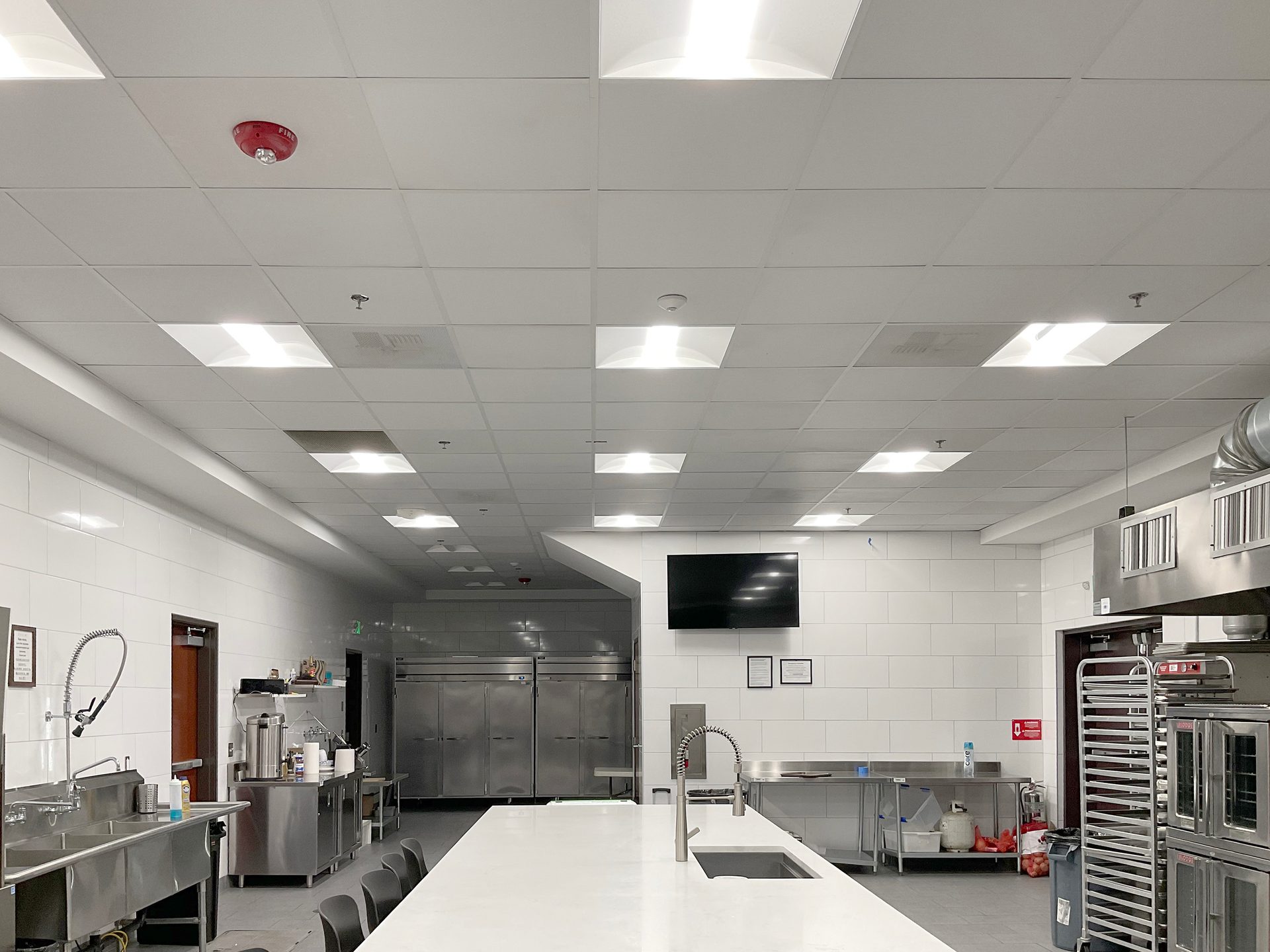
The company’s niche is fast-turnaround work (schools, offices, tenant improvements and occupied remodels) where sequencing and coordination are critical. In these environments, ceiling contractors must often work around mechanical, electrical and plumbing trades, while maintaining strict tolerances for grid levelness and panel fit.
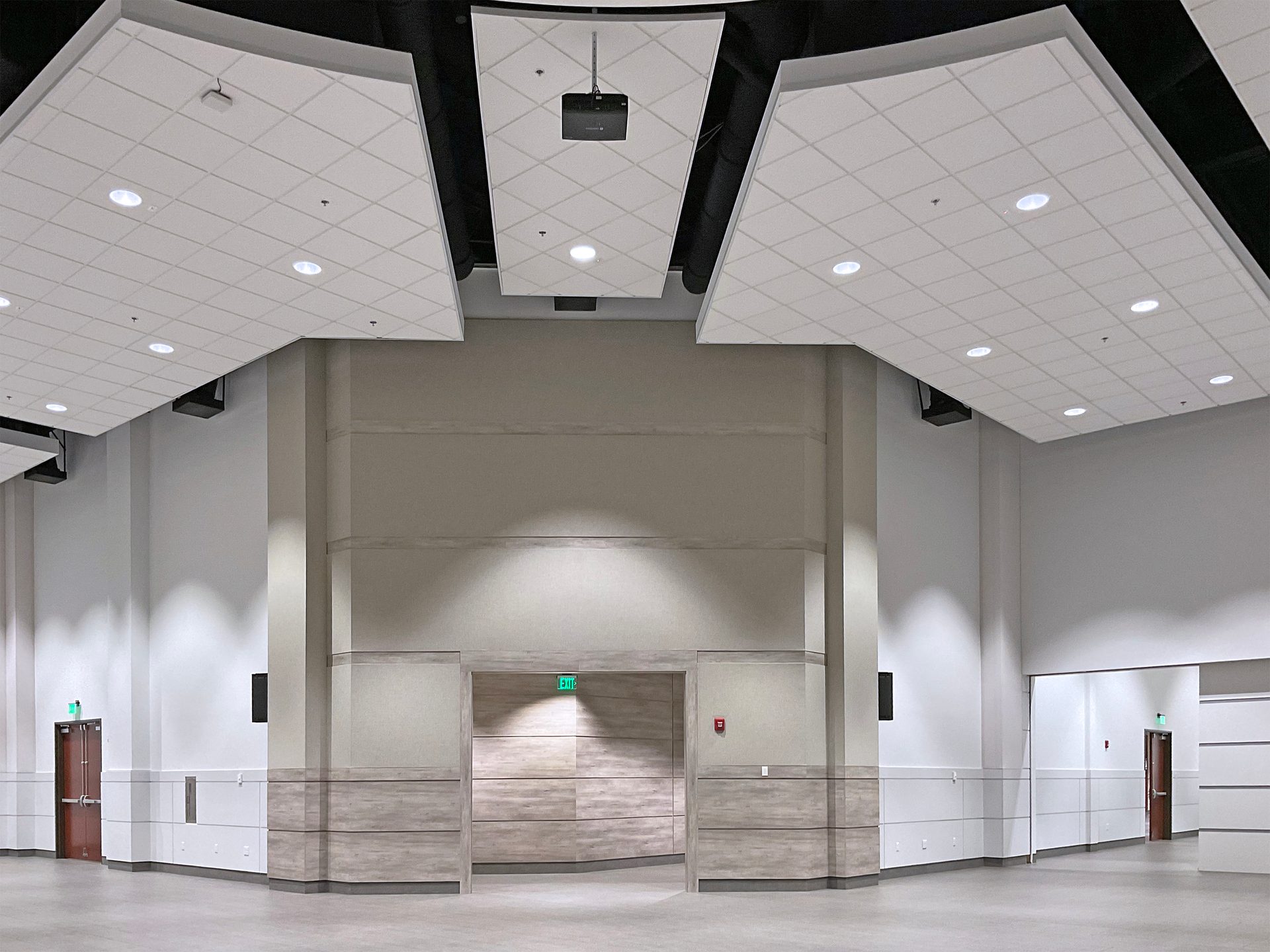
“All suspended ceilings through the whole building” was the scope on one of the firm’s most ambitious recent projects—a 20,000-square-foot custom acoustical buildout for a church in Kent, Wash.
Complex Geometry Under Pressure
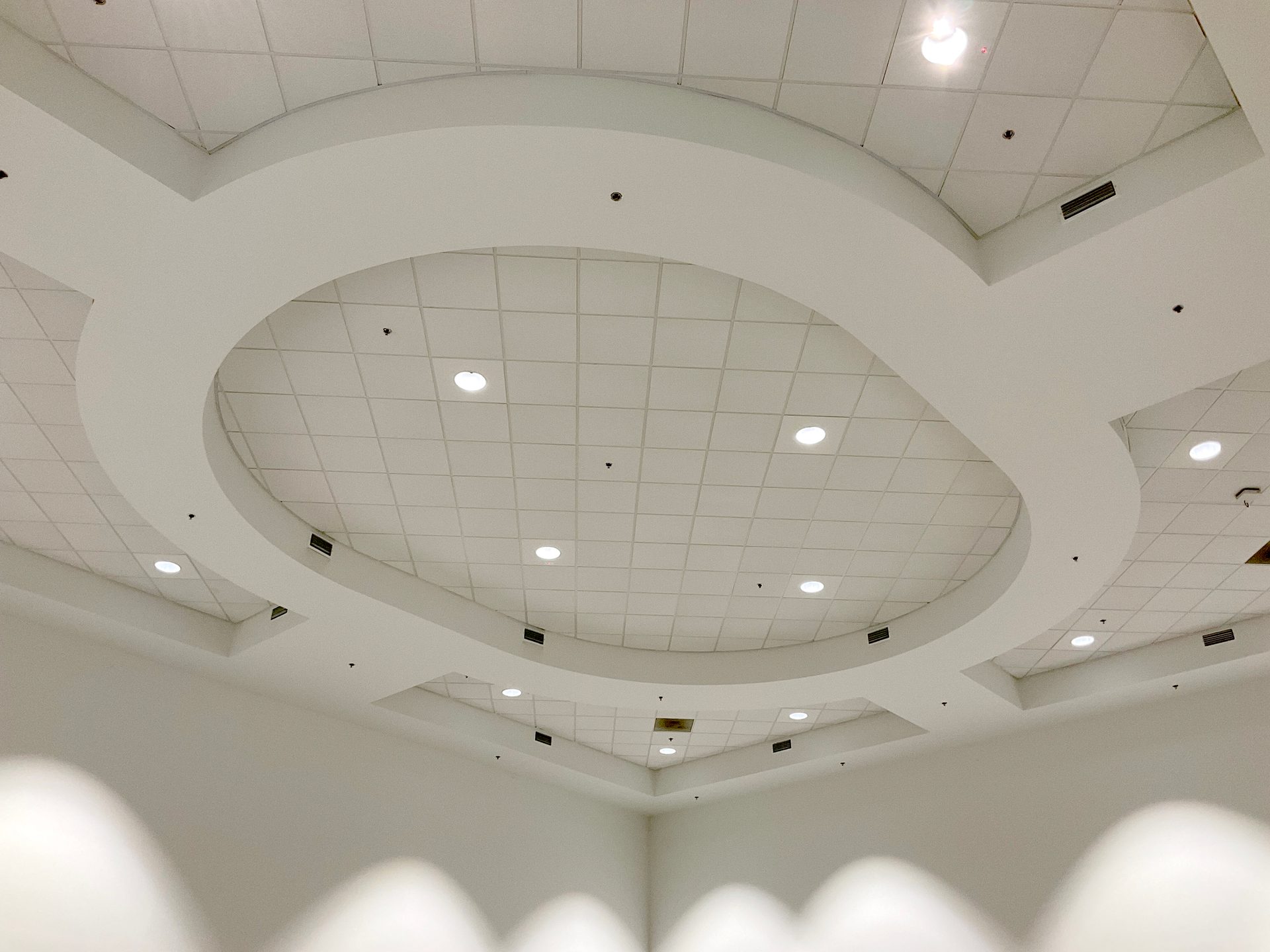
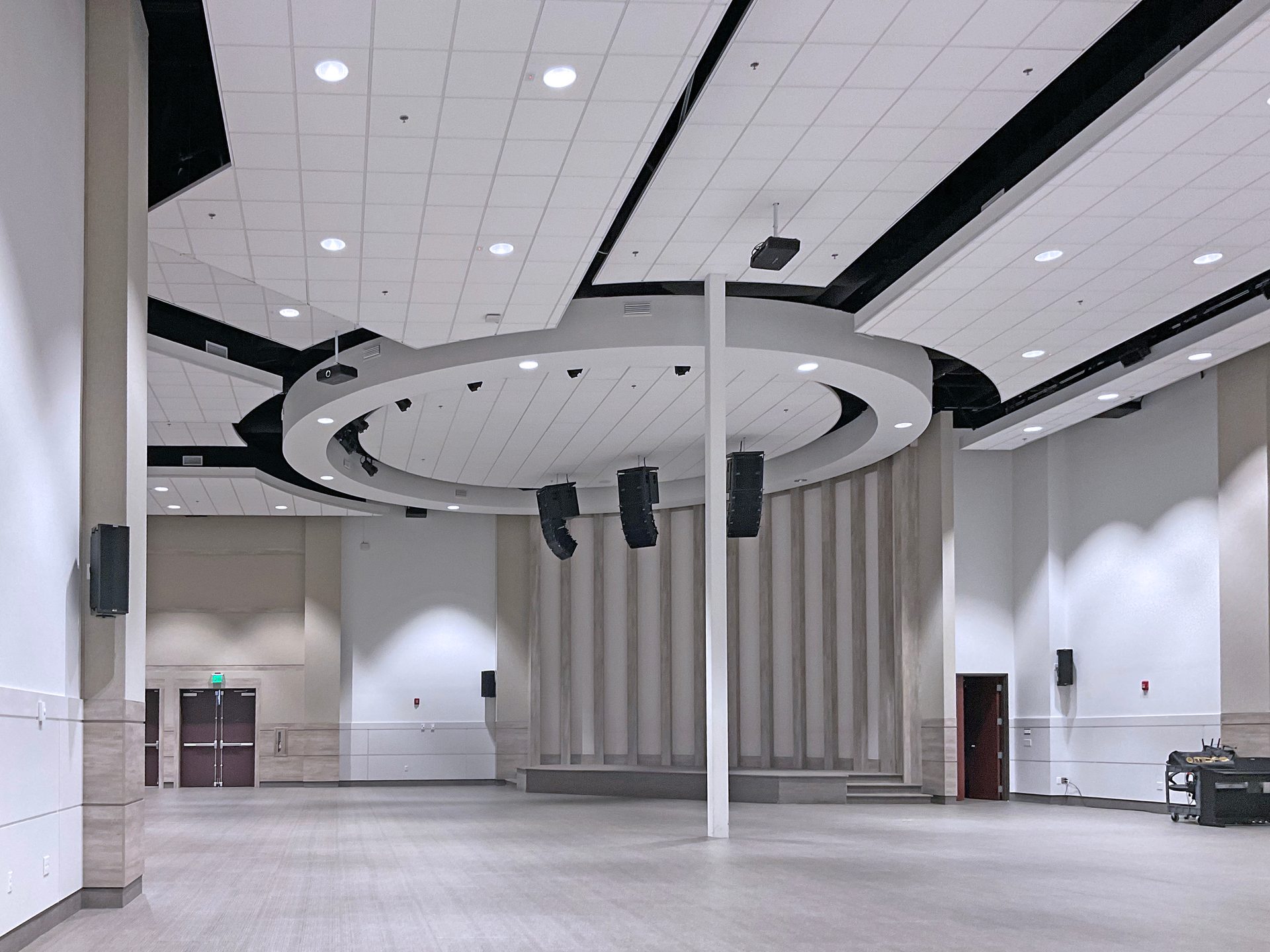
The Kent project required ceilings exceeding two stories in height, spanning three auditoriums, a commercial kitchen, seven hallways, conference rooms and even a radio station. The design intent called for circular motion, figure-eight-inspired geometry and suspended sound clouds to support multipurpose use—from banquets to weddings to memorial services.
Products from CertainTeed and Rockfon were used, sourced through a regional supplier. Smith also frequently works with USG, Armstrong and F-Sorb, depending on performance requirements and specifications.
The project unfolded on the heels of COVID-19 shutdowns, when labor availability and material lead times were unpredictable. Midway through installation, sequencing conflicts with other trades forced delays in overhead work.
Rather than allow the schedule to collapse, Smith restructured workflow—tackling areas out of the original sequence and staging material strategically to protect installed work. For ceiling contractors, that kind of adjustment often requires revisiting hanger wire placement, protecting grid from damage and maintaining layout continuity across phases.
The job delivered on schedule.
Why Acoustics Matter to Owners—and Contractors
Smith is particularly enthusiastic about advancements in sound absorption products and hanging baffles. In commercial interiors—especially open offices, hospitality venues and multipurpose assembly spaces—acoustical performance directly affects occupant comfort and productivity.
Ceiling systems today are expected to do more than conceal structure and services. Noise Reduction Coefficient (NRC), Ceiling Attenuation Class (CAC) and light reflectance values are often specified to meet code or owner standards. Installers must understand how panel selection, plenum depth and perimeter detailing affect overall system performance.
Smith notes that improvements in insulation and composite ceiling products have expanded both aesthetic and functional options. For contractors, that means more design flexibility—but also increased responsibility to follow manufacturer installation guidelines precisely.
Improper panel handling, incorrect suspension spacing or inadequate perimeter support can compromise acoustical performance and lead to callbacks.
Labor, Mentorship and the Next Generation
Washington’s construction climate remains competitive. Labor shortages persist, and material costs have added complexity to bidding. For smaller firms without large capital reserves, rework is not an option.
“Smaller businesses don’t have the extra funds to do the job twice,” Smith says. That philosophy reinforces strict quality control in layout, leveling and finish.
He has trained more than 50 mentees over the course of his career, several of whom have launched their own companies. Workforce development, in his view, is both a necessity and a responsibility.
The industry has made progress, but barriers remain—particularly for minorities and women entering field roles. Smith recalls earlier days when he often felt the need to prove himself repeatedly to earn equal respect on jobsites.
Today, several of his daughters have worked both in the office and in the field. His son has more than 15 years in the acoustical ceiling trade. Field exposure, Smith believes, builds credibility and practical knowledge that cannot be substituted by theory alone.
For contractors facing an aging workforce, this multigenerational approach offers a blueprint: cross-train, mentor early and create clear advancement pathways.
What Sets a Ceiling Contractor Apart
In the Pacific Northwest market, many firms can hang grid and set tile. Smith argues the differentiator lies in execution discipline and communication.
Clean jobsites, consistent attendance, accurate scheduling and proactive coordination build trust with general contractors and owners. That trust often translates to negotiated work and referrals—critical for steady backlog.
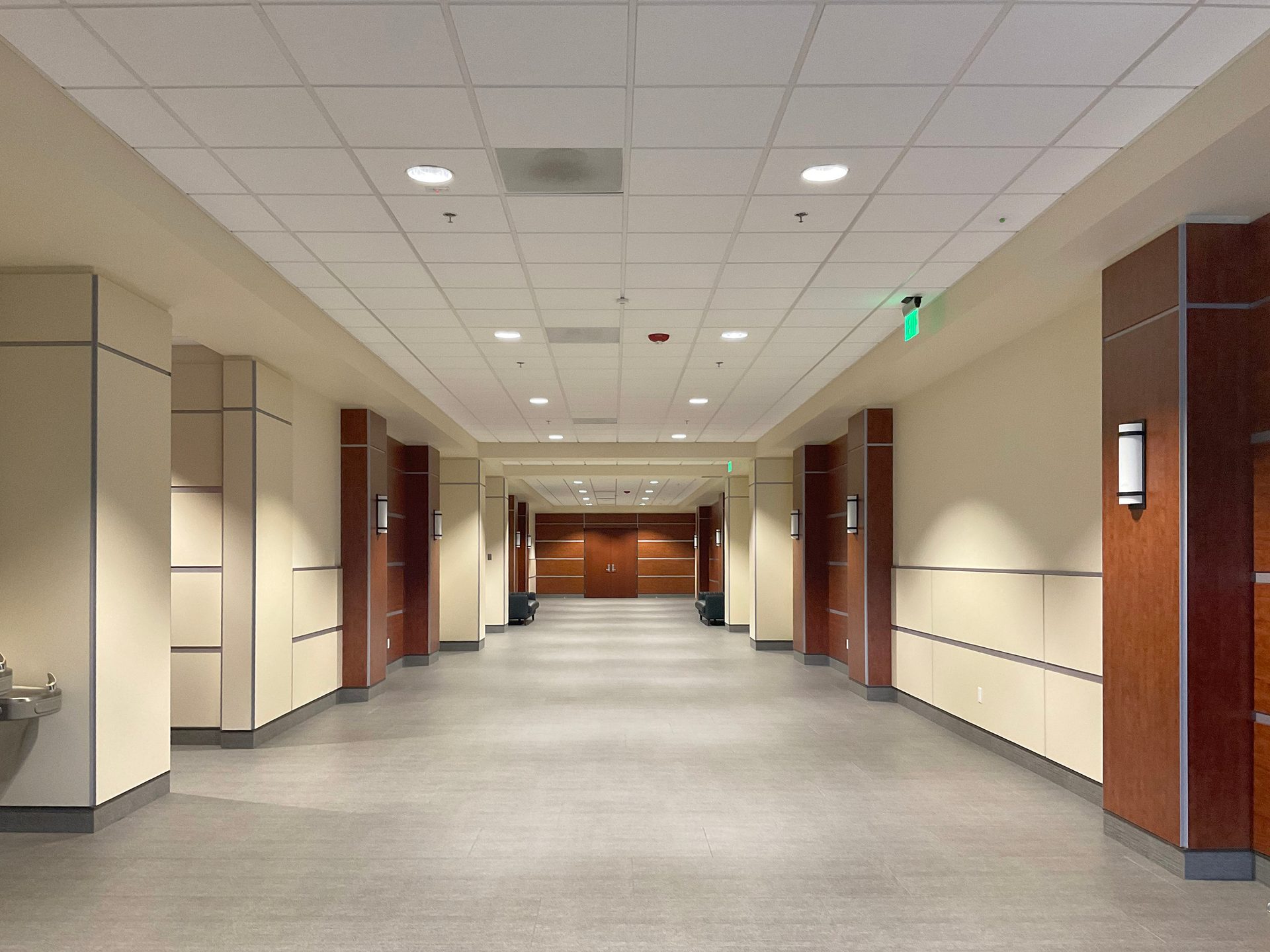
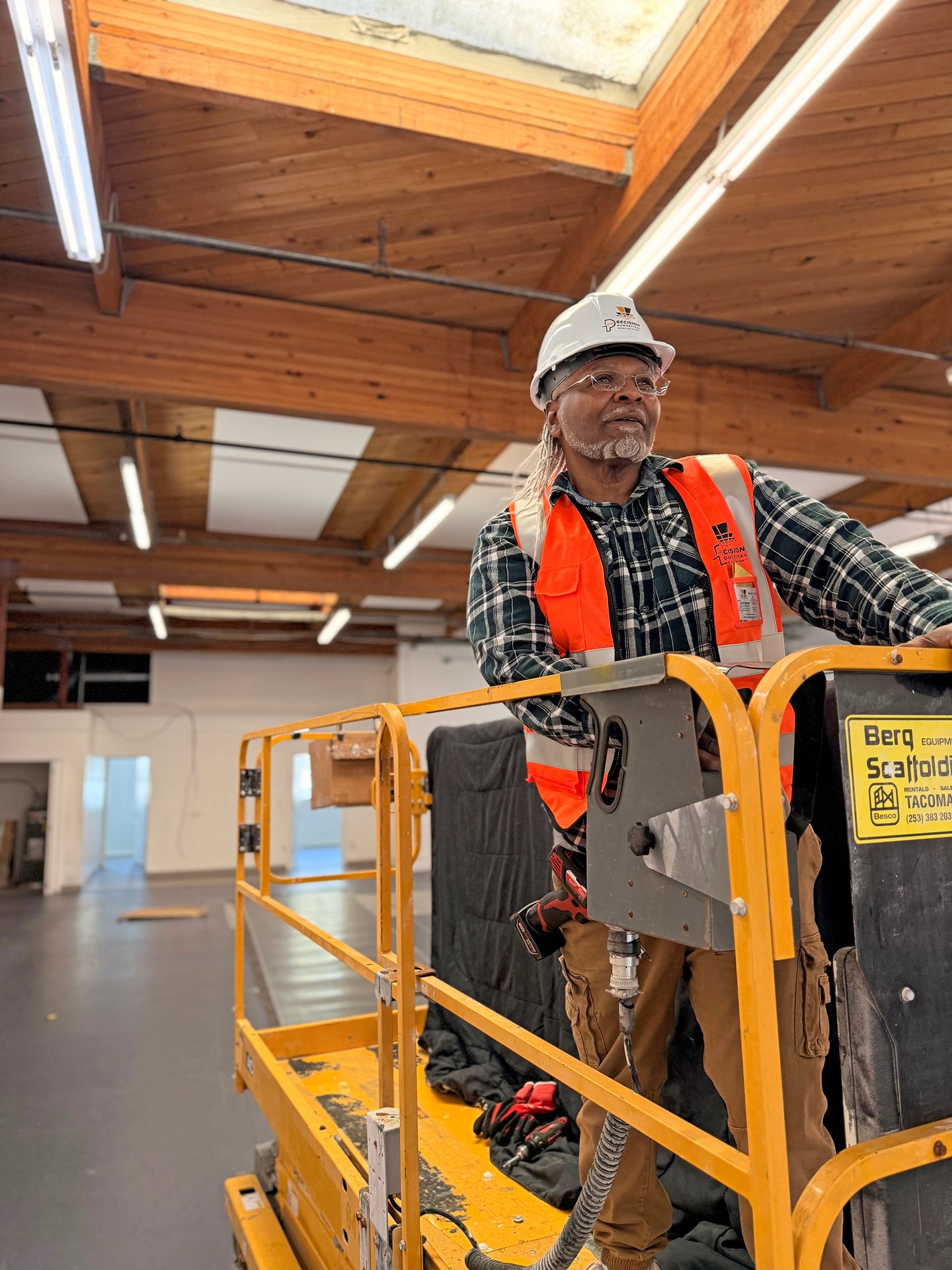
Smith remains hands-on in the field, even at 70 years old, overseeing layout and installation details. In suspended ceiling work, small errors compound quickly. A minor deviation in main tee alignment can create visible drift across long corridors. Uneven hanger wire tension can telegraph through the grid.
Precision at the start reduces punch-list corrections at the end.
A New Jersey office designed by Gensler, featuring a NanaWall HSW60 single-track system | Photography by Garrett Rowland Photography
The office of an Omaha financial institution designed by Alley Poyner Macchietto Architecture, featuring a Generation 4 acoustical, folding glass wall system.
Staying Lean Through Market Cycles
When asked how he would respond to another recession, Smith emphasizes flexibility. During previous downturns, the company diversified services to include more FRP installations, soundproofing packages and custom panels and baffles.
For wall and ceiling contractors, diversification can stabilize revenue streams when large commercial projects slow. Healthcare retrofits, educational maintenance work and smaller tenant improvements often persist even in softer markets.
Keeping overhead tight and maintaining strong supplier relationships are also part of the strategy. Reliable distribution partnerships help manage lead times and avoid costly schedule slippage.
Growth Without Losing Identity
From a one-man operation with a single truck to a multi-crew contractor supporting multiple families, Precision Acoustical’s growth reflects sustained demand for specialized ceiling expertise in the Seattle region.
Yet Smith measures achievement less by square footage and more by reputation. Word-of-mouth referrals continue to drive business. The company has sponsored more than 20 college students with tuition assistance and supports local nonprofit efforts—community investment that reinforces its regional standing.
For Smith, the long-term goal is to formalize a training pipeline for young workers who want to enter the trades but lack direction. Eventually, he plans to step back from daily field operations, allowing the next generation to manage execution while he focuses on business development and regional expansion.
Craft as Foundation
In commercial interiors, ceilings frame every space. They affect acoustics, lighting performance, fire ratings and aesthetics. Installed correctly, they disappear into a seamless plane. Installed poorly, they become a permanent visual reminder of shortcuts.
Smith’s career underscores a simple lesson for contractors: skills matter. Precision layout, manufacturer compliance, communication and mentorship are not optional extras—they are survival tools in a competitive market.
From circular cloud installations to straightforward grid replacements, the fundamentals remain the same. Start square. Stay level. Follow specifications. Deliver on schedule.
For a contractor who began by watching crews build from a distance as a child, that transformation—from raw materials to finished space—still holds its appeal.
And in Seattle’s evolving commercial landscape, there is no shortage of ceilings left to build.