Virtual reality is transforming insulation training in the construction industry by offering faster, safer, and more consistent skill development—helping address labor shortages and appeal to a new generation of tech-savvy workers. By Mickey Chastain
Closing the Skilled Labor Gap with Virtual Reality
xxxxx. xxx
xxxxx
xxxxxxxxx
xxxxxxxxxxxxxxx By xxxxxxxx
h2 - xxxx
h3 - xxxx
H1 headline
The construction industry has long grappled with a skilled labor shortage. As experienced installers retire and fewer young people pursue careers in the trades, the pressure is on to attract and train the next generation—faster, smarter, and more safely.
Virtual reality and immersive training is stepping in as a promising solution. Once reserved for gaming or entertainment, VR is now proving its value as a powerful training tool. And in construction—where hands-on learning and real-world familiarity are critical—it’s a game changer.
In insulation, immersive tools like VR headsets and interactive screen-based simulations are recreating the jobsite experience in impressive detail. Some companies are leading the way, using these technologies to better prepare installers.
Training That Feels Real
Traditional training, whether classroom-based or through job shadowing, has limitations. It often lacks consistency, slows productivity, and doesn’t always reflect the reality of the job. That’s a problem in insulation, where even small mistakes like compression or gaps can impact building performance. VR gives new installers a chance to get it right before they ever step foot on site.
Through VR simulations, they can work inside virtual attics, fill wall cavities, spot safety hazards, and build confidence in a realistic, risk-free environment.
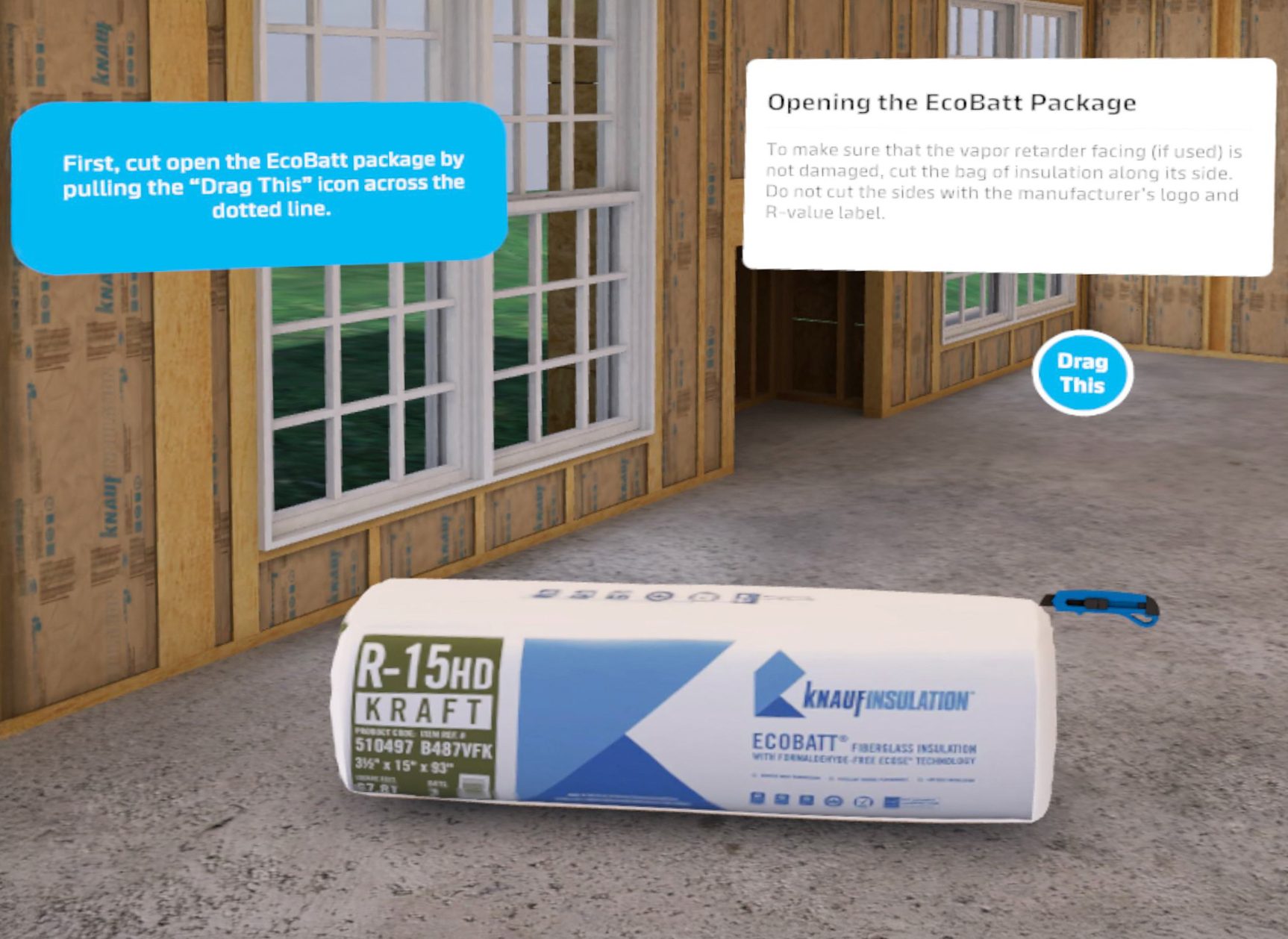
xxxxxxxxxxxx
Faster Learning, Stronger Impact
Workers trained with VR learn up to four times faster than those using traditional methods, according to a study by PwC. They also report 275 percent higher confidence in applying their skills on the job.
In a labor-strapped industry, that efficiency matters. In a survey conducted at the 2025 National Home Performance Conference by Subvrsive of 50 insulation professionals, respondents estimated that VR would save them about 33 percent in training time.
Showing, Not Telling
For Todd Conn, Apprenticeship Coordinator for Heat and Frost Insulators Local Union 18 in Indianapolis, VR gives new applicants and apprentices an engaging preview of what the job really entails.
“Some people have never even stepped foot on a jobsite,” says Conn. “They’re still asking the basics. With VR, we can drop them right into a simulated project, so they can actually see what we’re talking about.”
At Local 18’s 10,000-square-foot training center, VR is now a core part of apprentice education. “It takes pressure off our instructors,” he says. “We hand them a headset, and they can experience it. That makes every conversation afterward more productive.”
They’re also bringing VR to job fairs—where the difference between talking about a trade and showing it is a game changer. “There’s a line of people waiting to try it. When they put on the headset, it’s a light bulb moment. They can picture themselves in this career.”
A New Jersey office designed by Gensler, featuring a NanaWall HSW60 single-track system | Photography by Garrett Rowland Photography
The office of an Omaha financial institution designed by Alley Poyner Macchietto Architecture, featuring a Generation 4 acoustical, folding glass wall system.
Consistency and Scalability
One of VR’s biggest advantages is standardization. Every trainee engages with the same scenarios, techniques, and performance benchmarks, regardless of location or trainer. This helps companies maintain quality across teams and job sites.
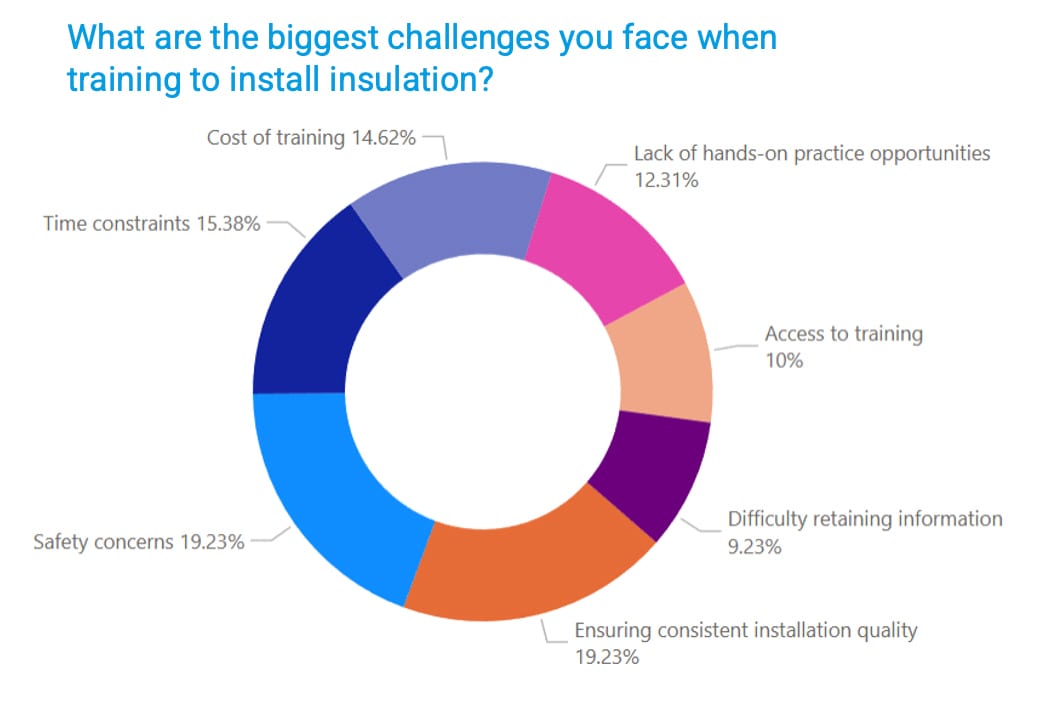
That consistency directly addresses one of the biggest training challenges cited by insulation survey participants: ensuring installation quality.
Insulation work often involves confined spaces, ladders, overhead tasks, and exposure to dust or debris—all conditions that demand proper safety training. With VR, workers can practice lifting safely, using PPE correctly, and navigating confined spaces before facing any real-world hazards.
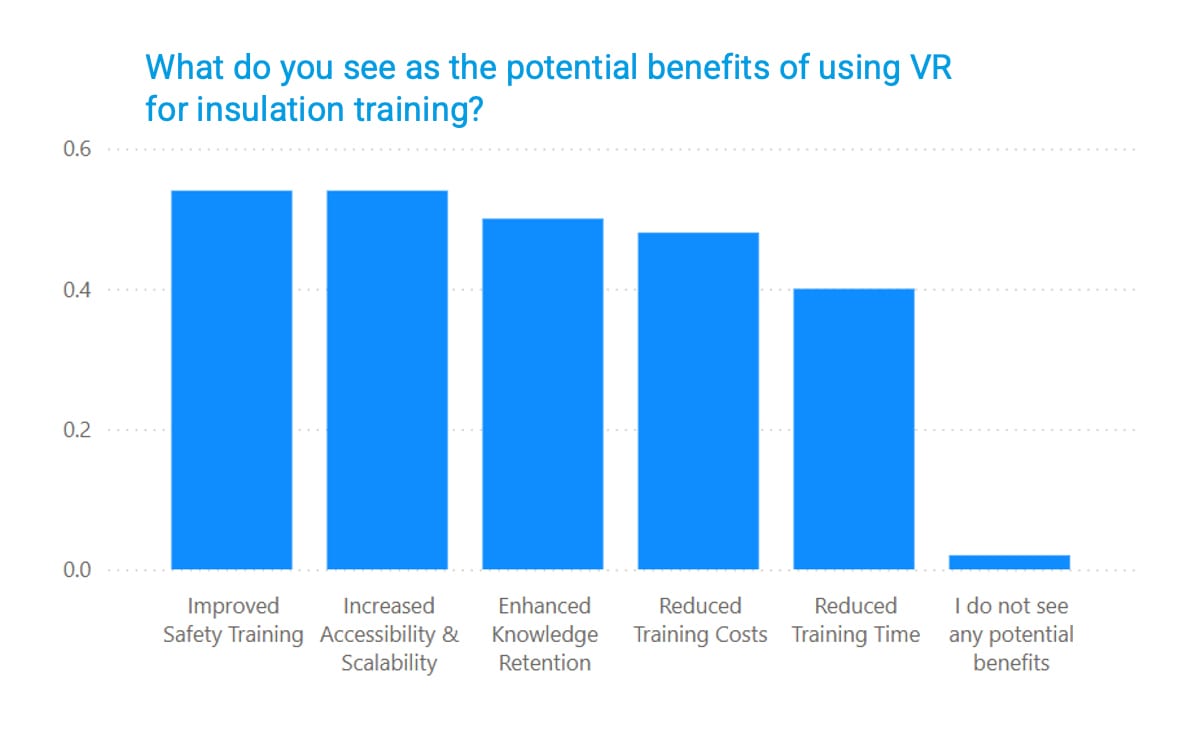
No surprise: safety topped the list of benefits in the Subvrsive insulators’ survey.
As the trades compete for Gen Z talent, technology becomes a competitive advantage. For these digital natives, an immersive headset feels more intuitive and engaging than a thick binder or a slide deck.
“The new generation doesn’t want the paperwork,” Conn explained. “They want to experience things, not just read about them.”
And they’re ready. In the Subvrsive survey, 94 percent of respondents said they would try VR for insulation training, and most had no concerns about adopting the technology. The most cited barrier was cost, but with some VR training programs priced less than $1,000—not much more than the Oculus headset alone—it’s a cost-effective investment.
In a field that’s often perceived as slow to change, VR offers a new narrative: we’re modern, dynamic, and ready for what’s next.
A Smarter Start to a Hands-On Career
VR won’t ever replace hands-on experience, nor should it. But it can offer a valuable head start, building confidence and providing a structured, repeatable foundation for skill development.
At some insulation manufacturers, immersive training, whether through a VR headset or screen-based simulation, is a key part of how to prepare the next generation of installers. As these tools become more accessible and their benefits more widely recognized, immersive learning is poised to become the new standard across the trades.
Image Credit: Knauf
Mickey Chastain, a certified professional training manager is director of the Knauf Academy, where he leads technical training and support for employees and customers. A 20-year Knauf veteran, he is passionate about educating others on installation best practices, building science, and product innovation. He champions diverse learning methods — from hands-on workshops to on-demand and virtual reality training.